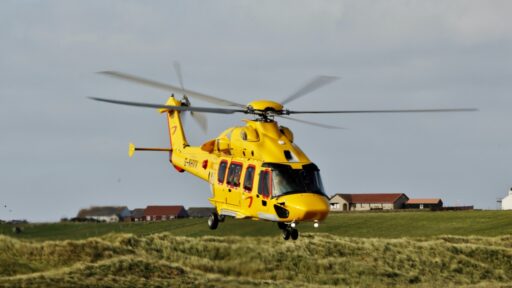

Airbus Helicopters has entered 2026 with a backlog that looks very different from just a year ago, after its 2025 order book swelled by 89 additional units and tilted decisively toward defense customers. At the heart of that jump is Spain, whose landmark commitment for 100 aircraft has turned a regional modernization drive into a defining global story for the vertical lift market. The surge is reshaping not only the company’s production profile but also the balance between civil and military demand across Europe.
The headline figures are striking, yet they only make sense when set against a broader shift in strategy, technology and geopolitics. A mix of new platforms, from light twins to heavy lifters, and a wave of sovereign rearmament has converged to push Airbus Helicopters into a new growth phase, with Spain’s order acting as both catalyst and symbol of that change.
From steady growth to a 20% “order jump”
The clearest signal that 2025 marked a break from business as usual is the scale of the order book. In Marignane, France, Airbus Helicopters reported that it logged 544 g gross orders, with net orders of 536, a step up that translates into a roughly 20% increase in new business compared with the previous year. Separate performance overviews describe a similar 20% rise in orders, underscoring how the company’s mix of civil and military products has benefited from a broad-based upswing in demand. Analysts have framed this as a structural shift rather than a one-off spike, pointing to the way defense and parapublic customers are now anchoring the backlog.
Deliveries have not kept pace with that surge, which is typical when orders accelerate faster than factory output. One detailed breakdown notes that the company delivered 392 aircraft in 2025, a figure repeated in multiple summaries of 392 units against the 544 g gross orders and 536 net. That gap between orders and deliveries is exactly what gives the 89-unit jump its strategic weight: it locks in future production, supports long-term employment at sites like Marignane, France, and signals to suppliers that the ramp-up is not a short-lived blip but part of a sustained expansion cycle.
Spain’s 100-helicopter bet reshapes the backlog
The single biggest contributor to that 89-unit increase is Spain, which has moved from incremental upgrades to a sweeping recapitalization of its rotary-wing fleet. In Albacete, Spain, the government, acting through the Directorate General for, placed an order for 100 Airbus helicopters, described as the largest-ever helicopter acquisition by the Spanish Ministry of Defence. Parallel reporting characterizes this as the Spanish Ministry of Defence Commits to Largest, Ever Helicopter Acquisition in Albacete, Spain, with The Spanish Minist planning to use the aircraft for missions ranging from combat support to disaster relief and utility operations. That 100 figure, cited verbatim across official and industry summaries, is the anchor around which the 2025 order story revolves.
Spain’s decision is not just big, it is also strategically structured. Detailed breakdowns explain that Spain accelerates its defense and security modernization plan by signing, through the Directorate General of Armament and Material, for a mix of helicopters destined for the Army, Air and Space Force and Navy, with specific allocations such as 6 for the Navy highlighted in multiple Spain-focused reports. Another official note stresses that Spain is placing orders for 100 helicopters through the Directorate General for Armamen, again underlining the 100 figure and the central role of Albacete, Spain as an industrial hub. When I look at the 89-unit year-on-year increase in Airbus Helicopters’ orders, it is hard not to see Spain’s 100 m military helicopters, flagged in a brief from Bloomberg that credits Airbus and Spain, as the decisive swing factor.
European defense demand and the “order surge”
Spain’s move sits within a wider European pattern that has tilted Airbus Helicopters’ portfolio toward defense. Several analyses describe how Airbus Helicopters sees order surge on European defense demand, with one account noting that the share of military and parapublic contracts in the backlog has climbed sharply from 57% a year earlier. That shift is echoed in a separate narrative that frames the company’s performance as Airbus Helicopters Reports 20% Order Jump as Global Defence Demand Peaks, with MARIGNANE, FRANCE highlighted as the focal point of a historic surge in European procurement. In both cases, the language around Order Jump and Global Defence Demand Peaks captures the same underlying reality: governments are buying more helicopters, faster, and for a broader range of missions.
From my perspective, what matters is how this demand reshapes the industrial and technological roadmap. One detailed Key Takeaways summary notes that Airbus Helicopters, a division of Airbus (EADSF, Financial), saw a 20% increase in new orders in 2025, driven by heightened defense budgets across Europe and beyond. Another Quick Summary of Airbus Helicopters Performance Overview points to Deliveri trends that, while solid, lag the order curve, reinforcing the idea that the company is building a multi-year cushion of work. When I connect those dots with the European focus in multiple European defense demand reports, the 89-unit increase looks less like a spike and more like the new baseline for a rearming continent.
Platform strategy, from H140 to Super Puma
Behind the headline numbers is a deliberate platform strategy that spans light twins, super-mediums and heavy lifters. Airbus signaled a new chapter in vertical lift at VERTICON 2025 with the unveiling of the H140, described as a next-generation light twin-engine helicopter that will sit alongside the H160 in the medium twin segment. In official language, Airbus framed this as a way to open a new chapter in vertical lift, pairing the H140’s simpler, aerodynamically optimised architecture with the H160’s growing market traction. Meanwhile, independent analysis notes that 2025 was a strong year for the H160, with orders pointing to parity with the rival AW139, a sign that Airbus is finally matching its Italian competitor in the crucial super-medium twin category.
At the heavy end of the spectrum, the Super Puma family has quietly become one of the workhorses of the order book. In the heavy segment, the Super Puma family proved its versatility as Greece ordered eight H215s for firefighting, a detail highlighted in official summaries that stress how In the heavy segment, the Super Puma family continues to attract sovereign customers. Those same reports also note that the H225M reached new milestones, while the company continues “moving forward” with work on the H175M against a clear development plan and roadmap, according to a Meanwhile passage that also mentions total orders around 100 units in 2025. When I put those pieces together, the 89-unit order increase looks less like a single-country story and more like the payoff from a portfolio that now stretches coherently from H140 to Super Puma and H175M.
Why Spain’s deal matters beyond the numbers
Even in that broader context, Spain’s 100-helicopter package carries outsized symbolic and industrial weight. Multiple official notes describe how Spain accelerates its defense and security modernization plan by signing, through the Directorate General of, for a fleet that will support the Army, Air and Space Force and Navy, with roles spanning combat, search and rescue and maritime security. One detailed release from Albacete, Spain explains that the order covers 100 units, with specific allocations such as 6 for the Navy, and positions Airbus facilities in Albacete, Spain as central to both production and long-term support. A separate industry brief, titled Spanish Ministry of Defence Commits to Largest, Ever Helicopter Acquisition, underscores that this is the Largest helicopter package ever for The Spanish Minist, with aircraft earmarked for disaster relief and utility missions as well as pure defense.