
Lithuania has chosen to delay its planned acquisition of new Embraer C-390 transport aircraft and instead keep its existing C-27J Spartan fleet in service until 2036. The move reflects a hard-edged budget calculation at a time when Vilnius is trying to balance national defence needs, long-term support for Ukraine and the realities of a limited treasury. I see it as a revealing case study in how a frontline NATO state is prioritising immediate readiness over ambitious recapitalisation.
The decision to postpone the C-390 order
Lithuania’s government has confirmed that plans to buy new military transport aircraft have been put on hold, even though officials had already selected Embraer’s C-390 as the preferred platform. After a meeting of the State Defence Council on a Tuesday in Jan, leaders decided that the country would not proceed now with the procurement of the Brazilian-built airlifter, despite earlier work that had led to the choice of the Embraer planes. In practical terms, that means the air force will continue to rely on its current transport fleet for at least another decade.
Officials have framed the delay as a postponement rather than a cancellation, with the acquisition of new transport aircraft expected to begin only around 2030 or later. The government has indicated that the timeline for any future order will be pushed to the period after 2030, aligning with broader defence planning cycles and budget forecasts that stretch into the next decade. According to the same official explanation, the procurement process for the new aircraft is now expected to begin only once those longer term financial and strategic conditions are clearer.
Why the Embraer C-390 was attractive but costly
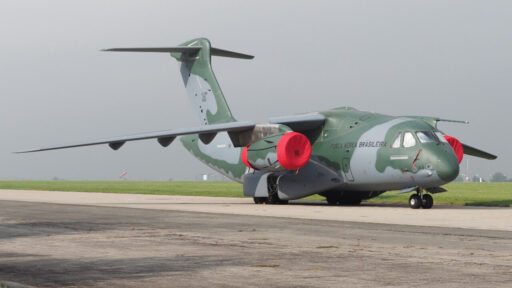
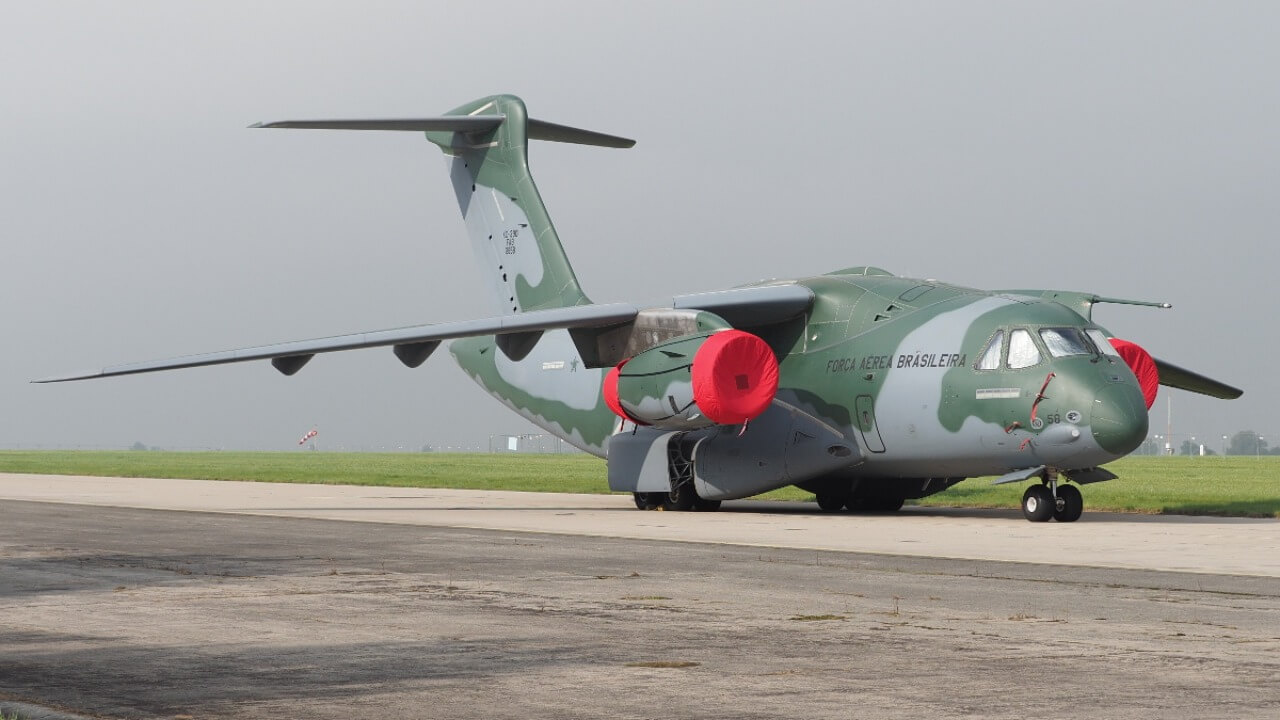
The Embraer C-390 had emerged as a strong candidate because it offers a modern, multi-role transport capability that would significantly expand Lithuania’s lift capacity. The twin-jet design is optimised for rapid troop movement, cargo transport and medical evacuation, and it has been marketed as a flexible platform for NATO partners. Lithuanian planners saw the C-390 as a way to plug into a growing community of operators and to replace older aircraft with a system that promises higher payloads and faster transit times, which is why the government had initially leaned toward the C-390 as its next-generation airlifter.
Yet the same qualities that made the C-390 attractive also carried a heavy price tag that Lithuania ultimately judged too steep for the current moment. The total bill for acquiring and operating the new aircraft, including infrastructure, training and lifecycle support, was estimated in the range of 700 to 800 million euros, a figure that senior officials have now publicly cited as a key reason for stepping back. In public comments, the government has signalled that such a commitment, which would likely reach around 700–800 million euros, is difficult to justify when other defence and foreign policy priorities are pressing.
Extending the Spartan fleet to 2036
Instead of committing to new jets, Lithuania is doubling down on its existing C-27J Spartan fleet, which has already formed the backbone of its tactical airlift capability for years. The country currently operates three C-27J Spartans, and defence leaders have decided to invest in upgrades and life extension so that these aircraft can remain operational until 2036. According to official statements, the plan is to modernise avionics, carry out structural work and ensure that the air force can continue to rely on the Spartan fleet for another decade.
This approach is being presented as a pragmatic way to maintain essential airlift while avoiding a sudden spike in capital spending. By refurbishing the Spartans, Lithuania can keep flying aircraft that are already integrated into its logistics system, trained crews and maintenance pipelines. The air force leadership has argued that the C-27J remains a capable platform for regional missions, including troop transport, humanitarian flights and support to allies, and that targeted investment in the existing Spartan fleet offers better value in the short to medium term than a wholesale fleet replacement.
Budget pressures and the “No Extra 800 M” argument
The financial logic behind the postponement has been spelled out with unusual bluntness. Political leaders have stressed that there is “No Extra 800 Million” available for a transport aircraft programme on top of other defence commitments, a phrase that has quickly become shorthand for the decision. The reference points to the scale of the investment that would have been required, with the full package for new aircraft, support and infrastructure estimated at around 800 M euros, a sum that the government has concluded cannot be squeezed out of the current budget without sacrificing other priorities.
In that context, the choice to repair and modernise existing aircraft rather than buy new ones is being framed as “saving where we can,” a phrase used by senior advisers to describe the broader fiscal strategy. The chief advisor to the President of Lithuania on national security, Deividas Matulionis, has explicitly linked the postponement to the need to manage limited resources while still meeting alliance obligations and supporting Ukraine. He has argued that the estimated 700 to 800 million euros for a new transport fleet would be better directed, at least for now, toward other defence needs and long-term support for Kyiv, a position that underscores how the President of Lithuania and his team are weighing trade-offs.
Strategic trade-offs and regional implications
Strategically, postponing the C-390 purchase means Lithuania will continue to operate a smaller, turboprop-based transport fleet at a time when some allies are moving to larger jets. That choice could limit the country’s ability to move heavy equipment quickly over long distances, but it also keeps the defence budget focused on areas that leaders see as more urgent, such as ground forces, air defence and direct assistance to Ukraine. The government has made clear that the decision was taken after a meeting of top officials in Jan, where the balance between national capability and alliance contributions was weighed and the conclusion reached that the postponement would not undermine core commitments.
At the same time, the delay sends a signal about how even highly exposed NATO members are sequencing their modernisation plans. By pushing the C-390 acquisition to the period after 2030, Lithuania is effectively betting that its current fleet, once upgraded, will be sufficient for regional tasks and that allies will help fill any gaps in strategic lift. The official line is that the procurement of new aircraft will only begin around 2030, a timeline that aligns with the expectation that the economy and defence budget will have more room to absorb such a large project. That expectation is reflected in the government’s own description of the future acquisition window and in the way officials have tied the delay to long-term support for Ukraine and broader regional security planning.