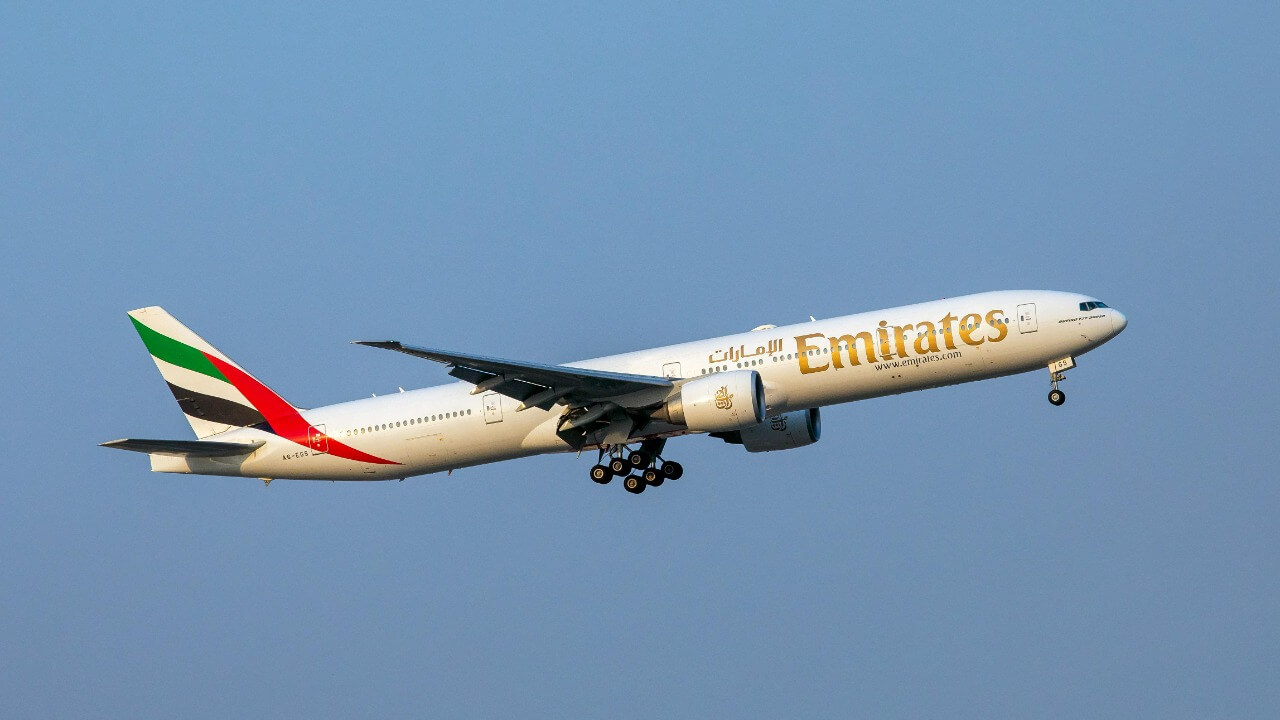

Emirates has moved to lock in the future of two of its flagship Airbus A380s, securing long term access to the double deck jets with an option to take full ownership from 2030. The arrangement underlines how central the superjumbo remains to the Dubai carrier’s network strategy even as the wider industry pivots toward smaller twin engine aircraft. It also extends a pattern of Emirates converting leased A380s into owned assets, reinforcing its bet that the type will remain commercially viable well into the next decade.
The latest deal sits alongside a broader push to reactivate and refurbish A380s that had been sidelined, supported by a multi billion dollar retrofit programme and a series of second hand acquisitions. Taken together, these moves show an airline that is not simply running down a legacy fleet but actively reshaping it, with ownership structures, cabin investments and long term maintenance planning all aligned around keeping the aircraft in front line service.
What the new A380 option actually secures
The new agreement gives Emirates continued access to two Airbus A380s that were previously under long term lease, while building in a pathway to buy the aircraft outright once the current lease period expires around 2030. Reporting on the transaction credits ByIan Molyneaux and notes it was Edited ByEmma Yates-Badley, with the timing set out as 15:48 (UTC +3), details that underscore how closely the airline’s fleet decisions are tracked in Aviation Economics. The structure means Emirates can keep the jets flying through the late 2020s under existing terms, then exercise the option to assume full ownership, a move that would typically lower long run operating costs and give the airline more flexibility on future cabin or maintenance decisions.
The same coverage highlights that the transaction is part of a wider pattern of Emirates working with lessors to reshape its A380 portfolio, rather than simply returning aircraft as leases expire. The reference to 48 in the context of the deal points to the scale of the airline’s owned or controlled A380 fleet, which remains unmatched by any other carrier and is central to its ability to schedule high capacity services through Dubai. By embedding an ownership option into the lease extension, Emirates is effectively hedging against future scarcity of airworthy A380s, since Airbus has ended production and the pool of available frames is finite, a reality that makes each additional aircraft under its control strategically valuable.
Reactivations, retrofits and the long game to 2041
Securing options on individual aircraft only makes sense when set against Emirates’ broader plan to keep the A380 at the heart of its network for another 15 years or more. The airline has already signalled that it intends to bring back around 15 stored A380s and keep flying the type until 2041, a timeline that goes well beyond what most analysts once expected for the superjumbo. That reactivation drive, detailed in coverage of how Emirates plans to return aircraft from its long term lessors, shows the carrier is prepared to invest in heavy maintenance and cabin work to keep the jets commercially attractive.
Underpinning that decision is a Multi Billion Dollar Retrofit Program Facing ongoing delays in new aircraft deliveries, which has pushed Emirates to double down on the assets it already has. The strategic analysis of the airline’s outlook describes how this retrofit effort is being used to refresh cabins, upgrade inflight connectivity and align the A380 product with newer types, all while bridging the gap until additional widebodies arrive. By committing to this Billion Dollar Retrofit delays in new deliveries, Emirates is effectively betting that a modernised A380 can continue to command premium yields on trunk routes, justifying the cost of keeping the type in service into the 2040s.
Buying used A380s outright to deepen control
The option to acquire two more A380s from 2030 fits neatly alongside a series of outright purchases that have already shifted more of the fleet from leased to owned status. Earlier, Emirates agreed to pay $180 million to keep four used A380s in its fleet for the long haul, a deal that valued the aircraft at $180 m and signalled the airline’s willingness to commit hard cash to the type even as others retired it. That transaction, which involved four Airb jets, was framed as a way for Emirates to transfer ownership and secure long term access to high capacity aircraft at a fraction of their original list price.
That purchase dovetailed with a separate move in which Aircraft lessor Doric sold four Airbus A380s to Dubai based Emirates for $180 million, again using the figures $180 m and $180 million to underline the scale of the investment. The Doric deal, which involved aircraft that were due to come off lease in 2027, further increased the proportion of the A380 fleet that Emirates for owns outright, reducing its exposure to lease rate volatility and giving it more freedom to decide when to retire or convert individual frames. Coverage of how Monaco based investor Stratos agreed to sell additional A380s to the carrier, reported under a piece credited to Share and Alan Dron October with Credit to Alan Dron and the Aviation Week Network, reinforces the picture of an airline steadily tilting its fleet mix toward owned assets through a series of A380 deals.
By layering the new 2030 option on top of these completed acquisitions, Emirates is building a pipeline of future ownership transfers that will keep its A380 fleet both large and increasingly unencumbered by leasing constraints. The Doric transaction, detailed in coverage of how Doric sold the jets to Dubai, shows how the airline is using lease expiries as trigger points to negotiate favourable purchase prices. The new option to buy two more aircraft from 2030 extends that strategy further into the next decade, ensuring that even as some older frames age out, a core of relatively young, fully owned A380s will remain available for high density routes.
How the A380 fits alongside the Airbus A350 and other types
Emirates’ decision to secure more A380s might appear at odds with its large orders for newer twin engine aircraft, particularly the Airbus A350, but the airline has been clear that it sees no single Airbus A380 successor. Analysis of its fleet plans notes that There is no single Airbus model that can replicate the capacity and onboard experience of the double deck jet on the busiest city pairs. Additionally, Emirates has no intention of retiring its A380 fleet until they wear out and is instead positioning the A350 and other types to take over routes where demand or airport constraints make the superjumbo less suitable, a strategy outlined in detail in coverage of how There is no single replacement.
That approach is echoed in separate reporting that again stresses There is no single Airbus A380 successor and that, Additionally, Emirates plans to keep the type in service until they wear out rather than setting a fixed retirement date. By pairing the A380 with the A350 and other widebodies, the airline can match capacity more precisely to route demand, using the superjumbo where slot constraints and premium heavy traffic justify its size, and deploying smaller aircraft elsewhere. The repeated emphasis that Additionally, Emirates will not rush to phase out the A380 helps explain why it is still striking deals that give it ownership options well into the 2030s.