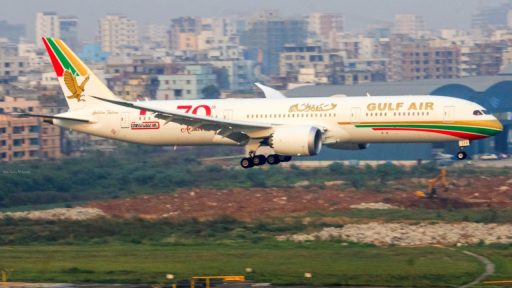
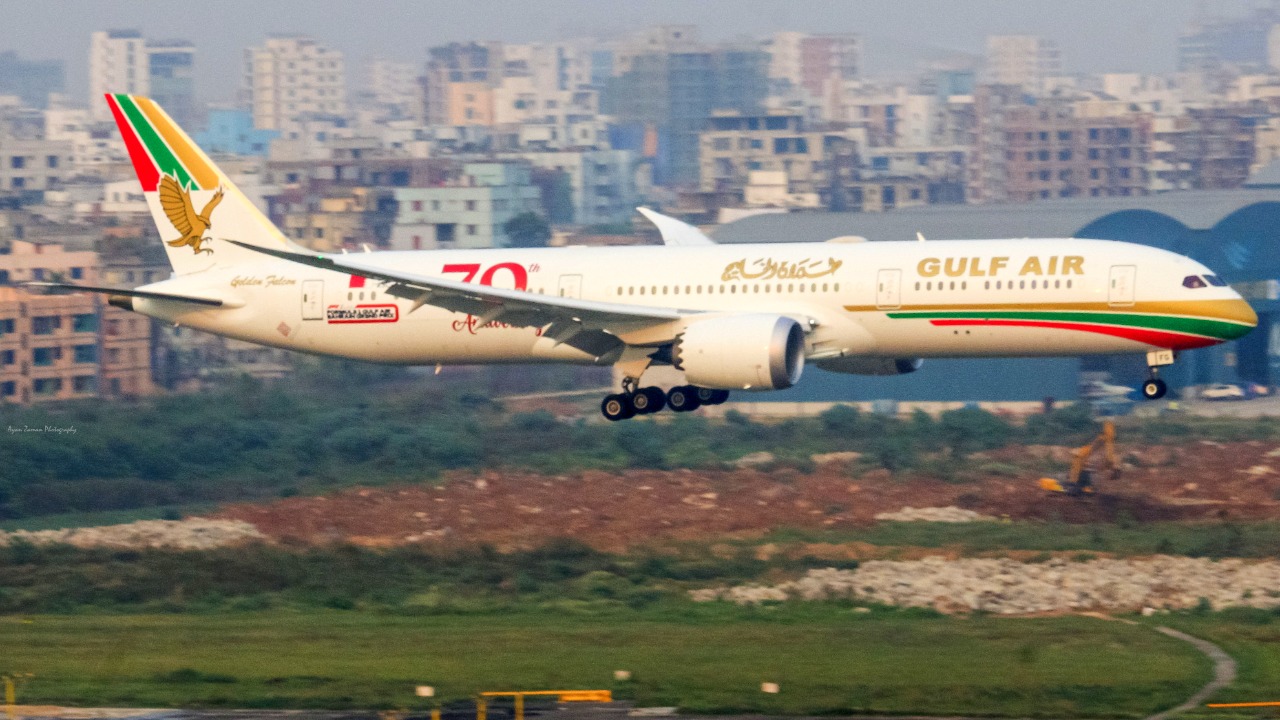

Gulf Air is betting that fast, reliable connectivity will become as fundamental to flying as a comfortable seat. By selecting Starlink for inflight Wi‑Fi across its entire fleet, the national carrier of the Kingdom of Bahrain is aligning a major technology upgrade with a broader push to digitize services on the ground and in the air. The move promises to reshape what passengers expect from regional and long haul travel originating in Bahrain, and to sharpen competition across the Gulf’s crowded aviation market.
The airline plans to roll out the new service from mid 2026, turning every aircraft into a high speed hotspot that mirrors the experience travelers are used to on the ground. For Bahrain, the decision folds into national digital transformation goals and positions the flag carrier as a showcase for how connectivity can support both customer experience and operational efficiency.
Why Gulf Air is turning to Starlink now
Gulf Air’s decision to equip its full fleet with satellite connectivity is as much about strategy as it is about technology. The carrier has framed the Starlink partnership as a way to enhance the passenger journey while supporting Bahrain’s ambition to be a regional digital hub, tying inflight connectivity directly to the country’s wider economic agenda. By committing to introduce Starlink Wi‑Fi across its entire fleet from mid 2026, Gulf Air is signaling that connectivity is no longer a premium add on but a core part of its brand promise.
The airline has also linked the upgrade to the way its crews work, arguing that better bandwidth will help cabin staff deliver more seamless and personalized service. In official statements, executives have stressed that the Starlink deployment will support Bahrain’s digital transformation goals and empower cabin crew to provide exceptional service from the moment passengers board. That framing is echoed in independent coverage of how Gulf Air selects, which notes that the project is being positioned as a flagship example of the kingdom’s technology ambitions rather than a narrow IT upgrade.
What Starlink Aviation actually delivers on board
For passengers, the promise of Starlink is simple: inflight Wi‑Fi that behaves more like a home broadband connection than the patchy, throttled services many travelers have learned to tolerate. The aviation product is described as delivering download speeds of 135 to 310 M, with peaks up to 450 M, upload speeds of 20 to 44 m, and latency under 99 m, performance that is designed to support streaming, cloud apps, and even online gaming simultaneously. Those figures, set out in Delivering, are a step change from legacy satellite systems that often struggle with basic web browsing when cabins are full.
The technical edge comes from the way Starlink is engineered. Instead of relying on a handful of large, distant satellites, the system uses a rapidly expanding constellation of low Earth orbit units that orbit much closer to the planet, reducing latency and improving resilience. Coverage is designed to be global, which is particularly relevant for a network like Gulf Air’s that spans regional routes and longer sectors. Reporting on the aviation product notes that it is Engineered around this low Earth orbit architecture, which is what allows the service to promise high speed, low latency connectivity even when aircraft are cruising far from terrestrial networks.
How the rollout will change the passenger experience
Gulf Air is not just installing faster hardware, it is rethinking what passengers can do with their time in the air. The airline has committed to offering free Starlink Wi‑Fi for everyone on board, a decision that removes the friction of paywalls and tiered access that often discourages casual use. Coverage of the plan highlights that travelers will be able to stream entertainment, join video calls, and work in cloud based tools from the comfort of their seats once the service is live, turning the cabin into an extension of the office or living room rather than a disconnected bubble.
That shift is likely to be particularly significant on routes linking Bahrain to key business and leisure markets, where travelers increasingly expect to stay online throughout their journey. By making connectivity a standard feature rather than a chargeable extra, Gulf Air is positioning itself against regional competitors that still treat inflight internet as a premium product. Independent reporting on how the carrier will introduce Starlink Wi across its fleet notes that the airline is explicitly tying the upgrade to comfort and convenience at the seat, underscoring that the goal is to make connectivity feel effortless rather than transactional.
The strategic stakes for Bahrain and the wider Gulf
For the Kingdom of Bahr, the Starlink deal is also a statement about national priorities. Gulf Air has described itself as the national carrier of the Kingdom of Bahr and has linked the connectivity program to the country’s broader digital transformation agenda, suggesting that the airline is being used as a high visibility platform for showcasing new technology. By committing to Introduce Starlink Wi and Fi Across Its Entire Fleet from Mid 2026, the carrier is effectively turning every aircraft into a flying demonstration of Bahrain’s digital ambitions, reinforcing the message that the kingdom wants to compete on innovation as well as geography.
The move also lands in a region where aviation is a central pillar of economic strategy and national branding. Gulf carriers have long competed on hardware, lounges, and network breadth; now, connectivity is becoming another front in that rivalry. Analysts note that Gulf Air’s decision to adopt Starlink across its fleet could pressure other regional airlines to accelerate their own upgrades, particularly if passengers begin to treat high speed, free Wi‑Fi as a baseline expectation rather than a luxury. The fact that the project has been covered by journalists such as Ian Molyneaux, with images credited to Faisal Akram under Creative Commons and editing by Emma Yates Badley, underscores how closely industry watchers are tracking the way Bahrain is using its flag carrier to project a digitally forward identity.
What to watch as Gulf Air moves toward mid 2026
The timeline to mid 2026 leaves Gulf Air with a tight window to retrofit aircraft, integrate new systems, and train crews to make the most of the technology. Installation will need to be coordinated with maintenance schedules to avoid disrupting operations, while ground teams will have to adapt IT and customer service processes to support a cabin that is always connected. The airline has already framed the project as a way to empower cabin crew to deliver seamless, exceptional service, which implies new workflows for handling real time passenger requests, digital payments, and on board support once the Starlink network is active.
From a passenger perspective, the key questions will be consistency and reliability. Travelers will judge the upgrade not on technical specifications but on whether video calls stay stable, streaming apps avoid buffering, and logins are simple. If Gulf Air can deliver on the performance metrics Star has set out for its aviation product, and align that with Bahrain’s broader digital transformation goals, the carrier will have turned a connectivity upgrade into a competitive differentiator. If it stumbles, the same visibility that makes the project a national showcase could amplify any shortcomings, giving rivals an opening to claim the inflight connectivity high ground.