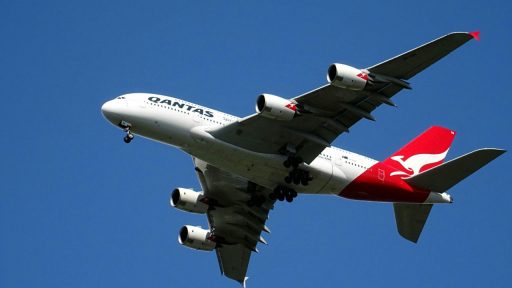
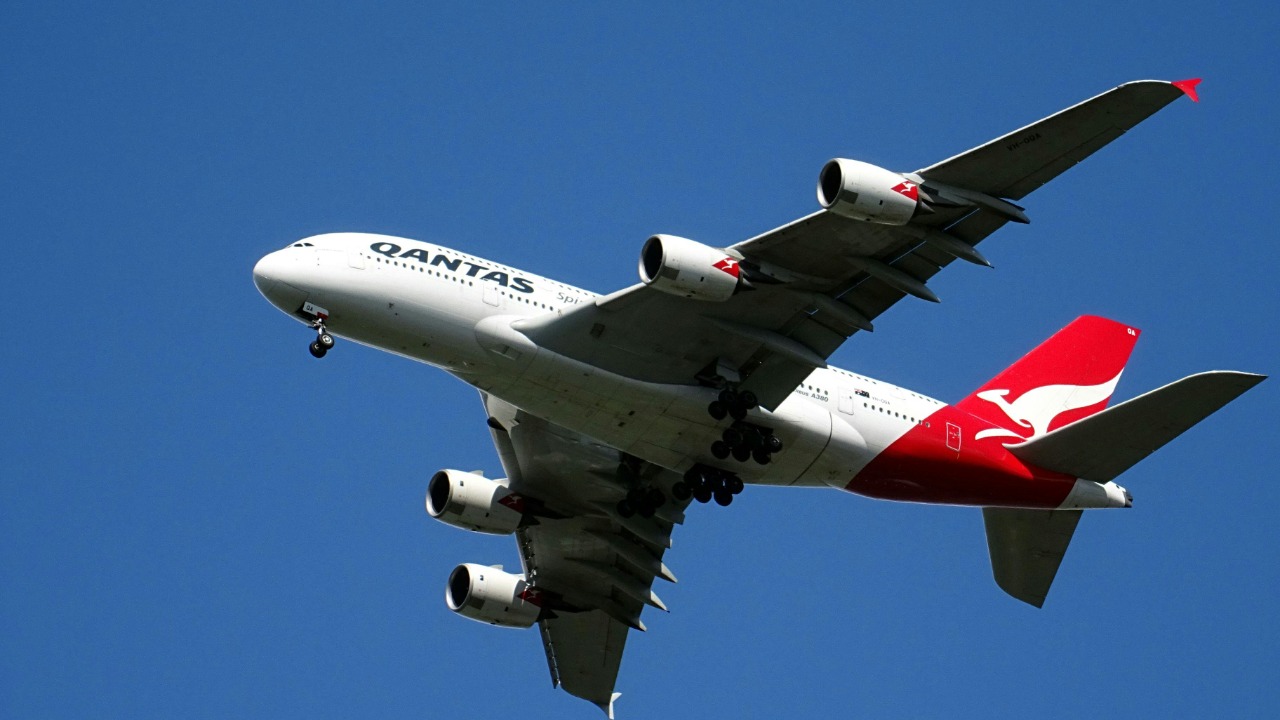

A Qantas Airbus A380-800 flew a long‑haul rotation between Sydney and Dallas with a work light left inside its left wing, an error that has triggered a fresh safety investigation into how tools are tracked around one of the world’s largest passenger aircraft. The incident, which involved a Qantas Airbus superjumbo registered VH‑OQK, did not result in an in‑flight emergency, but it has sharpened scrutiny of maintenance practices after a series of similar discoveries on the type.
Regulators and investigators are now examining how a basic piece of equipment could remain lodged inside a critical structure across multiple sectors, including ultra‑long‑haul flying, without being detected. Their focus is not only on what happened on this particular aircraft, but on whether the industry’s existing systems for tool control are robust enough for complex widebody fleets.
The flight that carried a hidden work light
According to detailed accounts of the event, a Qantas Airbus A380 operated a transpacific service between Sydney and Dallas with a portable work light trapped inside the cavity of its left wing. After the aircraft completed the long‑range pairing, it later flew on to Abu Dhabi, where engineers eventually discovered the item during further checks on the Qantas Airbus superjumbo. The aircraft involved is understood to be an A380-800, a double‑deck type whose wing structure houses fuel tanks, control runs and access panels that are routinely opened during maintenance.
Social media posts from aviation observers add that the tool was located in the left wing of a Qantas Airbus A380, VH‑OQK, while the aircraft was in SYDNEY, AUSTRALIA on 09 JAN 2026, reinforcing that the discovery came only after the jet had already flown multiple sectors with the foreign object on board. One widely shared update states that “SYDNEY AUSTRALIA 09 JAN 2026 A tool was located inside the left wing of a Qantas Airbus A380, VH‑OQK, on 9 January 2026,” highlighting both the registration OQK and the fact that the find occurred on the ground rather than in flight SYDNEY.
What investigators are looking at
The Australian Transport Safety Bureau has opened a formal probe into how the work light came to be left inside the wing and why it was not detected before the aircraft returned to service. In its initial description of the case, The Australian Transport Safety Bureau, or ATSB, notes that the tool was discovered after the aircraft had already completed flights between Sydney, Dallas and Abu Dhabi, and that its inquiry will examine maintenance procedures, inspection steps and any organisational factors that allowed the lapse to occur Australian Transport Safety. The bureau has indicated that it will consider whether existing tool‑tracking systems were followed and if any additional safety actions are required.
People familiar with the inquiry say the ATSB is treating the case as part of a broader pattern of “tool management” issues on large aircraft, rather than as an isolated mishap. It is understood that investigators will look closely at how the work light was signed in and out, how access to the wing was controlled, and whether shift handovers or documentation gaps contributed to the oversight, with the ATSB expected to examine “tool management” across the aircraft type as a whole ATSB. The bureau’s findings are expected to feed into industry‑wide guidance on how airlines and maintenance providers manage tools around complex structures such as A380 wings.
A pattern of tools left on A380s
The wing incident is not the first time an A380 has flown with a forgotten tool on board, and that history is shaping how regulators interpret the latest case. In a separate investigation, the ATSB previously detailed how an A380 operated multiple flights with a tool inside one of its engines after maintenance engineers did not commence a lost tool search, a case that the bureau said highlighted the importance of rigorous tool control and post‑task inspections on large aircraft tool control. In that earlier case, the A380 flew for an extended period before the foreign object was finally located during a later inspection.
Further reporting on that engine event notes that the aircraft, a Qantas A380 registered VH‑OQI, had undergone a turnaround maintenance check at LAX before flying almost 300 hours with the tool still in place, a span that underscores how easily a single oversight can persist across dozens of long‑haul flights if processes fail OQI. One account describes how the Quantis Airbus A380 involved in that case flew almost 300 hours with the tool lodged in the engine, a figure that has since been widely cited in safety discussions about foreign object risks on large airliners Quantis Airbus.
Why a forgotten tool matters on a superjumbo
From a safety perspective, a work light or spanner left inside a wing or engine is more than an embarrassing oversight, it is a potential source of structural damage, fire risk or control interference. On an A380, the wing houses fuel tanks, hydraulic lines and complex control linkages, so a loose object can chafe wiring, puncture components or obstruct moving parts over time, even if it does not cause an immediate failure on the first flight. Investigators in the earlier engine case noted that an Airbus A380 flew for 300 hours with a metre‑long tool left inside an engine, and that emails and tool‑tracking software did not trigger a timely search because the area where the tool sat was not examined during subsequent checks Airbus.
Regulators have repeatedly stressed that such events are preventable if basic disciplines are followed, including strict sign‑in and sign‑out of every tool, immediate “lost tool” searches when something cannot be accounted for, and independent inspections of critical areas before panels are closed. The ATSB’s own summary of the earlier engine case emphasised that an A380 operated multiple flights with a tool inside one of its engines after maintenance engineers did not commence the lost tool search, and that this highlighted the importance of robust tool control on complex aircraft types importance. Those same principles are now being applied to the wing incident involving VH‑OQK.
How Qantas and regulators may respond
For Qantas, the discovery of a work light in the wing of a flagship A380 raises uncomfortable questions about internal oversight at a time when the airline is already under pressure to demonstrate reliability and safety focus. The carrier has previously cooperated with detailed investigations into tool‑related events, including the case where a Qantas A380 flew 300h with a tool in its engine, and industry observers expect a similar approach here, with a focus on tightening procedures rather than disputing the facts 300h. Safety specialists say the airline is likely to review its tool‑tracking software, reinforce “lost tool” protocols with engineering staff and increase random audits of high‑risk tasks on the A380 fleet.
Regulators, for their part, are signalling that they see the latest event as part of a systemic challenge rather than a one‑off mistake by an individual engineer. The ATSB has already framed its current work as a probe into tool management on the Qantas A380 wing incident, and earlier commentary on the engine case suggested that industry‑wide lessons would be drawn from the findings ATSB. As the investigation into VH‑OQK progresses, the bureau’s final report is expected to recommend specific changes to maintenance practices, documentation and oversight, not only for Qantas but for any operator of large, complex aircraft where a single forgotten tool can travel unnoticed from SYDNEY to Dallas and beyond.