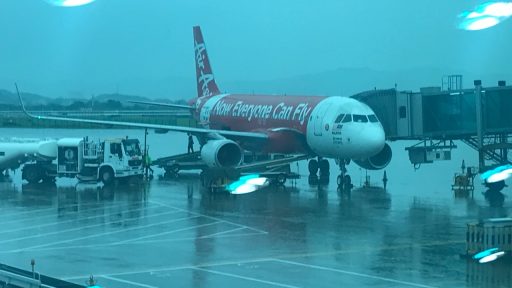
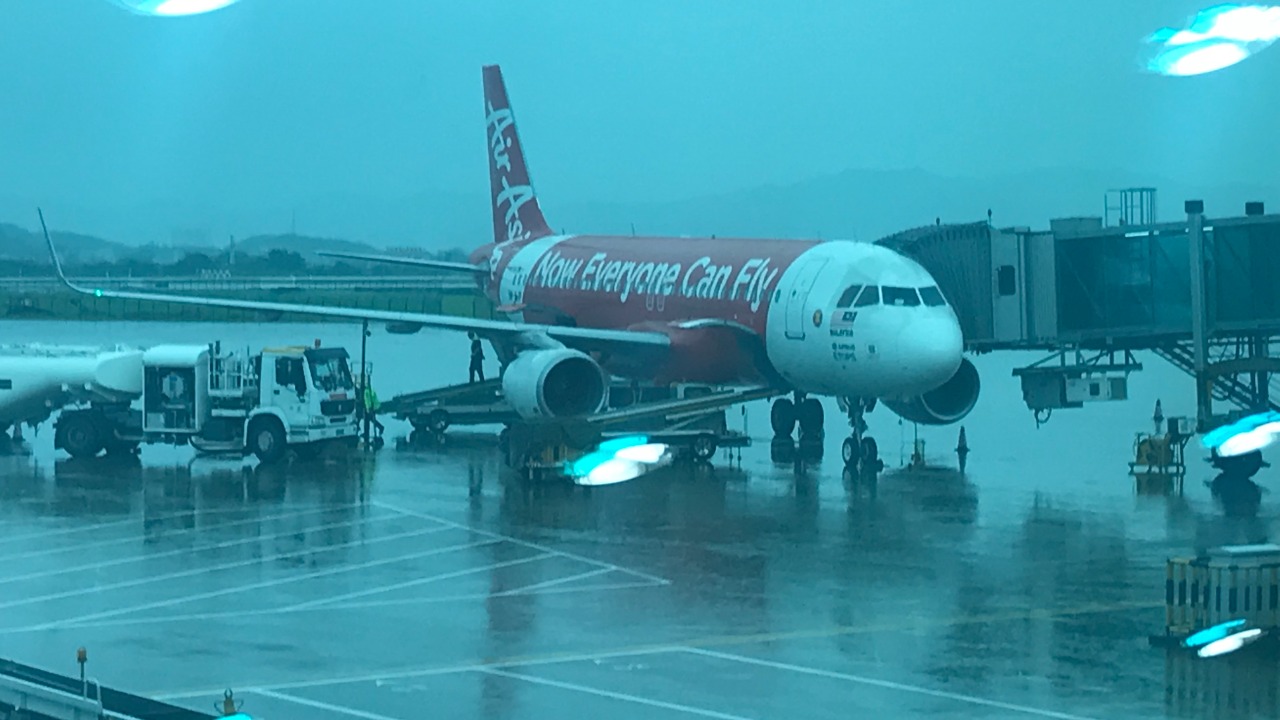

AirAsia has crossed a strategic threshold, bringing its short haul and long haul operations under a single corporate roof after years of incremental restructuring. The consolidation creates a unified airline group that is designed to compete as one brand across Asia and beyond, rather than as a patchwork of related carriers.
The move caps a complex series of transactions involving AirAsia X Bhd, Capital A and multiple aviation units, turning what was once a fragmented structure into a single listed airline platform. It also marks a personal milestone for Bhd CEO Tony Fernandes, who has described the disposal of key aviation assets as one of the most emotional decisions of his career.
The deal that finally unifies the AirAsia flying business
The core of the new structure is the transfer of Capital A’s aviation businesses into AirAsia X Bhd, which will now carry the AirAsia name and operate as the group’s main airline vehicle. Earlier this year, Capital A confirmed that it had completed the sale of its aviation business to AirAsia X, a transaction that shifted control of the short haul operations into the long haul affiliate and set the stage for a single airline group under one listed entity in Malaysia, according to Capital. The structure is intended to simplify governance, align strategy and give investors a clearer way to value the airline business separately from Capital A’s non aviation ventures.
On the airline side, AirAsia X has completed the acquisition of AirAsia Berhad and AirAsia Aviation Group Limited from Capital A, a step that formally pulls the short haul units into the same corporate perimeter as the long haul operation. The transaction, detailed in a statement from the AirAsia Group, confirms that AirAsia X Berhad will complete the acquisition and proceed with its rebranding to AirAsia Berhad on 19 January 2026, consolidating the group’s flying businesses into a single airline group, according to the Group. For passengers, the change is meant to be largely invisible at the booking stage, but strategically it turns AirAsia into a single, integrated airline platform.
From complex web to single airline group
For years, AirAsia’s structure reflected its rapid expansion across Asia, with separate entities handling different markets and route types. The consolidation now underway is the culmination of a plan to bring those pieces together so that AirAsia becomes one airline group rather than a loose federation of carriers, a shift that has been framed as the realisation of a strategy first conceived years ago, according to AirAsia. The aim is to streamline decision making, reduce duplication and present a single brand to customers and regulators across the region.
That ambition is echoed in separate reporting that describes how AirAsia is now positioned as one united airline group after the consolidation process ends, with the integration of short haul and long haul operations into a cohesive network. The new structure is designed to support a more efficient allocation of aircraft and capital across routes, and to give the group more flexibility in responding to demand swings, according to additional reporting. It also simplifies the story that AirAsia tells investors, who now see a single airline group rather than multiple overlapping entities.
Rebranding AirAsia X and the path to one ticker
A critical piece of the consolidation is the rebranding of AirAsia X Bhd itself. The long haul carrier has confirmed that it will be renamed AirAsia starting 19 January, a change that aligns the listed entity’s name with the brand that passengers already know across the region, according to an update that AirAsia X Bhd will be renamed. The rebranding is timed to coincide with the completion of the wider consolidation, so that the market sees a single AirAsia stock representing the unified airline group.
That shift has been flagged to investors as well, with Bhd CEO Tony Fernandes stating that AirAsia X will be renamed AirAsia and listed as a newly quoted stock on Jan 19, a move that effectively turns the long haul affiliate into the flagship airline listing for the group, according to comments that AirAsia X was renamed. The rebranding is not just cosmetic, it signals that the listed entity now houses both the long haul and short haul operations that previously sat in different parts of the corporate structure.
Big numbers behind the consolidation
The unification of AirAsia’s airline businesses is backed by sizeable financial transactions that reshape the group’s balance sheet. One of the headline figures is the 8 billion acquisition of short haul aviation businesses from parent company Capital A, valued at approximately $1.7 billion. That deal transfers the short haul units into the airline group and provides Capital A with funds and shares that can be used to focus on its non aviation portfolio.
Another key element is the disposal of The AAAGL to AirAsia X Bhd (AAX), which was finalised on Jan 16 with consideration settled via the issuance of 2.31 billion shares in AAX. That share based consideration deepens the link between Capital A and the airline group while still allowing the airline to stand on its own as a listed company. In parallel, AirAsia X also allotted and issued 606,060,606 placement shares to investors, strengthening its capital base as it absorbs the enlarged airline business.
Private placement, restructuring and investor signals
To support the enlarged group, AirAsia X has turned to the capital markets with a private placement that is closely tied to the consolidation. The company has completed a placement that forms part of its broader aviation restructuring and is scheduled to be fully wrapped up on January 19, 2026, with the transaction explicitly linked to the integration of the airline businesses and a focus on efficiency and affordability for passengers worldwide, according to details of the transaction. The placement is intended to give the unified airline group more financial headroom as it ramps up capacity and invests in network growth.
The Group is also exploring additional strategic options as part of the consolidation, including ways to optimise its capital structure and strengthen its position in key markets. In commentary around the placement, The Group has linked the fundraising to its ambition to integrate long haul and short haul operations into a single cohesive entity and to pursue further opportunities under the Group Consolidation Malaysia strategy, according to remarks attributed to The Group. That messaging is aimed squarely at investors who are being asked to back a larger, more integrated airline with ambitions to be a leading low cost network carrier.