
Some of the most mysterious “planets” in the cosmos may not be planets at all, but relics from the Big Bang hiding in plain sight. A growing body of theoretical work argues that tiny black holes formed in the early Universe could masquerade as worlds, warping nearby stars in ways that look planetary while remaining effectively invisible. If that idea holds up, the search for exoplanets might double as a hunt for the oldest objects in existence.
Instead of being the corpses of massive stars, these candidates belong to a different family of objects entirely, known as primordial black holes. They would have condensed out of the hot plasma of the young cosmos long before the first stars, then spent billions of years quietly tugging on gas, dust and even fully formed planets, leaving behind strange signatures that astronomers are only now learning how to recognize.
From hollow worlds to “dark” impostors
The most radical twist is that primordial black holes might be hiding inside seemingly ordinary planetary bodies. In one Dec theoretical study, physicists argue that small black holes born in the early Universe could burrow into dense material, swallow their way inward and leave behind hollow shells of rock or metal that still look like intact worlds from afar. According to that work, these compact objects could be embedded not only in distant exoplanets but also in asteroids, old buildings or other dense material right here on Earth, a scenario described in detail in a Dec release. A companion summary of the same work notes that these primordial black holes have been theorized for decades and could be lurking in everyday material right here on Earth, as highlighted under Related Assets and Media Contact Information Find an Expert.
At interstellar distances, the line between planet and black hole blurs even further. When astronomers infer a world around a distant star, they usually rely on the star’s wobble or a tiny dip in its light. A recent Jan analysis points out that these signals do not care what the object is made of. A compact body with the mass of Neptune and an actual Neptune-like planet produce the exact same gravitational tug, so a black hole the size of a grapefruit could mimic a gas giant in the data, as described in a Jan report. A related discussion of a record-breaking “dark object” found inside a warped Einstein ring 10 billion light years away underscores how gravitational lensing can reveal such invisible masses, with the same Jan coverage describing that Record “dark object” and its Einstein ring as an unprecedented case.
Planet Nine, wandering mini holes and the dark matter link
The most famous candidate for a disguised primordial black hole sits, at least hypothetically, in our own backyard. For years, astronomers have debated whether the unexplained clustering of about a dozen distant trans-Neptunian objects, whose orbits bring them to perihelion at nearly the same region near the Sun, points to an unseen Planet Nine. Some theorists have suggested that this hidden body could instead be a compact black hole, and a detailed proposal describes how to distinguish the two possibilities using targeted searches, as outlined in Research on whether Planet Nine is a black hole or a planet. Earlier work framed this as a twist in the Planet Nine hypothesis, with one paper arguing that the putative world could be one of these ancient black holes rather than a conventional planet, a possibility summarized in a Sep discussion of Planet Nine.
Other researchers have pushed the idea even further, suggesting that miniature primordial black holes might be roaming the galaxy and occasionally barging through planetary systems. One Jul overview notes that recent studies suggest these miniature objects could be hurling planets out of orbit across the galaxy, yet, despite their cosmic origins, they would not cause any physical harm or leave detectable damage as they travel through matter, according to a Jul explainer. In that picture, some free-floating “rogue planets” might actually be stars’ former companions that were kicked away by passing black holes, while others could be primordial black holes themselves, masquerading as planets simply because they weigh as much as one.
How new telescopes could unmask ancient impostors
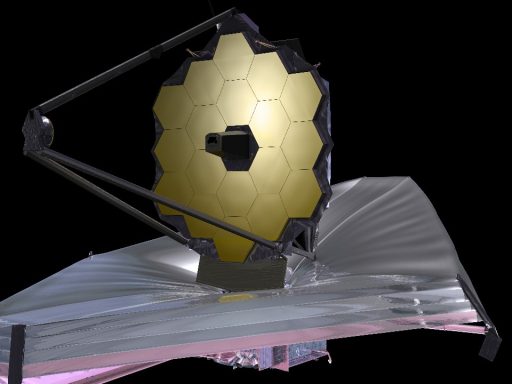
To move from speculation to evidence, astronomers are betting on a new generation of instruments designed to catch gravity in the act. The Nancy Grace Roman Space Telescope, often shortened to Nancy Grace Roman or Rom, will survey the Milky Way for exoplanets using microlensing, a technique that watches for the brief brightening of a background star when a massive object passes in front of it. A detailed modeling study of the mission’s Galactic Exoplanet Survey argues that Roman’s sensitivity will extend to giant exomoons around wide separation planets, dramatically expanding the range of detectable companions and providing a rich dataset of lensing events, as laid out in the Nancy Grace Roman analysis. A separate overview of NASA’s plans emphasizes that Rom will be capable of finding Earth sized black holes through their microlensing signatures, effectively turning a planet hunting mission into a search for compact objects, a point highlighted in a NASA discussion of the telescope’s goals.