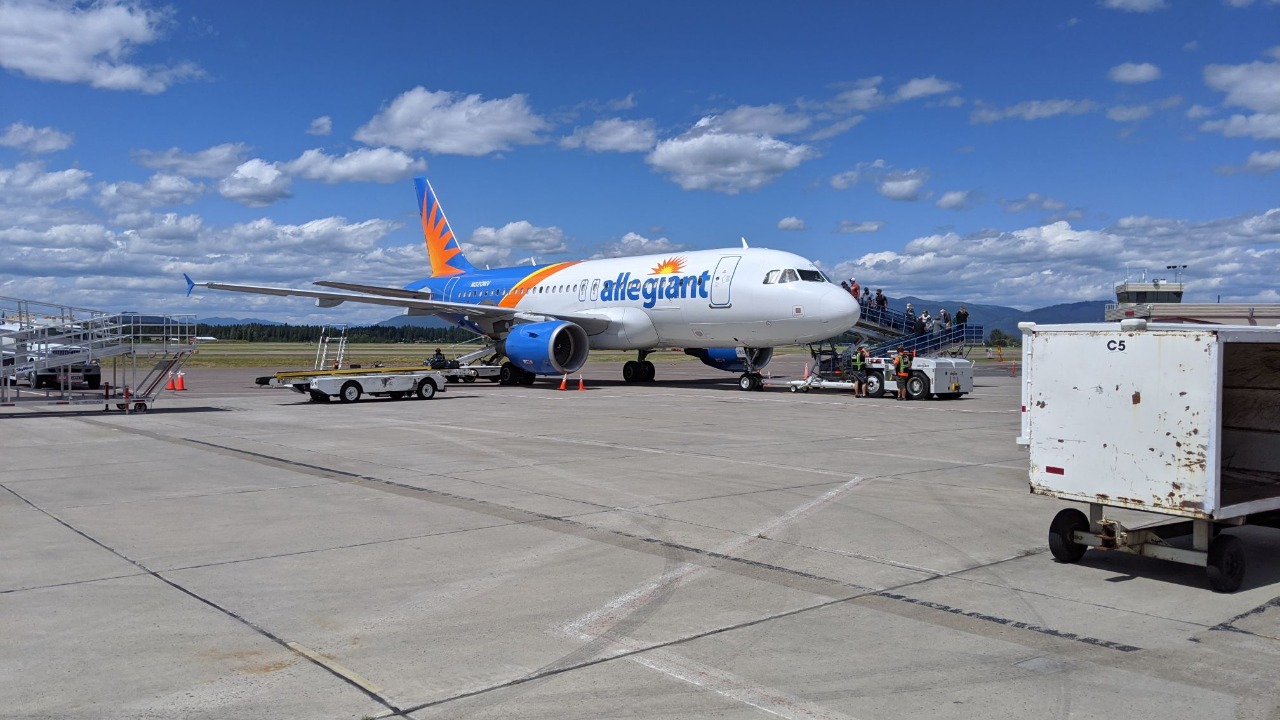

Allegiant Air has agreed to acquire Minnesota-based Sun Country Airlines in a $1.5 billion cash and stock deal, marking one of the most significant consolidation moves in the U.S. low-cost carrier market in recent years. Announced on January 11, 2026, the transaction will combine two leisure-focused airlines that specialize in domestic vacation travel, from beach destinations to major tourist hubs. The merged company is expected to leverage a broader route network and shared operations to compete more aggressively for price-sensitive travelers.
Announcement and Deal Structure
The acquisition was unveiled in a joint statement confirming that Allegiant and Sun into a single leisure-focused carrier. Under the terms of the agreement, Allegiant will pay a total of $1.5 billion using a mix of cash and newly issued shares, a structure that allows the buyer to preserve balance sheet flexibility while still delivering a substantial payout to Sun Country’s current owners. The companies framed the deal as a way to create a more competitive option for vacation travelers who have increasingly faced higher fares and fewer choices on routes dominated by the largest U.S. airlines.
According to transaction details, the $1.5 billion price tag is explicitly structured as $1.5 billion in, rather than a heavily debt-financed takeover. Sun Country, which is headquartered in Minnesota, will be fully acquired by Allegiant Air once the deal clears regulatory review and other customary closing conditions. For Allegiant, which has historically grown by adding routes and aircraft rather than buying competitors, the purchase represents its first major acquisition of a rival budget airline, signaling a strategic shift toward scale as a tool to defend its position in the crowded low-cost segment.
Company Backgrounds
Allegiant Air, based in Las Vegas, operates as a low-cost carrier that focuses on connecting smaller and mid-sized cities to popular vacation destinations across the United States. The airline has built its model around point-to-point routes, limited frequencies, and unbundled fares, allowing customers to pay separately for extras such as seat selection and checked bags. As highlighted in coverage of the deal, Allegiant’s network already spans more than 100 destinations, giving it a broad footprint in leisure markets from Florida and the Gulf Coast to desert and mountain resorts, and the acquisition is intended to deepen that reach rather than change its core strategy.
Sun Country Airlines, founded in Minnesota, has a similar focus on affordable leisure travel but pairs that with a significant charter and cargo business. Reporting on the transaction notes that Sun Country’s operations are anchored at Minneapolis-St. Paul International Airport, where it has become a key player for Upper Midwest travelers heading to warm-weather destinations and major U.S. cities. The carrier also provides charter services for cargo customers and sports teams, a diversification that has helped stabilize revenue through seasonal swings in vacation demand, and that mix of business is expected to give the combined airline more resilience across economic cycles.
Strategic Rationale and Benefits
In their joint announcement, the companies said the merger will create a leading, more competitive by combining complementary route maps and fleets. Allegiant’s strength in serving secondary airports in the West and South is expected to mesh with Sun Country’s concentration in the Upper Midwest, giving the merged carrier a stronger national footprint without heavy overlap in core markets. Executives argue that a larger combined fleet will allow them to better match capacity to seasonal peaks, such as winter flights from Minneapolis to Florida or Nevada, which could improve aircraft utilization and lower per-seat costs.
Integrating Sun Country’s Minnesota into Allegiant’s broader network is also central to the strategic logic of the deal. By coordinating schedules, maintenance, and crew bases, the companies expect to capture efficiencies that would be difficult to achieve independently, particularly on routes where both already compete with larger carriers. Industry observers have described the announcement as a “wow” moment for consolidation in the low-cost space, with one analysis arguing that the move could significantly strengthen Allegiant’s position on leisure routes that legacy airlines have increasingly targeted with basic economy fares. For travelers, the stakes include the potential for more nonstop options from smaller cities, but also questions about how pricing and service levels might evolve once the two brands are under one corporate roof.
Financial and Regulatory Outlook
The $1.5 billion valuation reflects a bet on Sun Country’s growth prospects in both passenger and charter markets, as well as the cost savings that Allegiant expects to unlock. According to deal coverage, the acquisition will be funded through a combination of cash on hand and new equity, with Allegiant choosing a cash and stock structure to limit the impact on its debt levels. That approach is intended to reassure investors that the company can absorb Sun Country without compromising its ability to invest in fleet renewal, technology, and customer-facing improvements, all of which are critical in a sector where cost discipline and operational reliability directly affect competitiveness.
Regulators are expected to scrutinize the deal, particularly on routes where Allegiant and Sun Country currently overlap, but analysts note that the carriers are focused almost entirely on domestic leisure traffic rather than international or business-heavy markets. That all-domestic profile could help expedite antitrust review compared with cross-border mergers that raise complex jurisdictional issues, although authorities will still examine whether the combination could reduce competition in specific city pairs. Company statements indicate that, at least in the near term, there will be no immediate changes to existing customer bookings or loyalty programs, and reporting on the announcement emphasizes that the combined airline is targeting enhanced profitability from synergies rather than quick cuts to service. For passengers, employees, and regional airports that rely on these carriers, the regulatory outcome will shape whether the promised benefits of a larger leisure-focused airline translate into tangible improvements in choice, reliability, and price.
Market Impact and Stakeholder Reactions
Coverage of the agreement has underscored how the deal fits into a broader pattern of consolidation among U.S. airlines that cater to price-conscious travelers. Analysts quoted in reports on the transaction describe the Allegiant-Sun Country tie-up as a logical response to intensifying competition from ultra-low-cost carriers and from major airlines that have pushed deeper into vacation markets with stripped-down fare products. As one detailed account of the acquisition notes, Allegiant’s purchase is being watched closely by investors who see potential for higher margins if the combined carrier can fill more seats year-round while keeping unit costs in check.
Local reaction in Minnesota has focused on what the sale means for jobs, routes, and the state’s role in the airline’s future strategy. Reporting that examined how Sun Country is highlighted concerns about whether Minneapolis-St. Paul will remain a central hub for the merged company or gradually lose flights to other bases in Allegiant’s network. At the same time, some business and tourism leaders have pointed to the possibility that a larger, better-capitalized parent could support new nonstop routes that attract visitors and make it easier for residents to reach key leisure destinations. For employees, the integration process will determine how overlapping roles are handled and whether Allegiant’s growth plans translate into expanded opportunities or a more cautious approach to staffing as the two airlines combine operations.