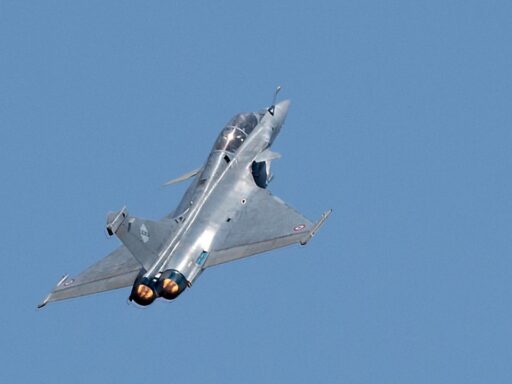
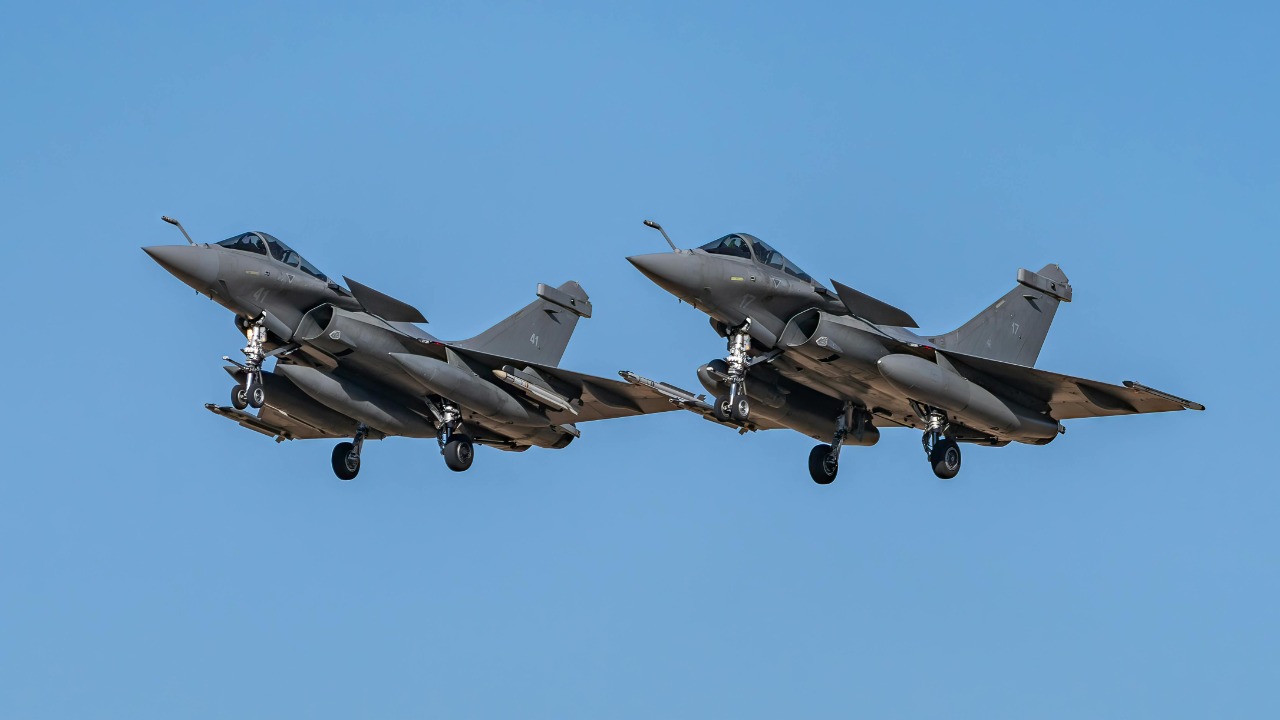

Dassault Aviation is backing Harmattan AI to develop controlled autonomy capabilities for the Rafale F5 upgrade and future UCAS platforms, aiming to blend advanced machine decision-making with strict human oversight. The partnership is intended to enhance fighter operations by delegating more routine and time‑critical tasks to onboard algorithms while keeping pilots and commanders firmly in charge of lethal decisions. It also signals a broader shift in European airpower toward integrating autonomy as a core design feature rather than an add‑on to legacy systems.
Dassault’s Strategic Backing of Harmattan AI
Dassault Aviation has positioned Harmattan AI as a central partner for integrating artificial intelligence into its next generation of combat aircraft, including the Rafale F5 and unmanned combat air systems. By aligning a specialist AI company directly with its design and upgrade roadmap, Dassault is effectively internalizing capabilities that many competitors still source through looser research collaborations. The decision to back Harmattan AI reflects a recognition that autonomy is no longer a peripheral technology but a strategic differentiator that will shape export competitiveness and operational relevance for decades.
Direct industrial support from Dassault is expected to compress development timelines compared with standalone AI efforts that must reverse‑engineer aircraft interfaces or rely on limited test access. With the airframer controlling both the platform architecture and the AI integration path, software can be tailored to avionics, sensors, and mission systems from the outset, reducing costly rework and certification delays. For air forces that depend on Rafale fleets, this tighter coupling between aircraft and AI supplier raises the prospect of faster capability drops and more responsive updates to emerging threats, while still operating within the safety and airworthiness regimes that govern military aviation.
Enhancing the Rafale F5 with AI Autonomy
The Rafale F5 upgrade is being framed as the first version of the fighter to embed Harmattan AI at the heart of its mission system, enabling semi‑autonomous flight and mission execution rather than isolated “smart” functions. In practical terms, this means the aircraft will be able to handle more of the routine piloting workload, such as flight path optimization, sensor management, and data fusion, leaving the pilot to focus on tactical decisions. By shifting to controlled autonomy, the F5 standard is expected to support features like real‑time threat assessment, where onboard algorithms continuously rank surface‑to‑air and air‑to‑air dangers and propose evasive maneuvers or countermeasure sequences that the pilot can approve or modify.
Compared with earlier Rafale versions, which already integrated advanced sensors and networked weapons, the F5 approach moves from decision support to shared decision‑making between human and machine. Previous standards relied heavily on pilot input to prioritize targets and manage complex strike packages, even when automated aids were available. With Harmattan AI embedded, the aircraft can pre‑sort targets, suggest engagement orders, and coordinate timing with supporting assets, which has direct implications for sortie efficiency, survivability, and pilot fatigue. For operators, this evolution promises higher mission success rates in dense threat environments without requiring a proportional increase in cockpit workload or training hours.
Extending Autonomy to UCAS Platforms
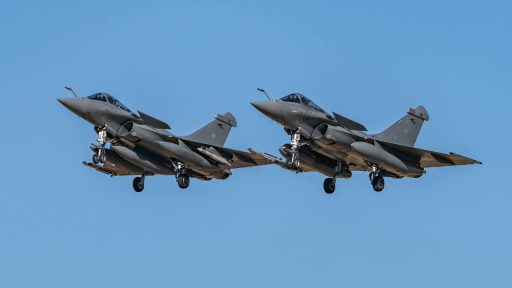
Dassault’s backing of Harmattan AI is not limited to manned fighters, it also extends to UCAS platforms that will conduct unmanned combat missions alongside or in support of Rafale F5 formations. In this context, controlled autonomy is central to enabling UCAS to navigate, sense, and react within predefined rules while remaining under human command for target selection and weapons release. The same AI core that assists Rafale pilots can be adapted to manage route planning, sensor cueing, and threat avoidance for unmanned aircraft, creating a common software backbone across manned and unmanned fleets. This shared architecture is particularly important for air forces that want to field “loyal wingman” concepts without building entirely separate command and control chains.
Integration of Harmattan AI into UCAS also opens the door to more sophisticated swarm coordination, where multiple unmanned aircraft can distribute tasks such as electronic attack, decoy operations, and reconnaissance. Instead of a single operator micromanaging each platform, the AI can allocate roles within the swarm according to mission priorities and evolving threats, while still respecting human‑defined constraints on engagement. For stakeholders, this reduces human risk by pushing the most dangerous tasks onto unmanned systems, and it enhances interoperability with manned assets by ensuring that UCAS behavior is predictable, explainable, and aligned with the tactics used by Rafale F5 crews.
Implications for Future Combat Systems
The partnership between Dassault Aviation and Harmattan AI is set to influence how Rafale F5 and UCAS are deployed, particularly in contested airspaces where reaction times are short and data volumes are overwhelming. By embedding controlled autonomy from the design phase, Dassault can offer air forces a path to gradually increase the level of delegated authority to AI as doctrine, regulation, and trust evolve. Early deployments may focus on non‑lethal functions such as navigation, sensor management, and electronic warfare support, while later increments could expand to more complex mission planning and dynamic targeting under strict human rules of engagement. This incremental approach allows operators to validate performance and safety in real operations without leaping directly to fully autonomous combat behavior.
For defense contractors and technology suppliers, Dassault’s move underscores a competitive shift toward vertically integrated AI ecosystems, where prime manufacturers cultivate dedicated partners rather than relying solely on generic software vendors. That dynamic could reshape supply chains, favoring firms that can demonstrate both deep aerospace integration and robust governance frameworks for military AI. End‑users, particularly air forces that operate Rafale or are considering UCAS acquisitions, face time‑sensitive decisions about how quickly to adopt these capabilities in light of evolving threat environments that feature advanced air defenses, electronic warfare, and adversary drones. I see the controlled autonomy model championed through Harmattan AI as a way to reconcile the operational need for faster, more automated decision cycles with enduring political and ethical demands for human accountability in the use of force.