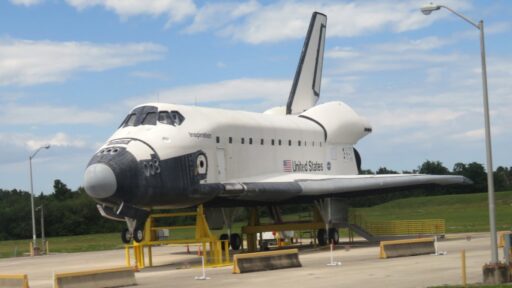
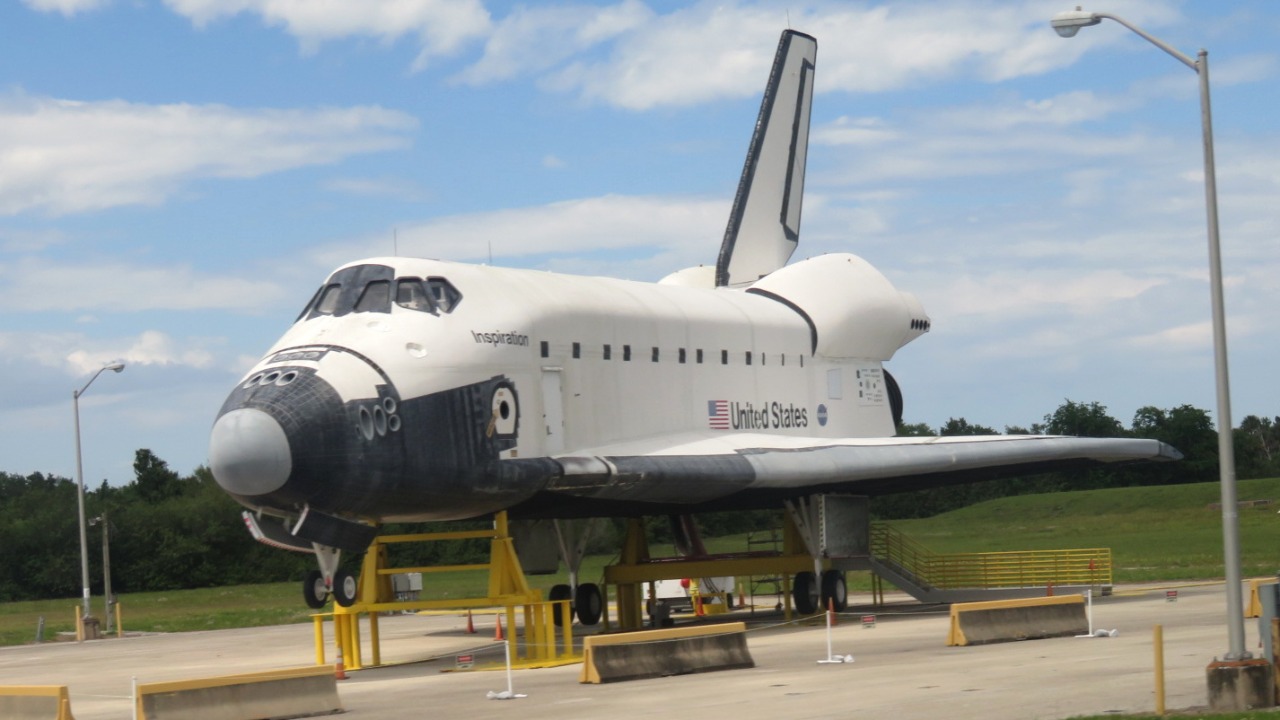

NASA’s long promised space plane is not quite on the launch pad yet, but after a decade of design churn, contract reshuffles, and schedule slips, Sierra Space’s Dream Chaser finally has a concrete path to orbit. The winged vehicle that has teased a return to runway landings since the Space Shuttle retired in 2011 is now working toward a late 2026 debut, with key tests complete and a dedicated launch slot reserved. Rather than a sudden “all clear,” the story is one of incremental clearances that, taken together, mark the most credible route to flight Dream Chaser has ever had.
That nuance matters, because the program has lived in the gap between aspiration and authorization for years. What has changed is that NASA, its launch partners, and Sierra Space have now locked in a specific demo mission profile, a target window, and the final rounds of testing that must be ticked off before the spaceplane can fly.
The decade-long wait for wings in orbit
The idea of a small lifting-body shuttle to replace some of the Space Shuttle’s capabilities has been circulating since before the Shuttle retired, but it was only after 2011 that the Dream Chaser concept began to crystallize as a practical cargo vehicle. In that gap, NASA relied on capsules and commercial freighters while the promise of a reusable spaceplane stayed on the drawing board, even as enthusiasts pointed to “wings in space” as the missing piece in the post Shuttle era described in Dec coverage. The Dream Chaser design, developed by Space Sierra Space, was pitched as that bridge, a way to bring back runway landings without rebuilding a full scale orbiter.
Over the same period, NASA’s broader human spaceflight ambitions shifted outward, with Artemis II framed as the agency’s return to crewed missions beyond Earth orbit and a symbol of how the agency is tightening requirements on commercial partners. The agency is now requiring a higher bar for reliability and mission assurance, a standard that applies as much to a cargo spaceplane as to a lunar capsule, as highlighted in Dec analysis of Artemis II and NASA. In that context, Dream Chaser’s slow march toward flight looks less like foot dragging and more like the cost of meeting a tougher certification regime that grew out of hard lessons from programs like the James Webb Space Telescope.
From shifting schedules to a locked-in demo
The most visible sign that Dream Chaser is finally moving from concept to commitment is its appearance on formal launch manifests, even if the dates have slipped. NASA’s own description of its “mini shuttle” underscored how the vehicle’s first mission had to be reshuffled, with Nov reporting on NASA explaining that Dream Chaser would not be lining up for its original slot. That change reflected both the complexity of integrating a new spacecraft and the realities of launch vehicle availability, rather than a single technical showstopper.
Subsequent updates made clear that Sierra Space’s Dream Chaser would debut as a free flying cargo mission instead of immediately docking with the International Space Station, a shift detailed when Sierra Space’s Dream Chaser was described as no longer lining up for its earlier station focused plan. That change dovetailed with a broader reassessment of how many new vehicles the ISS can safely host as it approaches its planned deorbit, and it allowed Sierra Space to focus on proving what the spaceplane can really do as an independent platform before taking on the added risk of docking operations.
The current plan is wrapped into a mission known as SSC Demo-1, also called Dream Chaser Demo-1, which is now defined as the first flight of the Sierra Space robotic spacecraft. According to the mission profile, SSC Demo was once expected to fly earlier but is instead targeting late 2026, a shift that aligns with the broader pattern of cautious scheduling around new vehicles.
Tests, delays and a realistic 2026 window
Behind the schedule changes is a long list of technical milestones that had to be cleared before any launch director could sign off. Company updates describe how Dream Chaser successfully completed critical pre flight milestones and is now moving into its final round of acoustic testing in Dece at Vandenberg Space Force Base, a step laid out in Nov statements on pre flight milestones. Those tests, which shake and blast the vehicle with sound to simulate launch conditions, are among the last major hurdles before a spacecraft can be declared ready to integrate with its rocket.
Independent observers have tracked similar progress, noting that The Dream Chaser spaceplane from Sierra Space has taken a major leap toward its 2026 debut by completing electromagnetic interference and compatibility checks, as described when Dream Chaser Takes a Major Leap Toward its Debut. Those EMI and EMC tests are crucial for ensuring that the vehicle’s own systems do not interfere with each other or with the launch vehicle and ground infrastructure, a non negotiable requirement in NASA’s current safety culture.
Even with that progress, Sierra Space has been candid about the reasons for delay. Company leaders explained that significant manufacturing milestones had been achieved but that the debut mission was being pushed back in part due to launch vehicle availability, a point spelled out when Sep comments detailed how the mission was delayed again and no longer docking to station. That nuance matters for readers tempted to see every slip as a technical failure, when in reality the bottleneck often lies in crowded launch pads and rocket production lines.
Manifested at last, but not yet “cleared”
The most concrete sign that Dream Chaser is finally treated as a real mission rather than a paper study is its appearance on public launch schedules. A current manifest lists a NET Q4 2026 Vulcan Centaur Dream Chaser 1 Launch from pad 41 at Cape Canaveral, with the note that it was delayed from 2025, as shown in the Jan Updated NET entry. That “NET” qualifier, meaning “no earlier than,” is the clearest reminder that while the mission is on the books, it is not yet formally cleared to fly on a specific day.
Separate tracking of upcoming missions reinforces that picture, describing how in the fourth quarter of 2026 ULA will conduct a Sierra Space Dream Chaser Mission to launch the uncrewed spaceplane, as summarized in a Dec listing of ULA plans. That language, focused on an uncrewed demo, aligns with NASA’s cautious approach to new vehicles and underscores that the first outing is about proving basic performance rather than rushing into crewed operations.
How Dream Chaser fits into NASA’s new era
Dream Chaser’s timing is not accidental. The same period that will see Artemis carry astronauts around the Moon is also expected to feature the spaceplane’s first orbital flight, with Dec previews of Artemis noting that Sierra Space’s Dream Chaser spaceplane is expected to debut as a cargo vehicle before a version capable of carrying astronauts follows. That staggered approach mirrors how NASA handled commercial crew capsules, proving uncrewed flights first before putting people on board.
The agency’s experience with the Space Shuttle and its retirement still looms large in these decisions. When NASA marked its first Astronaut Launch from the United States since the Space Shuttle was retired in 2011, it did so with a capsule, not a winged orbiter, as recalled in a Demo 2 mission summary. Dream Chaser’s gradual path, starting with cargo and free flight, reflects a desire not to repeat the all in bet that the Shuttle represented.
Free flyer first, stations and priorities later
Policy watchers have noted that the decision to fly Dream Chaser as a free flyer rather than an immediate ISS visitor is also shaped by the station’s remaining lifetime. Analyses of the program explain that The ISS is expected to be deorbited in 2030 and that crews will stop flying there before that, with the Dream Chaser demo framed as a free flyer only mission that NASA may or may not follow with additional flights, as laid out when Sep policy analysis described how the mission slips to the end of 2026 for a free flyer demo only. Instead of locking in a long ISS resupply contract, NASA is keeping its options open as commercial stations and other platforms emerge.
Within Sierra Space, executives have framed Dream Chaser as a tool for some of the nation’s most pressing space priorities, language that appears in company statements noting that with critical milestones achieved, Dream Chaser is positioned to support those goals, as highlighted in a Dream Chaser priorities statement. That framing suggests a future where the spaceplane is not just a nostalgia play for Shuttle era fans but a workhorse for logistics, in orbit experiments, and eventually crew transport.
For now, though, the honest status is that Dream Chaser is manifested, heavily tested, and aligned with NASA’s evolving strategy, but not yet fully cleared for launch. As Colorado governor Jared Polis put it when discussing the program’s progress, there was no single issue that delayed Dream Chaser’s launch, only the accumulation of work that comes with any complex vehicle, a sentiment captured when Nov comments from Polis emphasized the team’s commitment to the vehicle. In that sense, after 10 years of fits and starts, the spaceplane is finally on a realistic glide path to orbit, even if the tower has not yet given it a firm go for launch.