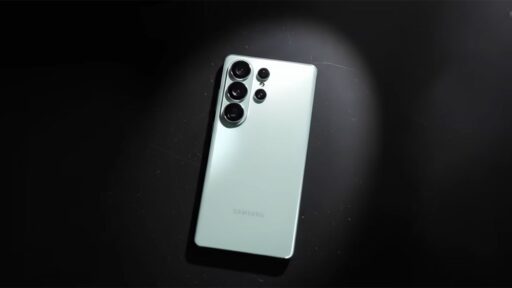


Samsung’s Galaxy S26 Ultra is set to debut with a headline new display feature that has now been confirmed through references in the upcoming One UI 8.5 software. That verification, emerging from code leaks in One UI 8.5, signals a major upgrade for the device’s screen technology ahead of its expected launch. The phone is also positioned as a 2nm powerhouse with support for 60W charging, marking a clear shift in Samsung’s performance and power delivery standards.
One UI 8.5 Leaks Confirm Display Innovation
Developer analysis of One UI 8.5 has surfaced code strings that explicitly tie a new display capability to the Samsung Galaxy S26 Ultra, giving the first software-side validation of the device’s headline screen feature. Internal identifiers in the firmware reference the S26 Ultra by name alongside flags for an upgraded display mode, which, according to reporting from Samsung Galaxy S26 Ultra’s headline new display feature confirmed by One UI 8.5, are not present for earlier Galaxy models. For Samsung’s hardware and software teams, that linkage indicates that the new panel is already far enough along to be integrated into system-level testing, rather than existing only as a hardware prototype.
The presence of these display-specific hooks in One UI 8.5 also marks a break from previous development cycles, where similar firmware builds for the S25 series did not expose any comparable screen-related flags. In practical terms, that suggests Samsung is aligning its software roadmap more tightly with the S26 Ultra’s hardware schedule, allowing interface engineers to tune animations, brightness controls, and power management around the new panel months before retail units ship. For users and app developers, that early integration raises expectations that the S26 Ultra’s display feature will be fully supported at launch, rather than arriving later through patches or incremental updates.
Unpacking the Headline Display Feature
While the One UI 8.5 code does not spell out marketing names, the references highlighted in the reporting point to a display upgrade that goes beyond the resolution and refresh rate options seen on the Galaxy S25 Ultra. The firmware strings group the S26 Ultra’s panel under a distinct capability set, suggesting enhancements in areas such as adaptive refresh behavior, peak brightness, or panel type that did not have direct equivalents in the S25 lineup. Because these flags sit alongside system-level display drivers, they indicate that Samsung is treating the S26 Ultra’s screen as a new hardware class rather than a minor iteration, which raises the stakes for how third party apps, from games like Genshin Impact to streaming platforms such as Netflix, will be expected to render and scale content.
One UI 8.5’s internal configuration files also show that the interface is being tuned to recognize the S26 Ultra’s display as a distinct target, with layout and animation parameters mapped specifically to its capabilities. That kind of tailoring typically covers how the system handles high frame rate transitions, HDR tone mapping, and always-on display behavior, all of which can change when a panel introduces new driving modes or subpixel structures. For users, the implication is that the S26 Ultra’s headline display feature is not just a spec sheet upgrade but a change that will be visible in day to day interactions, from smoother scrolling in apps like Chrome and X to more stable brightness and color reproduction when moving between indoor and outdoor environments.
2nm Processor as Performance Core
Alongside the display, the Samsung Galaxy S26 Ultra is being framed as a 2nm powerhouse, with reporting on Samsung Galaxy S26 Ultra: The 2nm Powerhouse and 60W Charging Era describing a shift from the 3nm chips used in previous Galaxy flagships to a new 2nm chipset technology. That transition, which aligns with broader foundry roadmaps, is expected to deliver higher performance per watt, allowing the S26 Ultra to push CPU and GPU clocks while keeping thermals and battery drain in check. For demanding workloads such as 4K video editing in apps like CapCut or multi-hour gaming sessions in titles like Call of Duty Mobile, the move to 2nm could translate into more sustained performance without aggressive throttling.
The 2nm adoption also has implications for Samsung’s manufacturing partners and supply chain planning, since it ties the S26 Ultra to the most advanced process nodes available from leading foundries. Earlier rumors treated 2nm as a speculative target for the S26 generation, but the latest reporting now presents it as a central differentiator for the S26 Ultra, positioning the device as a showcase for next generation silicon. That positioning matters for investors and component suppliers, because it signals that Samsung intends to compete directly with other 2nm-bound platforms in 2026, using process leadership to justify premium pricing and to support features like the new display mode without sacrificing battery life.
60W Charging Era Dawns
The same reporting that outlines the 2nm shift also confirms that the Samsung Galaxy S26 Ultra will support 60W wired charging, a notable jump over the slower wired speeds that have characterized recent Galaxy flagships such as the S25 series. By moving to 60W, Samsung is effectively ending the era in which its top tier phones lagged behind rivals from brands like OnePlus and Xiaomi that already advertise 67W or higher charging on models such as the OnePlus 12 and Xiaomi 14. For users, the practical benefit is shorter time spent tethered to a wall charger, which can reshape daily routines for people who rely on their phone for navigation, messaging, and productivity apps like Microsoft Teams and Google Meet.
From an ecosystem perspective, 60W support also creates new opportunities for accessory makers that design chargers, power banks, and in car adapters tuned to Samsung’s specifications. As the reporting notes, the 60W spec is part of a broader package of upgrades that prepares the S26 Ultra for a 2026 market in which charging parity is becoming essential, rather than a nice to have. That shift signals to carriers and retail partners that Samsung is willing to match or exceed the baseline set by Chinese competitors on core hardware metrics, reducing one of the key technical arguments that power users have used to justify switching away from Galaxy devices in recent years.