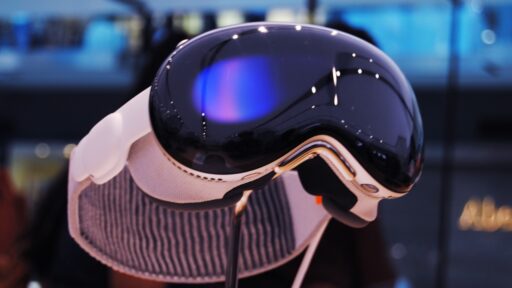
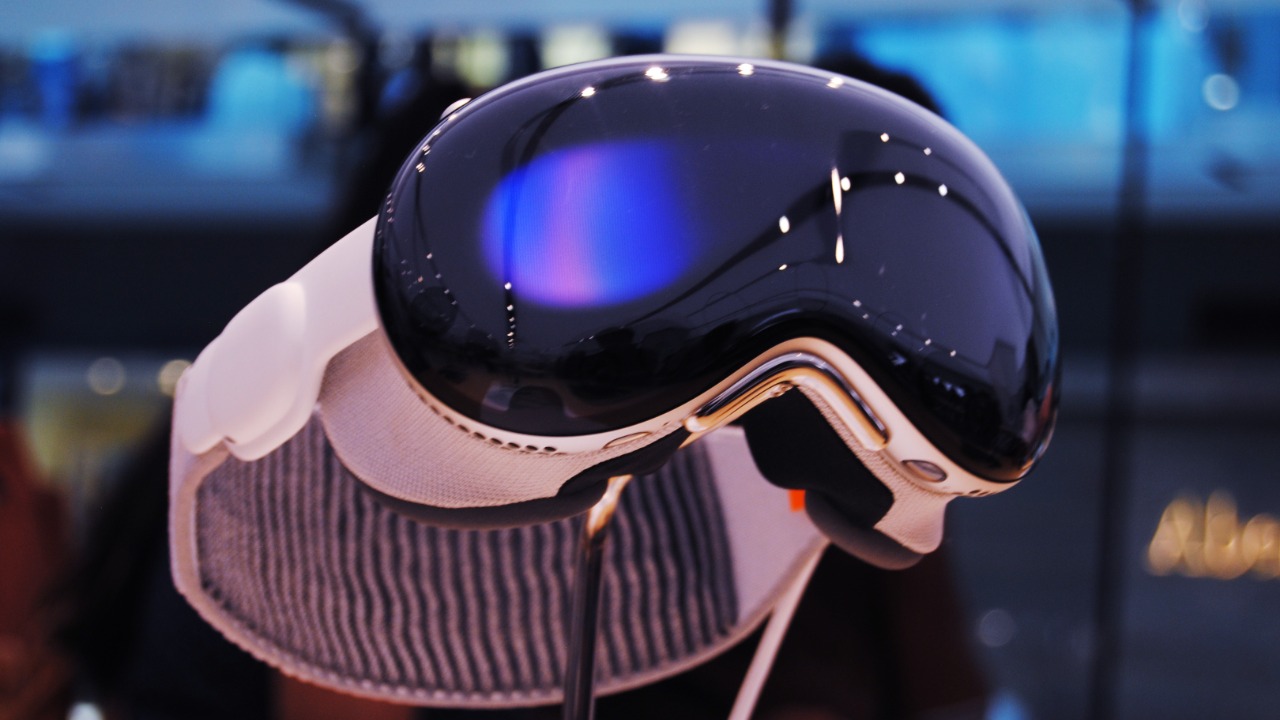

Apple’s Vision Pro headset has seen sales plummet despite the release of an upgraded model built around the M5 chip, a configuration that many inside the industry expected to reignite demand for the company’s spatial computing ambitions. Instead, weak consumer interest has reportedly pushed Apple to slash production of the device and sharply scale back its promotional push. The company has also cut marketing efforts for Vision Pro by more than 95 percent, signaling a major retreat from the aggressive launch strategy that once framed the headset as the next big platform.
Launch of the Original Vision Pro
When Apple first introduced the Vision Pro mixed-reality headset, the company positioned it as a premium spatial computing device aimed at early adopters, developers, and professionals willing to pay a high price for cutting-edge hardware. The original model carried a price tag that placed it firmly at the top of the consumer headset market, and Apple framed the device as a new way to run familiar apps, watch immersive video, and collaborate in virtual workspaces. Early demand reportedly justified an initial ramp-up in production, as preorders and launch-day interest suggested that the company could carve out a lucrative niche in high-end AR and VR.
That early momentum did not translate into sustained mainstream traction, and reports now describe how unmet sales targets forced Apple to reassess its expectations for the category. According to coverage of Apple Vision Pro sales plummeting despite the M5 chip upgrade, the headset’s premium pricing and relatively narrow set of compelling everyday use cases limited its appeal beyond enthusiasts and developers. I see that dynamic as central to the current situation, because it meant Apple entered the M5 refresh cycle already fighting skepticism about whether spatial computing could justify laptop-level prices for a single-purpose device.
Rollout of the M5 Chip Upgrade
In response to that lukewarm reception, Apple rolled out an updated Vision Pro model featuring the M5 chip, a move that was framed as a major performance upgrade over the original M-series configuration. The new silicon was presented as a way to deliver smoother multitasking, more responsive hand and eye tracking, and better support for graphically intensive experiences that had pushed the first-generation hardware to its limits. Reporting on Apple’s M5 Vision Pro update reportedly failing to revive sales notes that the company explicitly pitched the M5-based headset as a response to user feedback about processing power and thermal headroom, signaling that Apple saw technical refinements as a key lever for unlocking broader demand.
The timing of the M5 upgrade underscored how quickly Apple felt compelled to iterate on its initial design, with the refreshed model arriving while the original Vision Pro was still struggling to meet internal sales projections. By positioning the M5 version as a significant step up rather than a minor spec bump, Apple appeared to be betting that performance alone could overcome concerns about price and practicality. I interpret that strategy as a classic Apple playbook move, where the company leans on its chip design advantage to differentiate a product line, but in this case the market’s muted response suggests that raw power was not the primary barrier to adoption.
Sales Decline Following M5 Update
Despite the technical improvements, reports indicate that Vision Pro sales continued to fall after the M5 model reached the market, with unit volumes dropping well below Apple’s internal forecasts. Coverage of Apple slashing Vision Pro production as sales fall short describes how the company’s projections for the M5-based headset were not met, even though the upgrade was supposed to address performance complaints from early adopters. The same reporting aligns with the broader narrative that the M5 Vision Pro did not meaningfully expand the device’s audience beyond the initial wave of enthusiasts, leaving Apple with inventory and capacity that outstripped real-world demand.
Additional accounts, including those that focus on how the M5 Vision Pro update reportedly failed to revive sales, point to persistent consumer hesitation tied to the headset’s high cost and limited must-have applications. Even with faster processing and improved responsiveness, the device still asked buyers to invest in a new computing paradigm without a clear, everyday killer feature on the level of the iPhone’s mobile internet or the Apple Watch’s health tracking. From my perspective, the post-upgrade slump marks a pivotal shift in Apple’s AR and VR strategy, because it shows that incremental hardware gains are not enough to overcome structural questions about value, comfort, and long-term software support.
Production Cuts in Response to Weak Demand
As it became clear that the M5 refresh had not reversed the sales slide, Apple reportedly moved to cut Vision Pro production, scaling back manufacturing plans that had been built around more optimistic forecasts. Reporting that Apple slashes Vision Pro production as sales fall short describes a significant reduction in output as the company sought to align supply with weaker-than-expected demand. That retrenchment is echoed in analysis that details how Apple’s internal targets for the headset were revised downward, a shift that signals a more cautious stance on how quickly spatial computing can grow into a mass-market business.
Further coverage notes that Apple Vision Pro production was reportedly axed despite the newer M5 model, with some production lines said to be idled even as the upgraded headset remained on sale. Another report on how Apple cuts Vision Pro production and marketing after weak consumer demand highlights the impact on supply chain partners that had invested in tooling and capacity for Vision Pro components, only to see orders scaled back. I view these moves as a clear signal that Apple is reevaluating the near-term viability of the device, prioritizing cost control and inventory discipline over pushing units into a market that has not yet embraced the product at its current price and feature set.
Drastic Reduction in Marketing Spend
Alongside the production cuts, Apple has reportedly slashed marketing for Vision Pro, cutting budgets by more than 95 percent compared with the initial launch phase. Coverage that details how Vision Pro marketing was dropped by more than 95 percent describes a sharp pullback from the high-profile campaigns that once showcased the headset in cinematic ads and prominent retail displays. Another account of how Apple cuts Vision Pro production and marketing after weak consumer demand reinforces that the company is now spending only a fraction of what it did at launch, a shift that effectively removes Vision Pro from the center of Apple’s public narrative.
This drastic reduction in promotional activity has immediate implications for brand visibility and long-term awareness of the M5-upgraded model, since fewer consumers will encounter the device in advertising or in-store demos. Reporting that Apple Vision Pro sales plummeted despite the M5 chip upgrade suggests that the company is no longer trying to push the headset aggressively into the mainstream, instead allowing demand to be driven primarily by word of mouth and niche interest. In my view, that retreat underscores how Apple is recalibrating its ambitions for Vision Pro, treating it less as an immediate mass-market breakthrough and more as a long-term experiment whose future will depend on whether developers and users can eventually articulate a clearer set of indispensable spatial computing experiences.