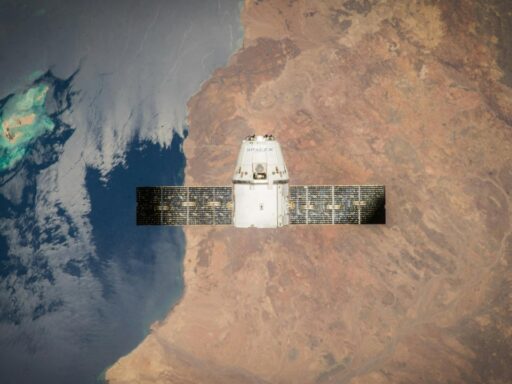


A UK-based company called Space Forge has launched a tiny factory into space capable of reaching temperatures of 1,000C to enable advanced material manufacturing in orbit. The deployment marks the first time a British firm has sent such a high-heat furnace beyond Earth’s atmosphere, using a SpaceX rocket to carry the miniature production unit into low Earth orbit. By shifting from ground-based production to microgravity, the mission aims to create purer semiconductors and alloys that are difficult to achieve under the pull of gravity.
The Company’s Origins and Partnerships
Space Forge was founded in Cardiff, Wales, as a British startup focused on in-orbit manufacturing, with a specific emphasis on using microgravity to improve high-value materials. From its early days, the company positioned itself as a specialist in space-based processing, building a team that combined satellite engineering, materials science, and furnace design. Its roots in Cardiff have been central to its identity, with the firm presenting itself as part of a new generation of UK space companies that want to move beyond communications satellites and into orbital industry.
The company’s relationship with Elon Musk developed as it sought reliable access to orbit and began working with SpaceX on launch opportunities. According to reporting that described how a “British company who worked with Elon Musk sends tiny factory capable of reaching 1,000C into space,” Space Forge used those early consultations to secure rideshare slots on Falcon 9 rockets, turning a technical dialogue into a recurring launch partnership that anchors UK innovation to a proven US launch provider. That access to Falcon 9 has been critical for a small Cardiff-based team, because it allows them to focus on microgravity processing expertise, including projects carried out with European Space Agency support to refine their furnace technology, while relying on an established rocket system to reach orbit.
Development of the Orbital Furnace
The tiny factory now in orbit is built as a compact module weighing under 100 kg, designed to operate autonomously once released from its carrier rocket. At the heart of the satellite is a furnace engineered to reach exactly 1,000C, hot enough to melt selected metals and semiconductors without the turbulence and convection that gravity induces on Earth. Engineers configured the module so that the furnace, power systems, and experimental chambers fit into a small form factor, which keeps launch costs down while still providing a controlled environment for high-temperature processing.
Designing a 1,000C heat source for space required Space Forge to solve several technical challenges, including how to insulate the furnace in a vacuum and how to prevent the intense heat from damaging the rest of the satellite. Reporting on the mission explains that the team integrated advanced insulation and cooling systems so that the furnace can cycle up to full temperature without compromising structural integrity, a key requirement for repeated experimental runs. The company also relies on proprietary software that allows ground stations in the UK to remotely control the furnace, adjusting temperature profiles for materials such as silicon wafers in real time, which is essential for stakeholders in the semiconductor sector who need precise, repeatable conditions.
The Launch and Initial Deployment
The tiny factory reached orbit after liftoff from Florida’s Cape Canaveral on a SpaceX Falcon 9, where it flew as a secondary payload alongside other satellites. Coverage of the mission notes that the British company sent its “tiny factory capable of reaching 1,000C into space” using this rideshare arrangement, which placed the module into low Earth orbit at roughly 500 km altitude. That orbit is high enough to provide a stable environment for months of experiments, yet low enough to enable a controlled de-orbit when the mission ends, a balance that matters for both scientific outcomes and space debris mitigation.
Once the Falcon 9 upper stage released the payloads, the factory separated and began its activation sequence, moving from a dormant launch configuration into operational mode. A report titled “UK company sends factory with 1,000C furnace into space” describes how the satellite entered orbit and, two days after launch, started initial systems checks before attempting any high-temperature runs, a cautious approach that shifts the project from pre-launch simulations to live microgravity operations. Confirmation of a stable orbit and the first heat-up tests is significant for investors, customers, and UK policymakers, because it demonstrates that a British-built manufacturing satellite can survive launch, deploy correctly, and begin functioning as a real industrial platform rather than a one-off demonstration.
Potential Impacts on Manufacturing and Return Plans
Space Forge’s 1,000C furnace is designed to enable defect-free crystal growth for electronics, with the company targeting reductions in impurities of up to 90 percent compared with Earth-based methods during its initial production runs. In microgravity, molten materials are not pulled downward, which reduces convection currents and sedimentation that can introduce flaws into semiconductor crystals and advanced alloys. If the Cardiff team can consistently achieve those purity gains, chipmakers and materials suppliers could see performance improvements in power electronics, sensors, and other high-value components that justify the cost of orbital processing.
The mission is planned to last around six months in orbit, after which samples produced in the furnace will be returned to the UK in a dedicated de-orbit capsule for detailed analysis. According to the reporting that describes how a UK company sends a factory with a 1,000C furnace into space via a SpaceX rocket, this return phase is central to Space Forge’s commercial strategy, because it turns orbital experiments into tangible wafers and ingots that potential customers can test in their own devices. Successful recovery and characterization of these materials would not only validate the physics of microgravity manufacturing but also support future job creation in the UK space sector and open the door to partnerships with semiconductor firms that want to exploit gravity-free production advantages for next-generation products.