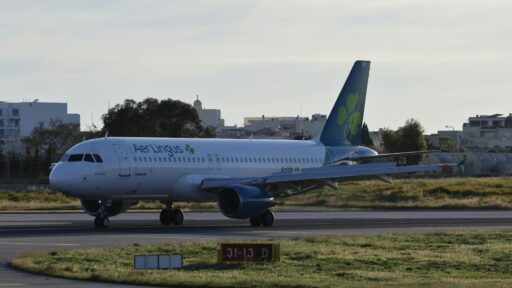
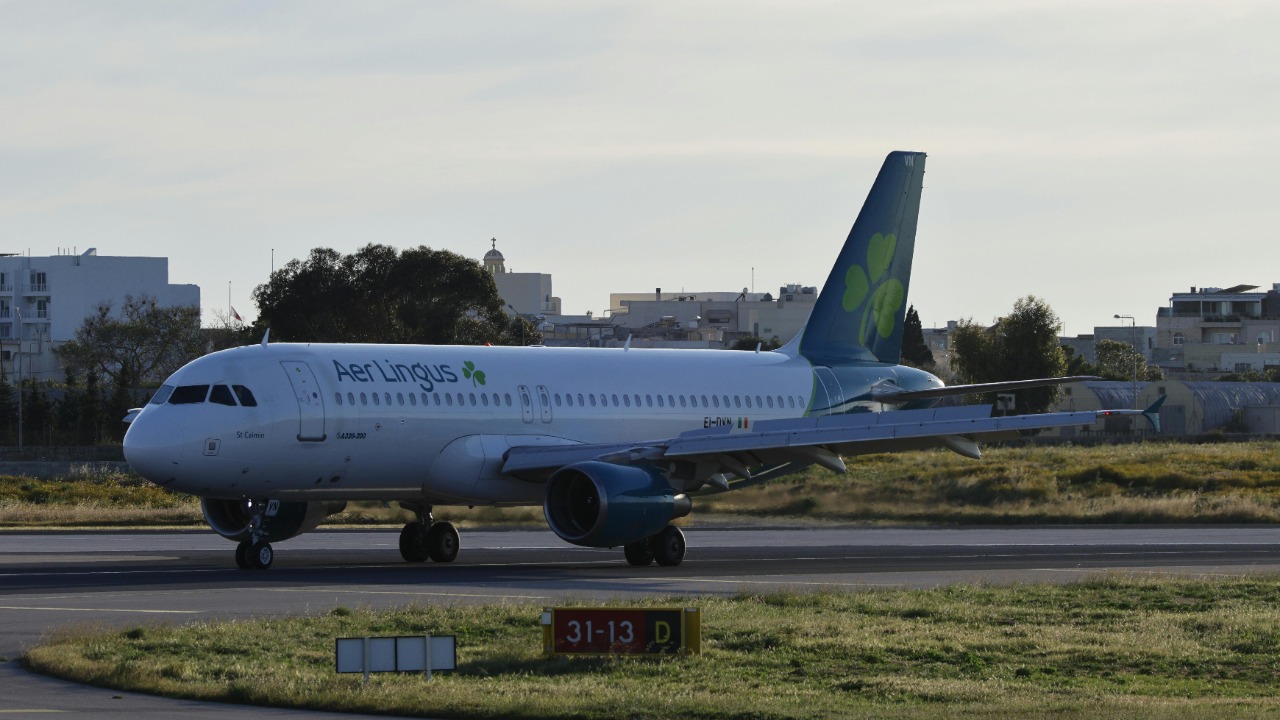

An Aer Lingus flight from Barbados to Manchester made an emergency landing at Manchester Airport after a technical issue on board, prompting a full evacuation of more than 200 passengers and crew. The incident caused significant disruption across the airport as operations were temporarily halted and flights were delayed or diverted. Despite the dramatic scenes on the runway and in the terminals, no injuries were reported, and the immediate safety risk was resolved quickly once the aircraft came to a stop.
The Flight and Emergency Trigger
The affected service was Aer Lingus flight EI90, operating the Barbados to Manchester route from Grantley Adams International Airport with more than 200 passengers and crew on board. According to early accounts, the aircraft developed a technical issue while en route over the Atlantic, prompting the crew to assess whether the problem could be managed in flight or required an immediate diversion. As the situation evolved, the pilots opted to treat the fault as a potential emergency, a decision that prioritised passenger safety over schedule and set in motion a chain of events that would later cause widespread disruption on the ground.
Reports indicate that the crew declared an emergency and diverted to the nearest major UK airport with suitable facilities, with Manchester selected because of its long runways, extensive fire and rescue capability, and ability to handle a wide-body aircraft arriving unexpectedly. Initial information shared by aviation sources described the issue as a technical fault affecting an unspecified aircraft system, a description echoed in coverage that highlighted how the crew followed established safety protocols rather than taking any chances with a system anomaly. By framing the situation as an emergency and requesting priority handling, the pilots ensured that emergency services were in position on arrival, a precaution that significantly reduced the risk to passengers and underlined how modern airline procedures are designed to err on the side of caution.
Evacuation Process at Manchester Airport
Once the aircraft landed safely at Manchester Airport, emergency vehicles moved quickly to surround the plane, with fire crews and airport response teams taking up positions along the runway. Coverage of the incident described how passengers were instructed to leave their belongings behind as the crew initiated a rapid evacuation, a step that is standard when there is any concern about a possible fire, fuel leak, or other hazard that might escalate after landing. One account of the scene, carried in a report on passengers being ‘evacuated’ after the flight made an ‘emergency landing’ at a major UK airport, emphasised the urgency of the operation and the visible presence of multiple fire engines positioned around the aircraft.
Passengers and crew exited the aircraft using a combination of emergency slides and mobile stairs, depending on their position in the cabin and the assessment of ground crews about which exits were safest to use. According to aviation-focused reporting on the incident, the evacuation was completed within minutes, with all those on board moved away from the aircraft and transported to terminal areas for medical checks and support. A detailed account of the sequence, published in a piece on the Aer Lingus Barbados–Manchester flight being evacuated after a technical issue, noted that no injuries were reported among the more than 200 passengers and crew, a result that underscores how training, clear communication and rapid coordination between cockpit, cabin and ground teams can prevent a technical scare from turning into a casualty event.
Immediate Airport Disruptions
The emergency landing and full-scale response triggered a partial shutdown of runway operations at Manchester Airport, as the Aer Lingus aircraft remained on the tarmac surrounded by emergency vehicles and inspection teams. Flights scheduled to land were placed into holding patterns or diverted to other airports, while departures were held at gates or on taxiways until the runway could be cleared and safety checks completed. A detailed rundown of the operational impact, set out in a report on Manchester Airport being in chaos as the Aer Lingus flight made an emergency landing and passengers were evacuated, described how delays and disruptions quickly cascaded across the schedule, affecting dozens of incoming and outgoing services.
For travellers already in the terminals, the knock-on effects translated into long queues at security and customer service desks, sudden gate changes, and a wave of missed connections as onward flights departed without passengers who were stuck in the backlog. Accounts from the scene, including one carried in a piece on passengers being evacuated from a plane after an emergency landing, highlighted the frustration of those whose holiday or business plans were thrown into disarray, but also noted that many passengers expressed relief that the Aer Lingus flight had landed safely and that no one had been hurt. The incident illustrated how a single emergency on the runway can ripple through an entire hub airport, creating hours of disruption for thousands of people even when the underlying safety issue is contained quickly.
Airline and Official Responses
Aer Lingus moved swiftly to explain the situation, confirming that a technical issue on flight EI90 was the sole cause of the emergency landing and subsequent evacuation. The airline stated that the aircraft would undergo detailed maintenance checks before being returned to service, a step that aligns with standard industry practice whenever a flight crew declares an emergency for a technical reason. In coverage of the incident that focused on the carrier’s handling of the event, including a report on passengers evacuated from the Manchester emergency plane landing, the airline was quoted as apologising to affected customers and offering assistance with rebooking and accommodation where necessary, a reminder that carriers are expected to manage both the safety and the customer service dimensions of such disruptions.
Manchester Airport officials also issued statements outlining how they had coordinated with fire and rescue teams, air traffic control and Aer Lingus to manage the emergency and then restore normal operations as quickly as possible. According to accounts that drew on airport briefings, including a detailed narrative of how passengers were evacuated from the aircraft after the emergency landing at Manchester Airport, the airport apologised for the inconvenience caused to travellers and urged passengers to check with their airlines for the latest information on delayed or rescheduled flights. Aviation authorities cited the incident as an example of safety protocols working as intended, noting that the rapid response, the absence of injuries and the structured return to normal operations all pointed to a system that, while disruptive in the short term, is designed to put human life ahead of punctuality or commercial considerations.