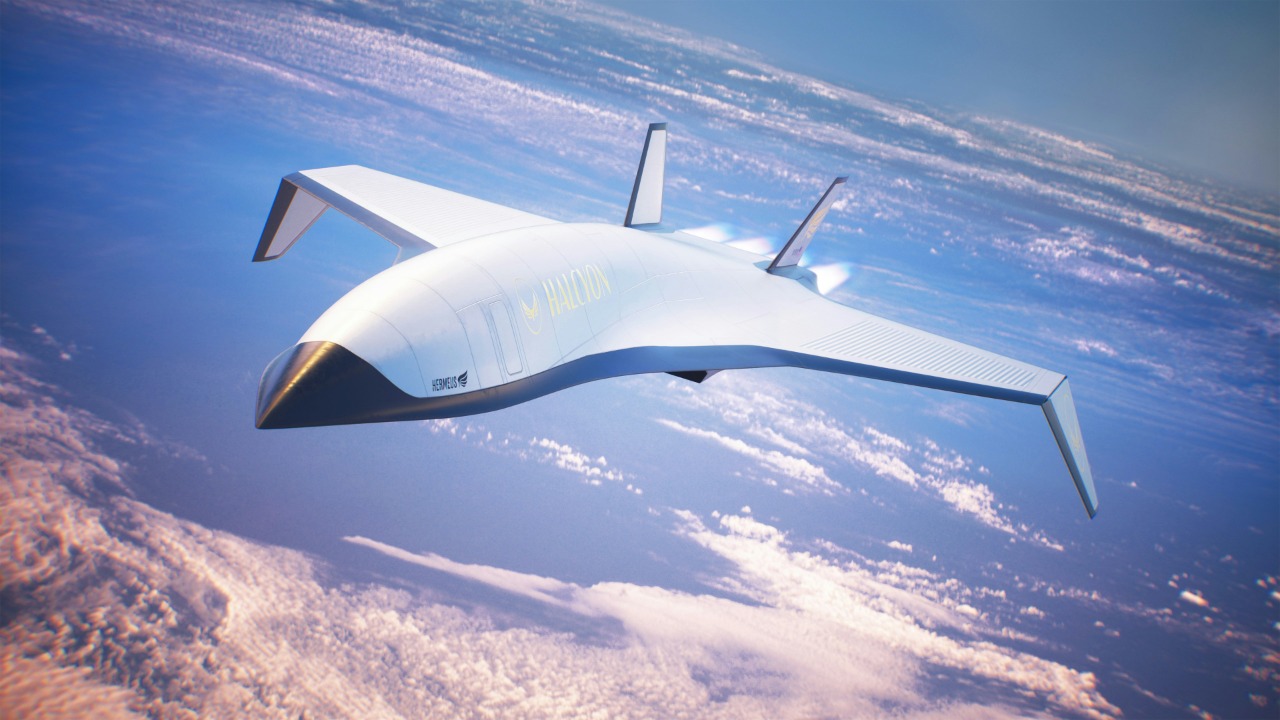

A presidential aircraft that can cross oceans at hypersonic speed would not just shave hours off diplomatic trips, it would reorder how power is projected and how crises are managed. Instead of planning summits around overnight flights and refueling stops, the White House could treat the planet almost like a single time zone, with the president able to appear in distant capitals in roughly the time it takes now to fly across a continent. That prospect is moving from science fiction toward engineering reality, and it carries global implications that extend far beyond one airplane.
From Air Force One to hypersonic flagship
The current fleet that carries the president is built around heavily modified Boeing 747s known as Air Force One, which combine long range with hardened communications, in‑flight refueling and protection against an electromagnetic pulse. In parallel, the United States also maintains airborne command posts such as the Boeing E-4, aircraft designed to keep national leadership connected during a nuclear or cyber crisis. A hypersonic successor would have to merge these roles, functioning both as a flying White House and as a survivable National Command Authority node, while operating at speeds that push well beyond traditional jet envelopes.
That ambition is already visible in the partnership between the U.S. Air Force and Atlanta startup Hermeus, which is working on high speed aircraft concepts that could underpin a future presidential transport. Earlier work by The Air Force on an unmanned hypersonic demonstrator shows how seriously the Pentagon is taking this technology. A video segment on What a Hypersonic President highlights how a future Hypersonic President aircraft, backed by the Air Force’s Presidential and Executive Airlift Directorate, is already being framed as a strategic asset rather than a luxury upgrade.
Speed, markets and the shrinking globe
Hypersonic flight is generally defined as travel at Mach 5 or faster, a regime where air friction can drive skin temperatures above 3,000°F and where propulsion systems must handle extreme heating and pressure. Technical overviews of hypersonic flight describe how Propulsion research, including Controlled detonation concepts tested by Researchers in China, is pushing the boundaries of what air‑breathing engines can do. Market analysts tracking Hypersonic Travel argue that a hypersonic passenger jet that can safely manage those temperatures would redefine premium long haul aviation.
Commercial concepts hint at what a presidential platform might unlock. Boeing has floated a Mach 5 airliner that could link New York City to London in about two hours at that speed, while engineers working on a Mach 9 concept at Venus Aerospace say Duggleby believes Hypersonic flight will collapse global distances. He invites people to Imagine flying from Los Angeles to Toky in roughly an hour, a vision that aligns with research describing how a Hypersonic Breakthrough Could Make One Hour Global Flights Possible and turn marathon journeys into short hops.
Defense and economic planners are already gaming out the ripple effects. A detailed look at Future Trends in the Global Hypersonic Plane Market notes that the Expansion of Hypersonic Defense Systems is expected to spur demand from both national defence and commercial operators. Earlier analysis of how the United States invests in hypersonic technology argued that these aircraft could bring trillion‑dollar economic growth, even as they emerge from a period when the coronavirus crisis depressed international travel. In parallel, U.S. work on new supersonic designs, described under Challenges and Market Prospects, shows how supersonic and hypersonic projects are framed as tools for fundamentally altering global connectivity and making long distance travel more accessible.
Security, deterrence and a new strategic signal
A hypersonic presidential aircraft would also sit at the intersection of diplomacy and deterrence. Existing airborne command posts, Known officially to the United States as National Airborne Operations Centers, or NAOC, are designed to survive nuclear attack and maintain the ability to withstand electromagnetic pulses. The current Air Force One already incorporates hardened electronics and secure communications so the president can direct a response to an attack on the United States. A hypersonic version would add speed as a layer of protection, potentially allowing the commander in chief to outrun some threats or reposition rapidly between theaters.
That speed, however, would be read through the lens of weapons development. Analysts warn that Hypersonic weapons represent a paradigm shift in military technology, raising questions about missile defense and reshaping the strategic landscape. If the same technologies that enable a Hypersonic President aircraft also feed into maneuverable missiles that can evade interception, rivals are likely to see the presidential jet as part of a broader arsenal rather than a standalone symbol. I see that as both a risk and an opportunity: a chance to embed arms control and transparency into the rollout of hypersonic systems, or, if mishandled, a trigger for a new era of vulnerability in which speed outpaces diplomacy.