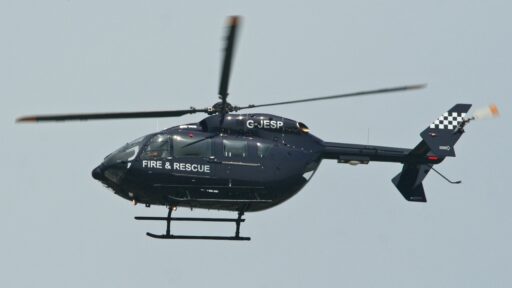
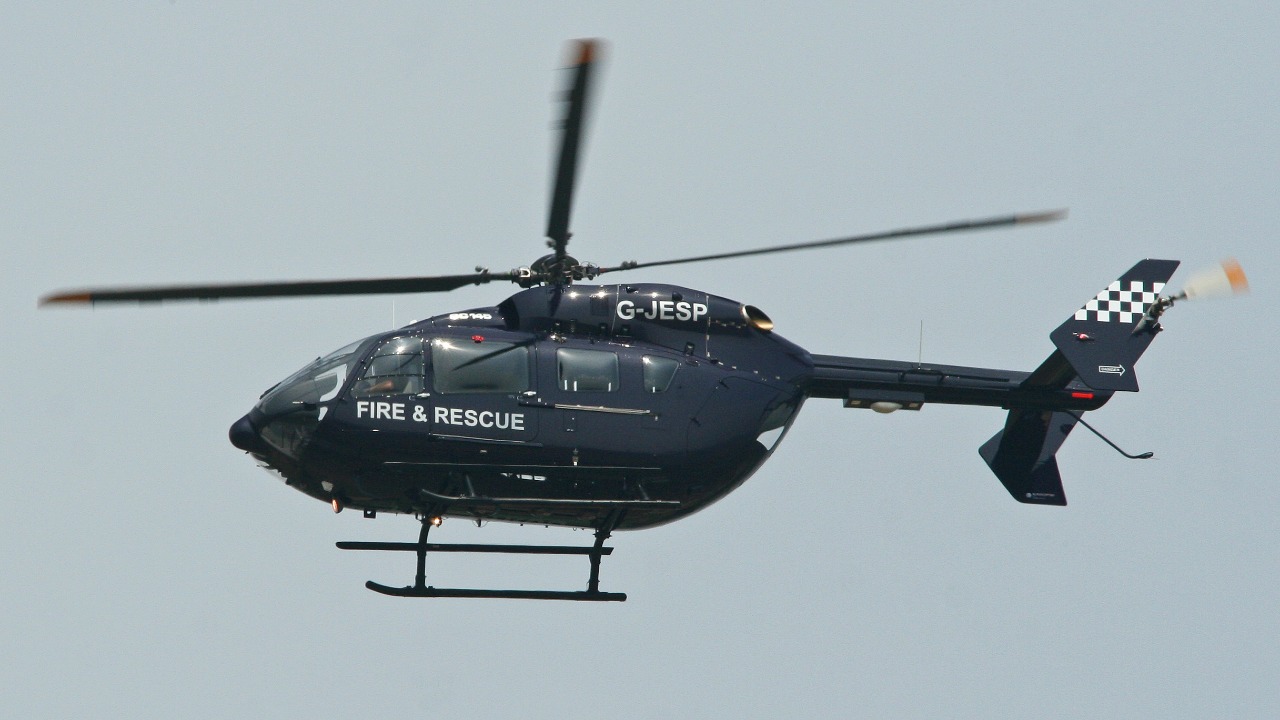

Germany has activated an option to buy 20 additional Airbus H145M light combat helicopters, lifting its total H145M fleet commitment to 82 units and consolidating what is described as the world’s largest H145M fleet. The new order takes Germany’s H145M inventory from 62 to 82 helicopters and further expands the country’s use of what has been billed as the quietest helicopters in the world in its class.
Scope and structure of the new H145M order
Germany has placed a new order for 20 more Airbus H145M helicopters, explicitly framed as an expansion of its existing fleet rather than a fresh platform introduction. Reporting on the deal stresses that these aircraft are part of a continuing build-up of a standardized H145M capability, with the additional helicopters ordered as a follow-on to earlier commitments that already put Germany at the center of the type’s global user base. For the Bundeswehr, scaling up within a single, proven helicopter family is intended to simplify logistics and accelerate the fielding of combat-ready crews.
The latest contract increases Germany’s total H145M commitment to 82 units, up from previous plans that capped the fleet at 62 aircraft. By moving to 82 helicopters, Berlin is expanding what has been described as the world’s largest H145M fleet, a status that underscores both the scale of the procurement and the central role the type is expected to play in German rotary-wing operations. This concentration on one light twin-engine model gives Germany significant leverage in shaping future upgrades and support arrangements, which in turn affects how quickly new mission systems and survivability enhancements can be brought into service.
From 62 to 82: how the option was triggered
Germany’s move from 62 to 82 H145Ms came by triggering an option for extra Airbus helicopters rather than negotiating an entirely new framework agreement. According to detailed coverage of the decision, Berlin chose to exercise an existing contractual option that had been built into the earlier H145M procurement, allowing the Ministry of Defence to expand the fleet without reopening core commercial terms or technical baselines. This approach reduces legal and administrative friction, which is significant for a military that is trying to accelerate modernization timelines while keeping acquisition risk under control.
The decision to firm up this option is described as Germany firms orders 20 H145M helicopters, a shift from provisional planning to a binding commitment that locks in production slots and delivery expectations. Reports emphasize that the additional 20 aircraft are characterized as “additional Airbus H145M light combat helicopters,” clarifying that they build on, rather than replace, earlier orders and are intended to sit alongside the existing 62 aircraft in a single, coherent fleet. For operators and planners, that distinction matters, because it signals growth in overall capacity rather than a one-for-one refresh of older airframes, and it points to a deliberate effort to increase sortie generation and mission availability.
Operational role and configuration: light combat and multi-mission use
The newly ordered aircraft are consistently described as Airbus H145M light combat helicopters, a designation that highlights their intended role in armed missions and close support operations. In German service, the H145M is configured to carry weapons and mission equipment suited to light attack, escort, and overwatch tasks, while still retaining the cabin volume and flexibility associated with a utility helicopter. This combination allows the Bundeswehr to use the same platform for tasks that range from inserting small special operations teams to providing armed overwatch for ground convoys, which is particularly valuable when budgets and personnel are under pressure.
Reporting on the broader fleet notes that Germany’s H145Ms are being acquired as H145M helicopters suitable for multi-mission tasks, including roles typically associated with light utility and special operations support. The expanded fleet of 82 helicopters is described as a standardized H145M fleet, a structure that enables consistent training pipelines, harmonized maintenance procedures, and common mission equipment integration across all units. For pilots and ground crews, a single configuration reduces the complexity of qualification and sustainment, while for commanders it simplifies the task of assigning aircraft to missions, since any H145M can be expected to operate within the same performance and systems envelope.
Technical and acoustic advantages of the H145M
One report on the new order highlights that Germany’s additional aircraft are described as the “quietest helicopters in the world in its class,” pointing to the H145M’s low acoustic signature as a key attribute. This characteristic is particularly relevant for special operations and low-visibility missions, where the ability to approach targets or operate near populated areas with reduced noise can provide both tactical and political advantages. A quieter helicopter is harder to detect acoustically at range, which can improve survivability in contested environments and reduce the disturbance to civilian communities near training areas and bases.
The aircraft in this deal are consistently identified as Airbus H145M helicopters, tying their capabilities to Airbus’s established light twin-engine helicopter family and its track record in both civil and military roles. The description of the order as 20 more Airbus H145M helicopters underscores that Germany is doubling down on a specific, already-fielded model rather than introducing a new type that would require fresh certification, training, and infrastructure. From a capability planning perspective, this choice reflects a preference for incremental improvement within a known platform, which can shorten the time between contract signature and operational deployment and reduce the risk of integration surprises.
Industrial and strategic implications for Germany and Airbus
Defence-focused reporting notes that Germany’s decision to buy 20 additional Airbus H145M light combat helicopters strengthens the industrial relationship between Germany and Airbus Helicopters, which already has deep roots in the country’s aerospace sector. By committing to a total of 82 units, Berlin is sending a clear signal of confidence in the H145M program, a message that can support long-term planning for production lines, supplier networks, and engineering investment. For German industry, sustained orders of this scale help preserve high-skilled jobs and maintain domestic expertise in complex rotary-wing systems, which is strategically important for a country that wants to retain sovereign options in defence procurement.
By lifting its total H145M commitment to 82 units, Germany is portrayed as a flagship customer that could influence future export prospects for the type. The characterization of Germany’s inventory as the world’s largest H145M fleet positions the country as a reference operator for tactics, training, and support concepts built around the H145M platform, making its experience particularly relevant to other nations considering similar acquisitions. In practical terms, that status allows Berlin to shape discussions on future upgrades, interoperability standards, and multinational training initiatives, while giving Airbus a powerful operational showcase when marketing the H145M to additional military customers.
How the expanded fleet reshapes German rotary-wing capability
With the option exercised and the fleet growing from 62 to 82 aircraft, Germany is effectively reshaping its rotary-wing force structure around a larger core of light twin-engine helicopters. The decision to expand within the H145M family, rather than diversify into multiple new types, suggests a deliberate strategy to concentrate on a platform that can cover a wide spectrum of missions, from light combat to utility and special operations support. For the Bundeswehr, this concentration can translate into higher availability rates, more predictable sustainment costs, and a clearer roadmap for future modernization of sensors, weapons, and communications systems across the entire H145M inventory.
At the same time, the focus on what has been described as the quietest helicopters in the world in its class indicates that acoustic performance and urban compatibility are now central considerations in German helicopter planning. As Germany aligns its defence posture with alliance commitments and evolving security challenges, a larger, standardized H145M fleet gives planners a flexible tool that can be deployed at home or abroad with relatively modest logistical footprints. In my view, the combination of industrial benefits for Airbus, operational gains for the Bundeswehr, and the signaling effect of operating the world’s largest H145M fleet makes this 20-helicopter option a relatively small numerical increase with outsized strategic implications.