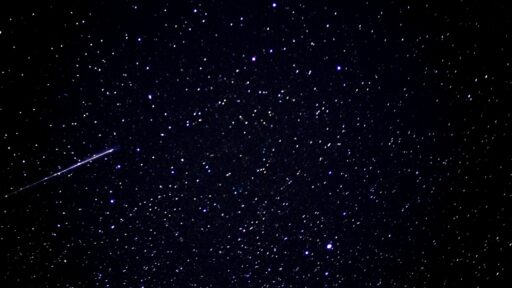
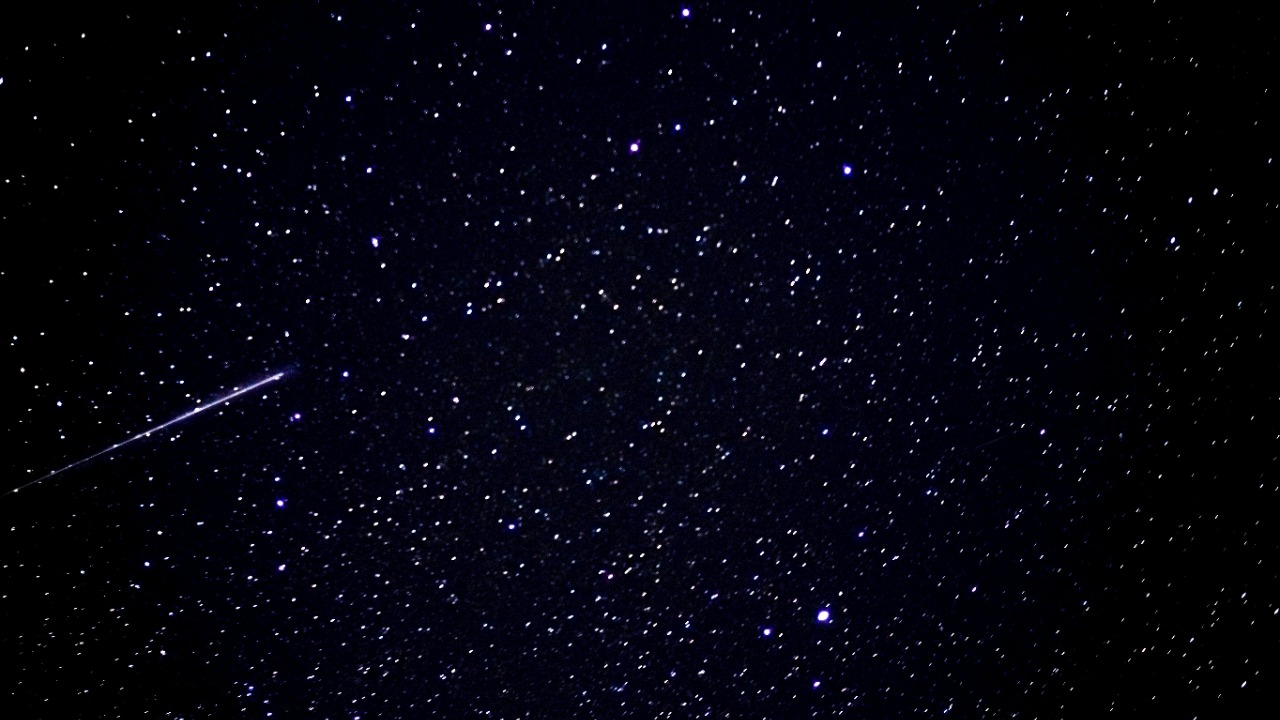

The Geminid meteor shower reaches its peak tonight and tomorrow, December 13-14, 2025, promising one of the year’s most reliable sky shows for much of the Northern Hemisphere after midnight local time. Under ideal dark-sky conditions, observers could see up to 120 meteors per hour, a rate that makes the Geminids a standout event even for casual stargazers. While urban light pollution and patchy clouds will limit some views, forecasters point to clearer skies in parts of the United States and abroad, giving many people a strong chance to catch the display.
Understanding the Geminid Peak Timeline
The 2025 Geminid meteor shower has been active since early in the month, with activity building from December 4 and continuing through December 20 as Earth moves through the dense debris stream of the asteroid 3200 Phaethon. According to guidance on when is the best time to watch the Geminid meteor shower peak on December 13-14, 2025, the shower reaches its maximum when the radiant in the constellation Gemini climbs high after midnight, which increases the number of visible meteors per hour. That timing matters for observers planning their night, because the higher the radiant sits in the sky, the more of the meteor stream is visible above the horizon, translating directly into higher counts and a better chance of catching bright fireballs.
Activity ramps up noticeably in the nights leading into the peak, with typical pre-peak rates of about 20 to 30 meteors per hour under dark skies, then surging to between 50 and 120 meteors per hour at maximum according to long-running observing records summarized in specialist guides such as how to see the Geminid meteor shower. Astronomers note that the exact timing of the peak shifts slightly later each year because of orbital dynamics in the Geminid stream, and in 2025 that shift coincides with a waxing gibbous Moon that sets before the prime post-midnight viewing window, a contrast with last year when bright moonlight washed out many of the fainter streaks. For skywatchers, that combination of a strong, predictable shower and a Moon-free peak means the Geminids remain one of the most dependable opportunities to see high meteor rates without specialized equipment.
Best Times to Watch Tonight
For most locations, the best strategy is to start watching around 10 p.m. local time on December 13, 2025, when the radiant in Gemini rises above the eastern horizon and the first Geminids begin to appear. As explained in a detailed timing breakdown on when to see the Geminid meteor shower peak tonight, early evening offers a slower trickle of meteors, but some of the longest, most dramatic earthgrazers can skim the atmosphere at shallow angles when the radiant is still low. That early window is especially useful for families or younger observers who may not stay up all night, and it gives photographers time to set up wide-field cameras before the rates climb.
Conditions improve steadily after local midnight as Gemini moves higher, with most experts pointing to the period from about 2 a.m. to dawn on December 14 as the peak intensity window when the shower can reach its advertised 50 to 120 meteors per hour under dark, clear skies. Guidance on Geminid meteor shower set to light up sky during weekend peak stresses that meteors can appear anywhere in the sky, even though their paths trace back to the radiant, so observers are advised to lie back and take in as wide a view as possible rather than staring directly at Gemini. Rates remain relatively strong for a night or two after the peak, but historical counts show a decline of roughly 20 to 30 percent per day, which makes tonight the most important window for anyone hoping to see the shower at its full strength before activity tapers off.
Regional Viewing Conditions and Forecasts
Weather will shape how much of the Geminid peak people actually see, and in parts of the Mid-Atlantic that means contending with significant cloud cover. A regional forecast for South Jersey cloud cover and the Geminid meteor shower warns that an overnight low-pressure system could obscure roughly 50 to 70 percent of the sky, particularly along the coast and in urban corridors. For residents in Camden, Atlantic City, and nearby communities, that level of cloudiness will cut down the number of visible meteors and may limit views to occasional breaks, which is why forecasters recommend, when possible, driving north or inland toward clearer horizons where partial clearing could open up more of the sky.
Conditions look considerably better in the Southwest, where mostly clear skies and low humidity are expected to favor high meteor counts. A guide on how to see the shower in the state notes that Geminid meteor shower peaks this weekend in Arizona with particularly strong prospects in dark-sky locations such as Sedona and high desert areas outside Phoenix and Tucson, where dry air can make meteor trails appear sharper and more persistent than in humid eastern states. For local tourism operators and park managers, that forecast translates into a likely uptick in late-night visitors at popular overlooks and campgrounds, reinforcing the need for clear guidance on safe nighttime access and responsible lighting so the dark-sky advantage is not eroded.
Tips for Maximizing Your Geminid Experience
Regardless of location, a few practical steps can dramatically improve what observers see during the Geminid peak. Astronomers consistently recommend seeking out the darkest site available, ideally a park, beach, or rural field well away from city lights, and using stargazing apps such as Stellarium, SkySafari, or Star Walk 2 to locate the constellation Gemini, which marks the radiant point. Advice compiled in Geminids approach peak 2025 activity and where to see the meteor shower in Florida emphasizes that even modest steps like turning off nearby porch lights, shielding car headlights, and choosing a spot with an unobstructed view of the eastern and southern sky can significantly increase the number of meteors visible per hour. For communities that host organized viewing events, those measures also help preserve the experience for large groups, ensuring that local light pollution does not undermine turnout and enthusiasm.
Comfort and patience are just as important as location, because the human eye needs time to adapt fully to the dark and the shower’s activity ebbs and flows. Observing guides advise dressing in layers suitable for late-night chills, bringing blankets or reclining chairs, and allowing at least 20 to 30 minutes for eyes to dark-adapt while avoiding phone screens or bright flashlights, which can reset night vision. Coverage of how to see the Geminid meteor shower this weekend in your state in Australia notes that in the Southern Hemisphere the radiant sits lower in the northern sky, so observers should adjust by choosing open northern horizons and accepting somewhat lower meteor rates than at mid-northern latitudes. That geographic nuance underscores a broader point for planners and educators, who increasingly use the Geminids as a teaching moment about how latitude, local weather, and light pollution interact to shape what people can see in the night sky.