
Rapidly expanding satellite constellations threaten to obscure most space telescope observations by the late 2030s, potentially ruining large portions of astronomical images forever. Astronomers have raised alarms about the increasing density of these orbiting networks, which could create unavoidable streaks in exposures from major observatories like Hubble and James Webb. One expert laments, “That part of the image will be forever lost,” highlighting the irreversible damage to deep-space science.
Growth of Satellite Networks
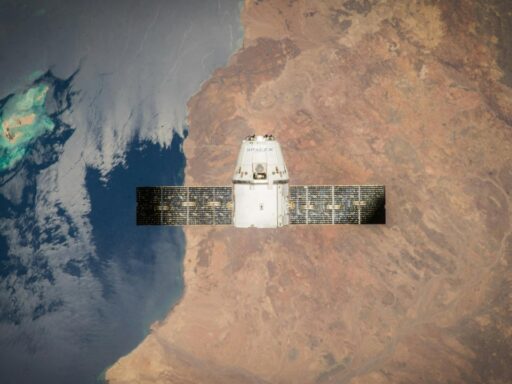
The rapid proliferation of low-Earth orbit constellations has transformed near-Earth space from a relatively sparse environment into a crowded shell of hardware. Companies planning thousands of broadband and Earth-observation spacecraft are building layered orbital networks that circle the planet in coordinated formations, rather than as isolated satellites. According to analyses highlighted in reporting on satellite constellations, the number of operational satellites is projected to climb steeply into the late 2030s, with low-Earth orbit becoming the preferred altitude for commercial systems that need low latency and global coverage. For astronomers, that shift means the sky will contain not just a few bright moving points, but dense swarms that repeatedly cross the same fields of view.
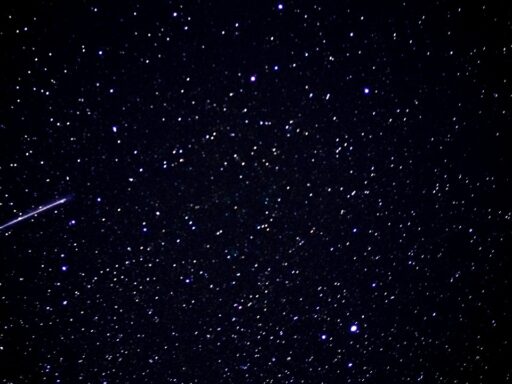
Current deployments already cause visible interference in both ground-based and space-based imaging, and the trend line points to a sharp escalation in satellite numbers by the late 2030s. Even now, long-exposure images from major observatories regularly show bright, linear trails where satellites passed through the frame, cutting across galaxies, nebulae, and faint background sources. Earlier generations of spacecraft, which were fewer and often higher in orbit, produced occasional artifacts that could often be worked around, but the new constellations are designed for scale, with thousands of units in coordinated orbits that intersect key observing directions. As the orbital population thickens, the probability that any given exposure will be crossed by one or more satellites rises, turning what was once a manageable nuisance into a structural threat to precision astronomy.
Impacts on Space Telescopes
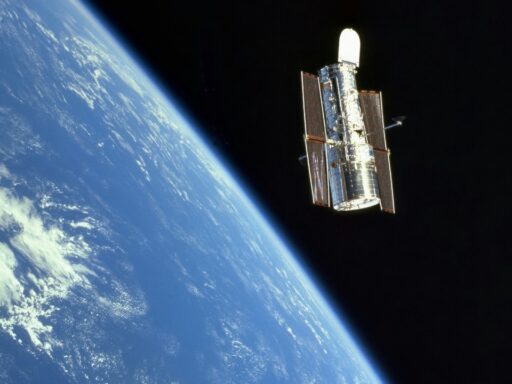
For space telescopes, satellite trails appear as bright streaks that slice through otherwise pristine images, saturating detector pixels and contaminating the data. Instruments on observatories like the James Webb Space Telescope are tuned to capture extremely faint signals from distant galaxies and exoplanet atmospheres, so a single bright object moving across the field can overwhelm the delicate measurements those instruments are designed to make. When a satellite crosses an exposure, it does not simply add a cosmetic blemish that can be brushed away in software, it injects spurious light into the detector, distorts the recorded signal, and can trigger electronic effects that spread beyond the immediate path of the trail. For missions that rely on stacking multiple exposures to build up depth, repeated crossings can make it impossible to recover the original scene with the required precision.
The time-sensitive nature of the problem is central to astronomers’ concern, because by the late 2030s, projections indicate that most observations from major space telescopes could be compromised. Observing programs are carefully scheduled to capture transient events such as supernovae, gravitational wave counterparts, or brief exoplanet transits, and those windows cannot simply be recreated if a satellite passes through at the wrong moment. As one expert warned in the context of growing interference with deep-space imaging, “That part of the image will be forever lost,” because the photons from that region of the sky at that specific time can never be recaptured. For the scientific community, each lost exposure represents not just a spoiled picture, but a permanent gap in the record of how the universe behaves.
Astronomers’ Warnings and Projections
Recent studies and simulations cited in the reporting on the threat to most space telescope observations predict that satellite density will climb to the point where up to most of the usable observing time for space-based instruments is at risk by the late 2030s. Researchers model the orbits, brightness, and distribution of planned constellations, then overlay those patterns on the pointing schedules of telescopes to estimate how often trails will intersect key fields. Those simulations show a stark change from the relatively clear skies of the 2020s, when interference was still sporadic and often avoidable, to a future in which multiple satellites may cross a single exposure, even for observatories located far from Earth or operating at wavelengths that were once considered safe from visible contamination. The result is a projected loss of clean data that could undermine long-term surveys and legacy programs designed to map the cosmos over decades.
Stakeholders across the astronomical community have voiced concern that this obscuration effectively prioritizes commercial satellite goals over scientific discovery, without a robust framework to balance the two. Professional observatories, university researchers, and citizen scientists all depend on access to dark, unobstructed skies, yet they have limited influence over licensing decisions that enable large constellations to occupy key orbital shells. As the risk that most space telescope observations will be compromised becomes more concrete, astronomers are calling for immediate regulatory action to mitigate the looming crisis, including stricter limits on orbital crowding and brightness standards for new spacecraft. Without such measures, the community fears that the cumulative effect of thousands of satellites will be to lock in a degraded observing environment for generations, constraining what future telescopes can discover regardless of how advanced their instruments become.
Potential Mitigation Strategies
In response to mounting criticism, satellite operators have begun exploring technical measures to reduce their visibility, such as darkening coatings, modified orientations, and less reflective materials. These efforts aim to lower the apparent brightness of individual spacecraft so they are less disruptive in astronomical images, particularly during twilight when reflections are strongest. However, even advocates of these approaches acknowledge that incremental improvements in surface treatments may not suffice against the projected scale of deployments by the late 2030s, when tens of thousands of satellites could be in low-Earth orbit. The sheer number of objects means that, even if each one is slightly dimmer, the aggregate impact on long-exposure imaging remains significant, especially for instruments that push to the faintest detectable limits.
Alongside hardware changes, collaborative initiatives between astronomers and industry are focusing on smarter observation scheduling that avoids peak interference times. By sharing orbital data and planned maneuvers, operators can help observatories predict when satellites will cross specific fields, allowing some exposures to be shifted or shortened to reduce the chance of contamination. This kind of coordination is already being tested for certain ground-based surveys, and similar concepts are being discussed for space telescopes that can adjust their pointing within operational constraints. Even so, the reporting on the risk that data will be “forever lost” underscores that scheduling alone cannot eliminate the problem, because some observations must occur at specific times and directions that coincide with dense satellite traffic.
Urgency for International Policy and Governance
As the scale of planned constellations becomes clearer, astronomers and policy experts are increasingly framing the issue as one of global governance rather than isolated technical fixes. Low-Earth orbit is a shared resource, and decisions made by a handful of operators and licensing authorities can shape the observing conditions for every current and future space telescope. Without coordinated international policies that set limits on orbital crowding, brightness, and end-of-life disposal, the cumulative impact of thousands of satellites could effectively close off parts of the sky to high-precision science. The warnings that most space telescope observations may be at risk by the late 2030s highlight how quickly the window for preventive action is narrowing, because once large fleets are fully deployed, reversing their impact would require costly deorbiting campaigns and long regulatory battles.
Calls for stronger governance emphasize that protecting the night sky is not only a concern for professional astronomers, but also for education, cultural heritage, and the broader public that funds space science. Space telescopes like Hubble and James Webb have become global icons, inspiring students and informing fundamental physics, and their successors will depend on access to relatively clean skies to deliver comparable breakthroughs. If unchecked growth in satellite constellations proceeds without meaningful constraints, the result could be a permanent trade-off in which commercial connectivity is gained at the expense of deep-space knowledge. For policymakers weighing spectrum rights, orbital slots, and licensing approvals, the stakes are therefore not abstract, they involve deciding whether future generations will inherit a sky where key regions of every image are, in the words of concerned astronomers, “forever lost” to artificial streaks that could have been avoided.