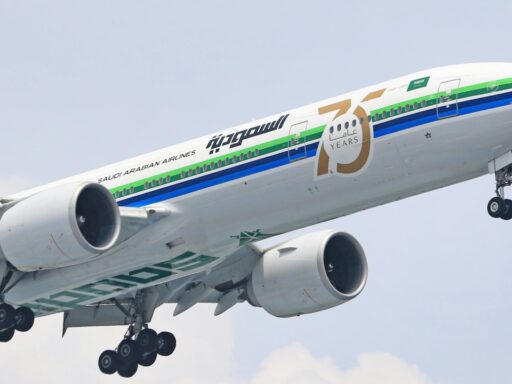

Saudia, Saudi Arabia’s flag carrier, remains “bullish” on achieving its Vision 2030 targets through aggressive expansion in fleet and network capabilities. Chief Commercial Officer Arved von zur Muehlen has emphasized this confidence in recent discussions, pointing to tangible progress that positions the airline to support the kingdom’s economic diversification. That stance marks a shift from earlier cautious projections, driven by accelerated investments that have gathered pace since 2022.
Saudia’s Strategic Alignment with Vision 2030
Saudia has framed its current growth initiatives as a direct response to the aviation pillars of Vision 2030, particularly the drive to build tourism and logistics into globally competitive sectors. In public comments, Chief Commercial Officer Arved von zur Muehlen has described the carrier as a central tool for turning Saudi Arabia into a major visitor destination and transit point, aligning capacity growth with the national objective of attracting tens of millions of international tourists each year. By tying route planning, fleet decisions, and service upgrades to the broader policy blueprint, the airline is positioning itself as a practical enabler of non-oil revenue, rather than a standalone commercial project.
That alignment is especially visible in Saudia’s focus on connectivity that feeds new economic clusters, from religious tourism in Jeddah and Medina to business and entertainment traffic into Riyadh and emerging coastal developments. According to von zur Muehlen, the carrier’s modernization strategy is designed so that each new aircraft and route can be mapped to a Vision 2030 priority, whether that is boosting inbound tourism, supporting cargo flows, or improving domestic mobility for a growing workforce. For stakeholders across the Saudi economy, this approach means aviation capacity is being built not just for headline growth, but to underpin long-term diversification goals that depend on reliable, globally competitive air links.
Recent Fleet Expansion Milestones
Fleet expansion sits at the core of Saudia’s confidence, with the airline highlighting a series of aircraft acquisitions that have strengthened long-haul capability since 2023. The carrier has focused on adding wide-body jets that can open and sustain intercontinental routes, a prerequisite for turning Saudi Arabia into a global aviation crossroads rather than a primarily regional player. In interviews, von zur Muehlen has pointed to the growing 787 Dreamliner fleet as a key asset, citing its range and fuel efficiency as critical for connecting Saudi hubs to high-yield markets in Europe, Asia, and North America while keeping operating costs in check.
Partnerships with major manufacturers such as Boeing and Airbus have also been recalibrated to accelerate deliveries compared with the delays that characterized the pre-2022 period. Saudia’s leadership has described how improved coordination with these suppliers has allowed the airline to secure earlier production slots and better align aircraft arrivals with planned route launches. For passengers and corporate customers, the result is a more modern, reliable fleet that can support higher frequencies and new destinations, while for the Saudi government the upgraded aircraft mix strengthens the credibility of Vision 2030’s aviation targets by showing that capacity is arriving on schedule rather than slipping into the next decade.
Network Growth and Route Developments
On the network side, Saudia has moved beyond its traditional Middle East focus to launch new destinations across Europe, Asia, and Africa, using its expanding fleet to fill gaps in global connectivity. The carrier has emphasized routes that can feed both religious and leisure tourism, such as additional European gateways that funnel visitors into Jeddah for Umrah and Hajj, as well as Asian and African cities that generate year-round demand from expatriate communities and business travelers. According to von zur Muehlen, each new city pair is evaluated not only on immediate profitability but also on its potential to support Vision 2030’s tourism targets by making Saudi Arabia easier to reach for first-time visitors.
Riyadh and Jeddah are being developed in parallel as complementary mega-hubs, with increased frequencies signaling a decisive break from the contractions that defined the pandemic era. Saudia has been adding capacity on trunk routes into these cities to support banked connections, allowing passengers from secondary markets in Asia or Africa to connect efficiently to Europe and vice versa. In comments reported by Arved von zur Muehlen, the airline sees these hubs as the backbone of inbound tourism growth, arguing that a dense, reliable schedule is essential if tour operators, conference organizers, and global brands are to commit to Saudi Arabia at scale.
Overcoming Challenges for Sustained Momentum
Saudia’s bullish tone is notable given the supply chain disruptions that have affected aircraft and engine availability across the industry, particularly in 2023. Von zur Muehlen has acknowledged these pressures but argued that the airline has navigated them more effectively than some regional peers by locking in long-term maintenance and procurement agreements and by sequencing fleet upgrades to avoid overreliance on any single supplier. That approach has helped Saudia keep more aircraft in service and maintain its expansion timetable, a critical factor for Vision 2030 planners who depend on predictable capacity to support tourism campaigns and investment roadshows.
Workforce development is another pillar of Saudia’s strategy to sustain momentum, with the airline aligning training and recruitment programs to Vision 2030’s Saudization targets. Management has highlighted initiatives to upskill Saudi pilots, cabin crew, and ground staff, as well as technical specialists in areas such as digital operations and revenue management, so that the carrier can grow without importing all of its expertise. Von zur Muehlen has described these efforts as part of the “bullish” case for Saudia’s future, arguing that a skilled local workforce reduces exposure to geopolitical and economic shocks by anchoring critical capabilities inside the kingdom. For employees and policymakers alike, that focus on human capital suggests that the current growth phase is intended to be durable, not a short-lived surge tied only to aircraft orders.