

Nvidia has received approval for shipments of its H200 chips to China, a development highlighted by former President Donald Trump as a key United States policy shift that allows these advanced semiconductors to reach the Chinese market despite ongoing trade tensions. That decision lands in a week when eye-catching robots are also drawing global attention, underscoring how geopolitical maneuvering over cutting-edge hardware is unfolding alongside rapid advances in automation and artificial intelligence.
Together, the H200 export nod and the latest wave of visually striking robots illustrate how strategic control over AI infrastructure and the race to deploy intelligent machines are reshaping both global supply chains and the competitive landscape for technology companies.
Nvidia’s H200 Chip Approval
According to reporting that cites President Donald Trump, the United States has decided to allow Nvidia H200 chip shipments to China, reversing earlier export restrictions that had blocked high-performance GPUs from reaching Chinese buyers. The H200 is a tensor core GPU designed for intensive AI workloads in data centers, and its renewed access to the Chinese market marks a significant shift from the tighter controls that were put in place under Biden-era rules targeting advanced accelerators. For Nvidia, the ability to resume shipments of this specific model opens the door to re-engaging with Chinese cloud providers and research institutions that had been forced to pivot to alternative hardware or delay deployments.
Market access to China is central to Nvidia’s growth story, and the H200 decision immediately raises expectations of a revenue boost from pent-up demand for high-end AI chips. Investors and analysts are likely to focus on how quickly Chinese customers can place new orders and integrate the H200 into large-scale training clusters, particularly for generative AI and recommendation systems that depend on dense GPU compute. The move also sharpens Nvidia’s competitive edge over rivals such as Advanced Micro Devices in the region, since the company can now leverage its established CUDA software ecosystem and existing relationships with Chinese partners while others navigate the same regulatory environment with less entrenched platforms.
Trump’s Role in the Announcement
President Donald Trump has taken direct ownership of the policy shift, publicly stating that the United States will allow Nvidia H200 chip shipments to China and framing the move as a deliberate easing of export controls on advanced AI hardware. His comments position the H200 decision as a strategic recalibration rather than a minor technical adjustment, signaling to both domestic and international audiences that Washington is prepared to selectively relax restrictions when it sees economic or geopolitical advantage. By putting his name behind the announcement, Trump also ties the fate of Nvidia’s China business to broader debates over how the United States should manage technological competition with Beijing.
Compared with the previous Biden-era restrictions that tightened limits on high-performance GPU exports, Trump’s stance represents a notable pivot that could foreshadow further adjustments to the export control regime. The change matters for global semiconductor supply chains because it affects how quickly advanced AI chips can move from U.S. fabrication and packaging hubs into Chinese data centers that underpin cloud services, industrial automation and AI research. If the H200 approval is followed by similar decisions on adjacent products, Nvidia will be positioned to capitalize on renewed access to China’s vast data center market, while policymakers weigh the security risks of enabling Chinese firms to train larger and more capable AI models on U.S.-designed hardware.
Eye-Catching Robots in Tech Spotlight
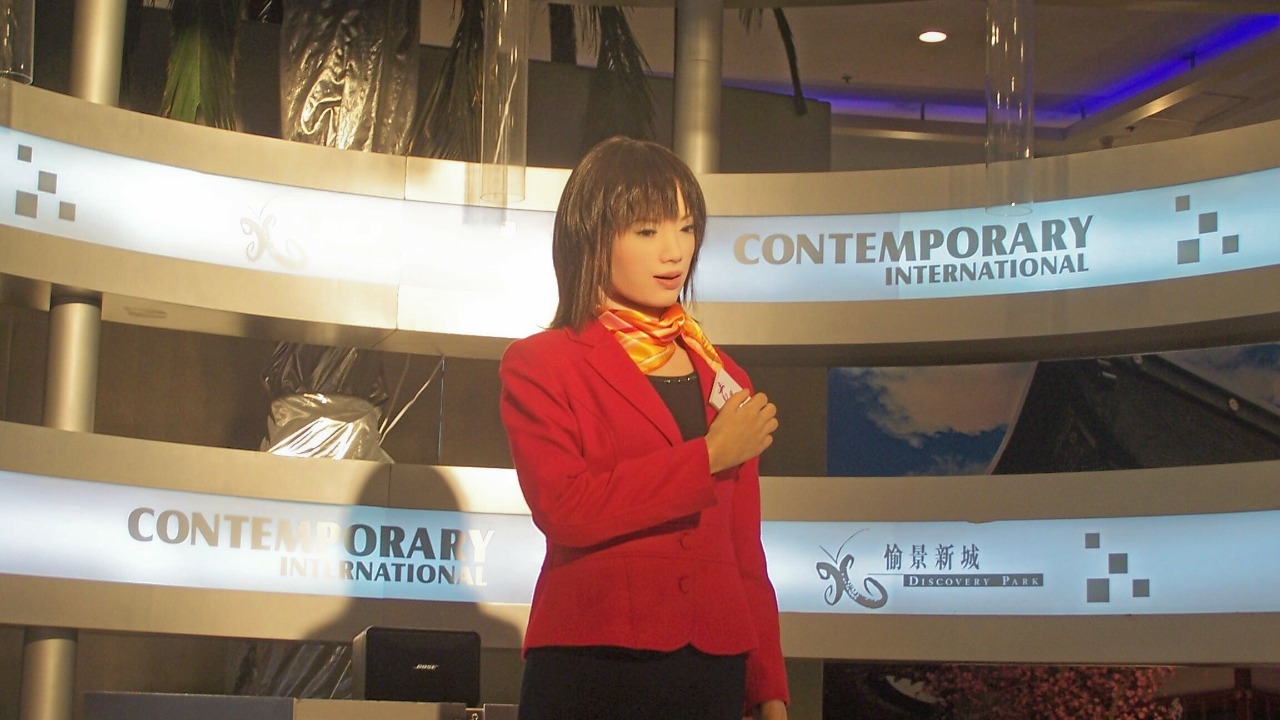
While Nvidia’s H200 policy shift dominates the semiconductor narrative, recent tech coverage has also highlighted a series of eye-catching robots that showcase how AI is being embodied in physical machines. In a recent segment of Tech Weekly: Nvidia gets China nod, eye-catching robots, visually striking designs took center stage, featuring robots that blend human-like mobility with expressive interfaces and advanced perception systems. These machines are not just engineering demonstrations, they are intended to operate in real-world environments, from factory floors and logistics hubs to public venues where they interact directly with people.
Some of the standout examples include humanoid platforms that walk, balance and manipulate objects with dexterity, as well as mobile robots that navigate complex indoor spaces while responding to voice commands or gestures. Their designers are pairing high-resolution sensors with AI models that can interpret scenes, recognize objects and adapt to changing conditions, which allows the robots to perform tasks such as sorting packages, assisting workers or entertaining audiences with choreographed movements. For stakeholders in manufacturing, retail and entertainment, these developments signal that robotics is moving from pilot projects to more scalable deployments, even as regulatory frameworks for AI chips and cross-border data flows lag behind the pace of innovation on the ground.
Geopolitical Shifts in Tech Trade
The decision to allow Nvidia H200 shipments to China fits into a broader pattern of evolving U.S. policies on technology trade, with Trump’s comments signaling a departure from the most stringent phase of controls on AI hardware exports. By selectively loosening restrictions on a flagship GPU, Washington is testing how to balance national security concerns with the commercial interests of a leading U.S. chip designer that depends heavily on global demand. The move also sends a message to allies and competitors that the United States is willing to recalibrate its approach as the economic stakes of AI infrastructure grow, rather than locking in a static set of rules that could disadvantage domestic firms.
Short-term market reactions are likely to focus on Nvidia’s stock performance and order pipeline, as investors assess how the H200 allowance could translate into incremental sales and stronger positioning in China relative to other suppliers. At the same time, the decision will be closely watched in Beijing, where policymakers are pushing for domestic chip alternatives to reduce reliance on U.S. technology while still seeking access to best-in-class GPUs for near-term AI ambitions. For international stakeholders, from European cloud providers to Asian contract manufacturers, the H200 shift underscores that export controls remain fluid, and that future policy moves could either open new channels for collaboration or trigger renewed restrictions that reshape where and how advanced AI systems are built.