

Google’s latest tensor processing units are positioned to deliver “Impressive” performance in AI workloads, signaling a deeper commitment to custom silicon for machine learning. Yet reports point to a single, easily overlooked bottleneck that could stall external scaling before it even begins, limiting how far this hardware can spread beyond Google’s own tightly managed stack. At the same time, NVIDIA has pushed back hard, arguing that its GPU-based AI platform still offers “Greater Performance and Versatility” than specialized ASICs and remains the safer bet for enterprises planning large-scale deployments.
Google’s Push with TPUs
Google’s current generation of tensor processing units is framed as a major leap in dedicated AI hardware, with Google’s TPUs described as capable of delivering “Impressive” performance on AI-specific computations. Built as application-specific integrated circuits that are tightly optimized for tensor operations, these chips are designed to accelerate the matrix multiplications and convolutions that dominate modern deep learning. For internal Google workloads, that specialization promises faster training and inference for large language models, recommendation systems, and search ranking pipelines that already run at enormous scale.
This TPU push also represents an evolution from earlier Google hardware iterations that were initially tuned for inference and later expanded to training, with each generation adding more compute density and tighter integration with Google’s data center fabric. The latest designs are presented as a way to accelerate internal AI training and inference at scale, giving Google Cloud customers access to the same infrastructure that powers products like Gmail and YouTube recommendations. For stakeholders building models inside Google Cloud’s controlled environment, the appeal is straightforward: if TPUs can be provisioned efficiently, they can shorten time to deployment compared with general-purpose GPUs, particularly for workloads that map cleanly onto the tensor-centric architecture.
The Scaling Bottleneck Challenge
Alongside the performance gains, the same reporting that highlights “Impressive” TPU results also flags a critical bottleneck that could halt external scaling before it starts. The concern centers on how tightly Google’s TPUs may deliver impressive performance but face one overlooked bottleneck tied to interoperability with non-Google ecosystems, which is described as a potential showstopper for broader adoption. In practice, that means organizations that rely on heterogeneous infrastructure, mixing on-premises clusters with multiple public clouds, could struggle to integrate TPUs into existing workflows that are already standardized around CUDA, PyTorch, and GPU-centric tooling. The stakes are high for enterprises that want portability across vendors, because a bottleneck at the integration layer can negate raw performance advantages on paper.
Reports suggest this limitation is particularly acute in multi-vendor AI setups, where models and data pipelines must move fluidly between different hardware back ends and orchestration systems. If TPUs remain deeply coupled to Google’s proprietary stack, external deployment could stall at the proof-of-concept stage, with teams finding that the cost of retooling code, retraining staff, and revalidating models outweighs the gains from faster tensor operations. Compared with previous TPU versions that were primarily evaluated inside Google’s own environment, the new emphasis on this bottleneck is emerging as a time-sensitive barrier for third-party scaling, because enterprises are making long-term platform bets right now and are wary of being locked into a single provider’s ecosystem.
NVIDIA’s Defense of Its AI Dominance
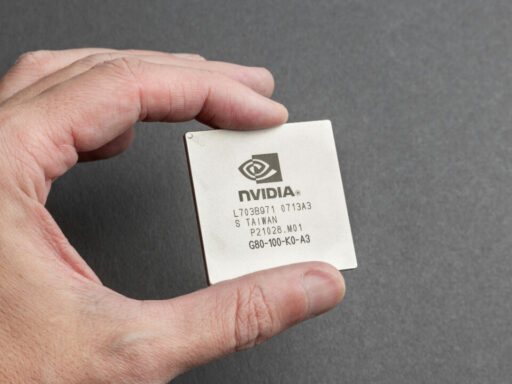
As questions about TPU scalability surface, NVIDIA has moved quickly to defend its position at the center of the AI hardware market. In a detailed response to comparisons with Google’s custom chips, the company argued that its GPU-based stack still offers “Greater Performance and Versatility” than ASICs, with NVIDIA hitting back at reports suggesting Google’s TPUs could overtake its AI stack and emphasizing the breadth of workloads its platform can handle. That rebuttal underscores NVIDIA’s view that while TPUs may excel on specific tensor-heavy tasks, GPUs retain an edge when developers need to support everything from training massive transformer models to running real-time inference in autonomous vehicles and edge devices.
NVIDIA’s framing matters for enterprise AI developers who must choose not just a chip, but an entire ecosystem of software, libraries, and partner support. By stressing “Greater Performance and Versatility” than ASICs, the company is effectively telling CIOs that GPUs are the safer long-term investment, especially in environments where workloads evolve quickly and cannot be neatly constrained to a single type of tensor operation. The response also reinforces NVIDIA’s market lead at a moment when custom accelerators from cloud providers are multiplying, signaling to investors and customers that the company intends to compete not only on raw FLOPS but on the flexibility and maturity of its full AI stack.
Implications for Cloud Customers and AI Builders
The tension between TPU specialization and GPU versatility is already shaping how cloud customers think about their next wave of AI projects. For teams that operate primarily inside Google Cloud and can align their models with the strengths of Google’s TPUs, the promise of “Impressive” performance is attractive, particularly for large-scale training runs that benefit from tightly coupled data center fabrics. However, the reported bottleneck around external scaling means that organizations with hybrid or multi-cloud strategies must weigh the risk that TPU-centric workflows will be harder to migrate or replicate elsewhere, potentially increasing long-term switching costs.
On the other side, NVIDIA’s insistence that it offers “Greater Performance and Versatility” than ASICs, as highlighted in its response to claims that Google’s TPUs could overtake its AI stack, reinforces the appeal of a more general-purpose platform. Developers who already rely on CUDA, TensorRT, and GPU-optimized frameworks can continue to scale across multiple clouds and on-premises clusters without rewriting core components for a new architecture. For stakeholders planning multi-year AI roadmaps, that flexibility can be as important as peak benchmark numbers, because it reduces the risk that a single overlooked bottleneck will derail external scaling just as demand for generative and predictive models accelerates.