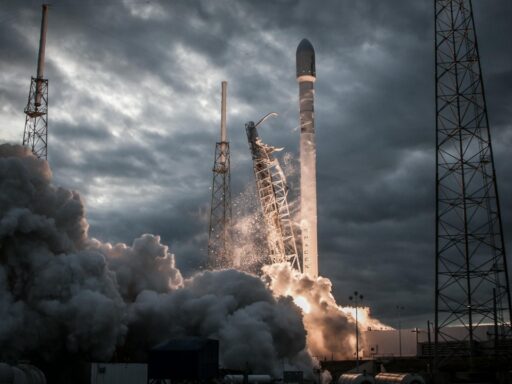
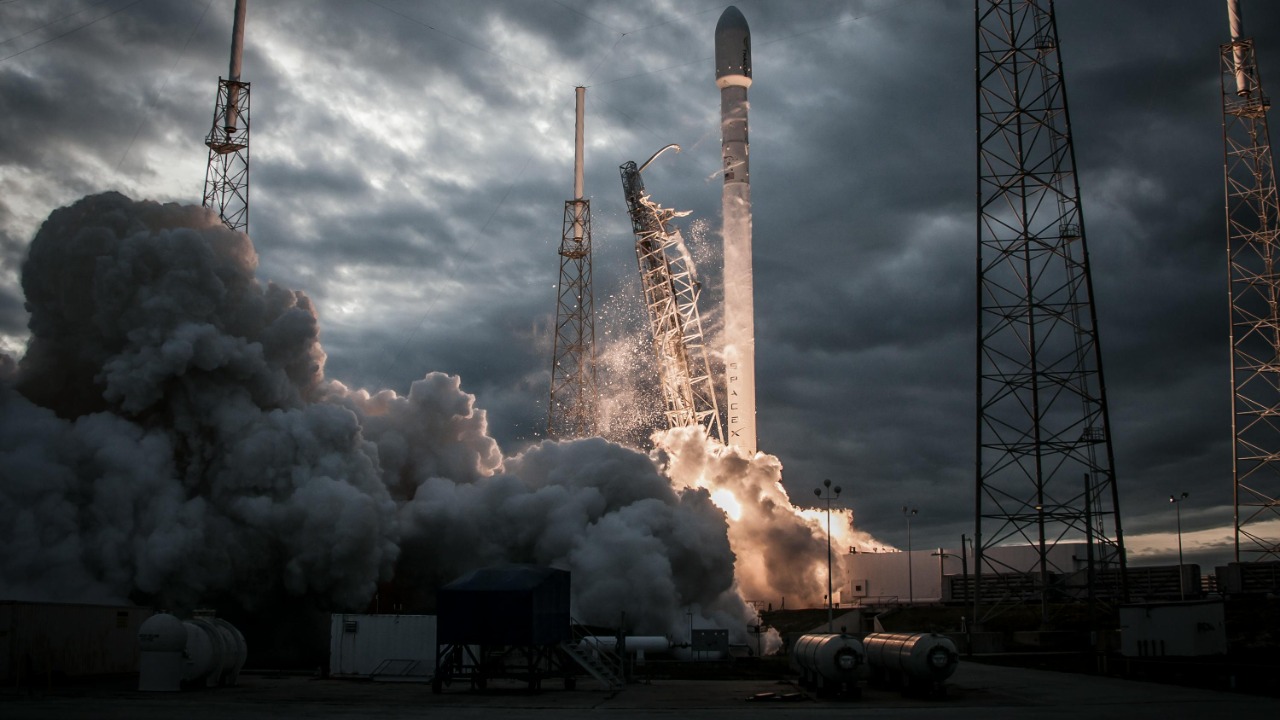

Three new crew members, forming a US-Russian team, have begun settling into their new life aboard the International Space Station during the week of December 1-5, 2025, marking the start of their eight-month mission after blasting off in a Russian Soyuz spacecraft. Their arrival signals a fresh rotation for the orbiting laboratory, with the trio shifting quickly from launch mode to the rhythms of long-duration spaceflight. I see their first days in orbit as a revealing snapshot of how international crews now transition almost seamlessly into complex, shared operations in microgravity.
Crew Arrival and Docking
The US-Russian crew of 3 reached the International Space Station after launching in a Russian Soyuz spacecraft and executing a precise orbital rendezvous that brought their capsule into alignment with the outpost’s docking port. According to reporting on the US-Russian crew of 3 blasting off to the International Space Station in a Russian Soyuz spacecraft, the mission profile relied on a carefully choreographed series of engine burns and navigation checks that allowed the Soyuz to close the final kilometers to the station at walking speed. That kind of controlled approach is critical not only for safety, but also for preserving the station’s structural integrity, since even a small misalignment at orbital velocities can have outsized consequences for hardware and crew.
Once the Soyuz was hard docked, the crew and ground controllers moved into a well-rehearsed sequence of leak checks and pressure equalization before the hatch between the spacecraft and the station could be opened. The initial hatch opening and crew transfer procedures are deliberately methodical, with each astronaut moving through the vestibule in turn, pausing for communications checks and quick visual inspections that confirm their readiness to join the orbiting laboratory’s existing residents. By integrating the new arrivals into the station’s life-support, communications, and safety systems within hours of docking, mission managers ensure that the expanded crew can immediately contribute to ongoing operations, a key factor in keeping the station’s multinational research program on schedule.
Settling into Orbital Routine
During the week of December 1-5, 2025, the three new astronauts have focused on adapting to microgravity and learning the layout of their new home, a process that begins with simple tasks like floating through modules and identifying handholds, sleeping quarters, and emergency equipment. Reporting on how the 3 new crew members settle in to life in orbit on the International Space Station this week Dec. 1-5, 2025 highlights that orientation sessions cover everything from how to secure laptops and experiment racks to where to stow food and hygiene supplies so they do not drift into sensitive hardware. That early familiarization is not just about comfort, it directly affects safety and efficiency, since a crew that can navigate quickly and intuitively is better positioned to respond to alarms, support science operations, and avoid accidental damage to equipment.
Alongside orientation, the astronauts have been unpacking personal items and mission-critical cargo, transferring bags from the Soyuz into designated storage locations around the station. Early health checks are another priority, with medical monitoring confirming how each crew member’s body is responding to the abrupt shift from Earth’s gravity to continuous free fall, and those data feed into long-term studies on bone density, muscle loss, and cardiovascular changes. By moving rapidly from launch preparations to sustained mission activities, the crew demonstrates how modern station rotations compress the transition period, allowing new arrivals to begin contributing to experiments and maintenance tasks within their first week, which in turn helps keep the station’s packed research schedule on track for partner agencies.
Mission Objectives and Duration
The US-Russian crew of 3 is embarking on an eight-month mission that will carry them through a full cycle of station operations, from routine maintenance and cargo traffic to potential spacewalks and visiting vehicle support. Over that period, they are slated to participate in a range of scientific experiments that typically include microgravity biology, fluid physics, and technology demonstrations designed to support future deep-space missions, although specific experiment manifests are not detailed in the available reporting and remain unverified based on available sources. An eight-month stay gives researchers a valuable window into how human physiology and performance evolve over time in orbit, and it also allows engineers to test hardware reliability across multiple thermal cycles, power-demand peaks, and operational scenarios.
Beyond the science, the mission carries clear diplomatic and operational implications, since it is built around a US-Russian team flying on a Russian Soyuz spacecraft to a station that also supports other international partners. The reporting on the US-Russian crew’s launch underscores that this rotation refreshes the station’s multinational workforce and reinforces cross-border coordination on everything from flight rules to emergency procedures. For stakeholders on the ground, including space agencies, contractors, and research institutions, that kind of integrated mission helps sustain a shared infrastructure that would be far more expensive and less capable if operated by a single nation, and it signals that practical cooperation in orbit continues even when geopolitical conditions on Earth are complex.
Weekly Highlights and Future Outlook
During the December 1-5, 2025 window, the new crew’s schedule has been dominated by joint briefings with the veteran station residents and system verifications that confirm every major subsystem is functioning as expected with the expanded team on board. These briefings typically cover life-support performance, power management, communications links, and emergency response roles, and the reporting on their first week in orbit indicates that the trio has moved through these checkouts quickly compared with some earlier rotations, which often required more time to synchronize procedures across language and training differences. That rapid integration matters for mission planners, because it frees up crew hours for science and maintenance rather than prolonged onboarding, and it offers a template for how future mixed-nationality crews might streamline their first days in orbit.
Looking ahead across the eight-month mission, the presence of this US-Russian crew of 3 is expected to shape station dynamics as they rotate into leadership roles on experiments, maintenance campaigns, and potential visiting vehicle operations. Their tenure will likely coincide with multiple cargo deliveries and crew handovers, giving them a central role in mentoring future arrivals and preserving institutional knowledge about the station’s evolving configuration, although specific visiting vehicle schedules and experiment lists are unverified based on available sources. For policymakers and program managers, the way this crew settles into its responsibilities and navigates the inevitable surprises of long-duration flight will offer fresh data on how to structure training, allocate resources, and design future missions that rely on similarly diverse teams working together in orbit.