
Interstellar comet 3I/ATLAS has revealed an “impossible” anti-tail in sharp new views that challenge established comet physics and overturn expectations about how dust and gas behave in deep space. As astronomers scrutinize these razor-edged structures and other features that appear to break every known rule of comet behavior, the object’s rapid passage through the solar system has prompted the United Nations to confirm that planetary defenses will track it closely.
New Images Unveil Unexpected Features
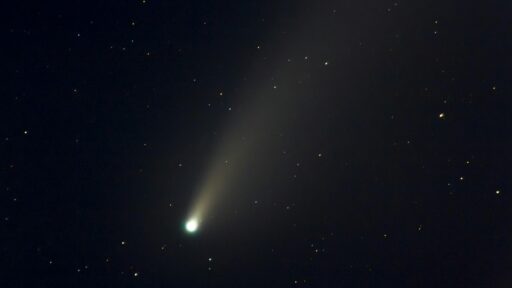
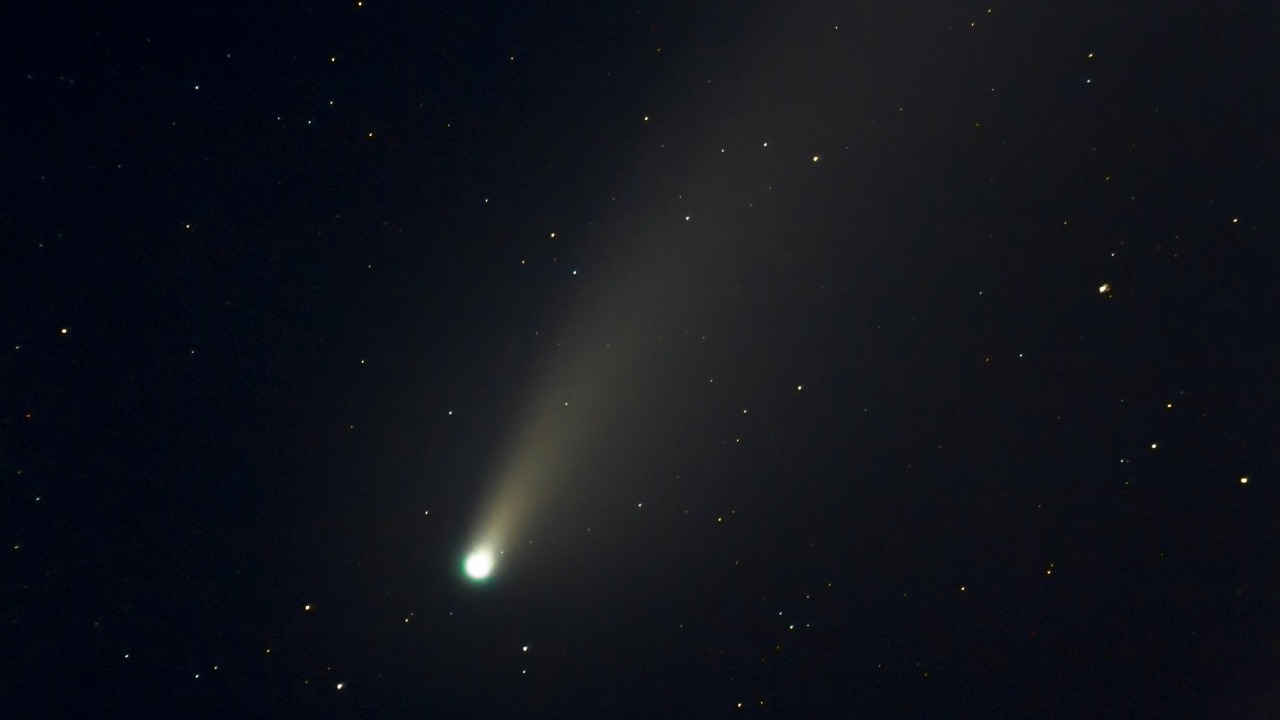
The latest high-resolution observations of 3I/ATLAS have captured what researchers are describing as an “impossible” anti-tail, a striking structure that appears to project toward the Sun rather than streaming away from it. In the new data, the anti-tail stands out as a sharply defined spike of material that contradicts the standard picture of comet dust being pushed uniformly outward by solar radiation, a contradiction that has been highlighted in reporting on how 3I/ATLAS reveals an ‘impossible’ anti-tail as new image challenges comet physics. For scientists and mission planners, the clarity of this feature raises immediate questions about the forces shaping interstellar comets and whether existing models can reliably predict their behavior as they cross planetary orbits.
Alongside the basic detection of an anti-tail, the new imagery has exposed a razor-sharp profile that stands in stark contrast to the diffuse, fan-like tails familiar from most solar system comets. Detailed reporting on how 3I/ATLAS reveals a razor-sharp anti-tail as new image exposes features that break every known rule of comet physics underscores that earlier views of the object were comparatively blurry, masking the fine structure now visible along the tail’s edge. This leap in resolution matters for researchers who rely on tail morphology to infer grain sizes, ejection speeds, and magnetic interactions, because a narrow, knife-like anti-tail suggests a far more organized and possibly more energetic process than the gentle outgassing typically assumed for comets passing near the Sun.
Implications for Comet Physics
The appearance of an anti-tail that seems to defy the expected direction of solar radiation pressure has immediate implications for comet physics, particularly for theories that treat dust grains as passive particles pushed outward in a predictable way. In the case of 3I/ATLAS, the “impossible” geometry documented in the new images, which are described in detail in coverage of how new images first captured this anomaly, suggests that additional forces or unusual grain properties are at work, from complex orbital alignments to interactions with the solar wind that are not yet fully captured in standard models. For planetary defense analysts and mission designers, that uncertainty complicates efforts to forecast how dust and gas from an interstellar object might spread through near-Earth space, a key factor when assessing potential hazards to satellites and crewed spacecraft.
Beyond the anti-tail itself, the same sharp views have revealed other features that reporting describes as breaking every known rule of comet behavior, including abrupt changes in brightness and structure that do not match the gradual evolution seen in long-studied solar system comets. The account of how the latest sharp views expose features that break every known rule of comet physics points to a broader pattern in which 3I/ATLAS refuses to conform to expectations derived from objects like 1I/ʻOumuamua or 2I/Borisov, let alone traditional periodic comets. For theorists working on interstellar object models, these anomalies signal that the diversity of material, structure, and activity among visitors from other star systems may be far greater than current frameworks assume, raising the stakes for rapid, coordinated observation whenever a new interstellar body is detected.
UN’s Role in Monitoring the Comet
As 3I/ATLAS races through the solar system on its interstellar trajectory, the United Nations has confirmed that planetary defenses will observe it closely, treating the comet as both a scientific opportunity and a live test of global monitoring systems. Reporting that UN planetary defenses will observe interstellar comet 3I/ATLAS as it races through our solar system links this decision directly to the new images, which have elevated the object from a routine tracking target to a priority case for coordinated observation. For national space agencies and defense organizations, that UN confirmation signals a shift toward more structured protocols whenever an interstellar object with unusual physical behavior passes through the region where it could interact with Earth’s orbital infrastructure.
Officials involved in planetary defense planning are treating the anti-tail revelations as a key input for ongoing risk assessments, particularly as 3I/ATLAS approaches closer solar proximity and its activity level changes. The emphasis on integrating data from the razor-sharp anti-tail and other anomalous features into global monitoring efforts reflects a broader move from passive cataloging of comets to active, scenario-based analysis of how interstellar visitors might behave under solar heating, gravitational perturbations, and magnetic influences. For stakeholders ranging from satellite operators to crewed mission planners, the UN’s decision to keep planetary defenses focused on 3I/ATLAS underscores that even objects with no immediate impact threat can serve as critical stress tests for the systems designed to detect, characterize, and, if necessary, respond to hazardous bodies in the future.