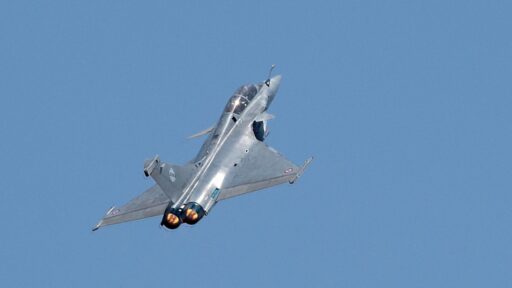
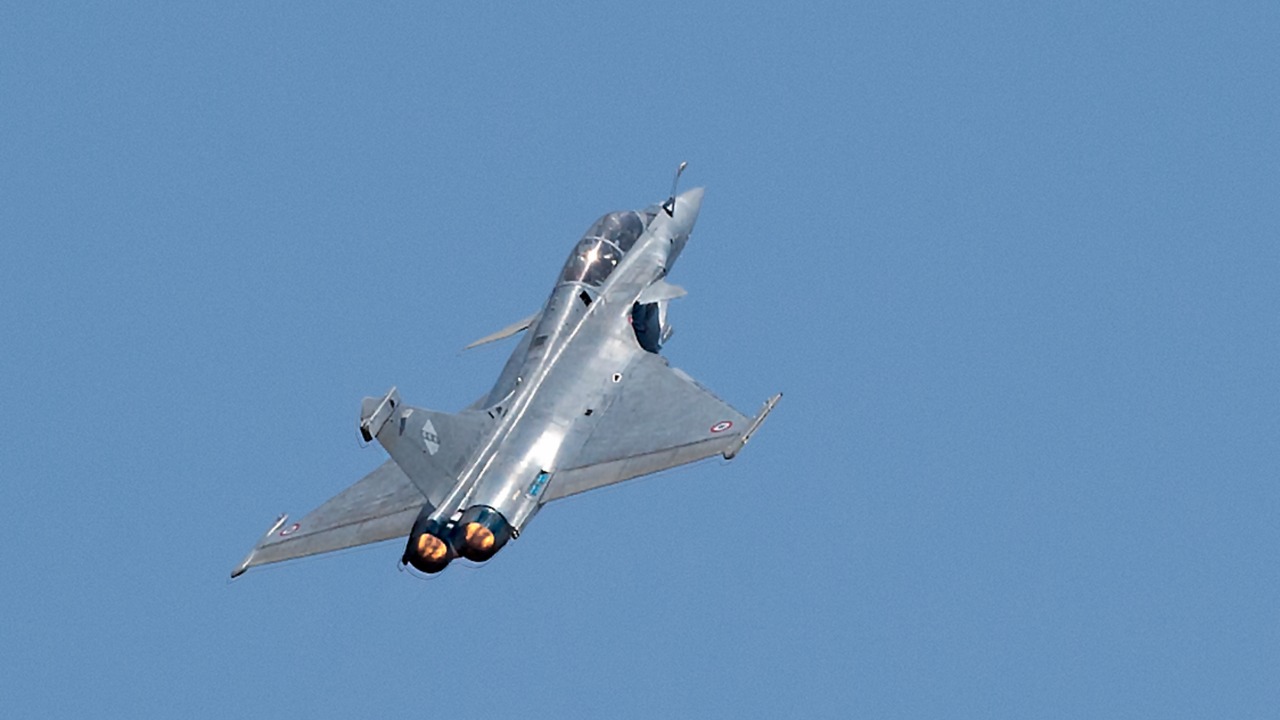

France has confirmed India’s interest in the Rafale F5, marking a pivotal advancement in their defense partnership and signaling a new phase in combat aviation planning for both countries. The move positions India as the potential first export customer for the next-generation fighter variant, a status that carries weight in both industrial and strategic terms. The confirmation underscores evolving strategic ties amid intensifying global aerospace competition and a crowded field of future fighter programs.
Background on Rafale Evolution
The Rafale program has evolved through successive standards, from early F1 and F2 configurations focused on air defense and strike roles to the more mature F3 and F3R variants that expanded multirole capabilities. French officials have now identified the Rafale F5 as the next major step, describing it as a future combat aircraft standard that will integrate advanced sensors, connectivity and weapons, even though no prior export commitments were attached to this configuration when it was first outlined. This progression reflects France’s intent to keep the platform relevant well into the 2030s, giving operators a bridge between current fourth-generation designs and more networked, collaborative combat systems.
Dassault Aviation, as the prime contractor and developer of Rafale, has been tasked by the French government with shaping the F5 standard as part of a broader national and European push toward future air combat capabilities. Reporting on the French position notes that the F5 is expected to support new concepts such as teaming with unmanned systems and enhanced data fusion, aligning it with the direction of European projects like the Future Combat Air System and other next-generation fighter initiatives. For stakeholders across Europe, the Rafale F5 therefore sits at the intersection of national industrial policy and continent-wide efforts to maintain technological parity with American and Asian aerospace competitors.
India’s Defense Procurement History with France
India’s interest in the Rafale F5 builds on a substantial procurement history with France that already includes a high-profile fighter acquisition. Under a government-to-government agreement concluded in 2016, New Delhi ordered 36 Rafale aircraft for the Indian Air Force, a deal that brought the French jet into frontline service and established a baseline of operational familiarity, training pipelines and maintenance infrastructure. That earlier contract has since become a reference point for discussions about future capability upgrades, as Indian planners weigh how to extend the life and effectiveness of their existing fleet while considering new variants.
Current Indian requirements under the Multi-Role Fighter Aircraft (MRFA) program are framed around a need for a highly capable, multirole platform that can integrate seamlessly with existing air defense networks and support long-range missions across the Indian Ocean and contested land borders. The Rafale F5, as described by French officials, appears tailored to many of these needs, particularly in its emphasis on advanced sensors and network-centric warfare, which align with India’s push for greater situational awareness and precision strike capacity. Bilateral frameworks, including a 2021 roadmap for defense-industrial cooperation between Paris and New Delhi, provide a political and industrial context for potential Rafale F5 acquisitions, signaling that any future deal would likely include technology collaboration and local industrial participation that could shape India’s aerospace sector for years.
Details of the Recent Confirmation
French authorities have now publicly confirmed that India has expressed interest in integrating the Rafale F5 into its future force structure, elevating what had been exploratory conversations into a more concrete prospect of export. According to reporting on the French position, officials have characterized India as a potential first export customer for the F5 standard, a designation that would give New Delhi early access to the most advanced Rafale configuration planned so far. The acknowledgment that India is being considered in this role marks a shift from generic marketing of future upgrades to a targeted dialogue with a specific partner that already operates the aircraft.
The timing of this confirmation, detailed in coverage of how France confirms India’s interest in the Rafale F5, potential first export customer, is strategically significant for both sides, as it comes while India is still shaping its MRFA roadmap and France is finalizing the F5’s capability set. French officials have indicated that discussions now include potential India-specific enhancements, opening the door to joint development work that could tailor avionics, weapons integration or mission systems to Indian Air Force requirements. For policymakers and industry leaders, this suggests that any Rafale F5 export package to India would not be a simple off-the-shelf sale but a collaborative project that could deepen technological interdependence and give India a voice in shaping the future evolution of the platform.
Implications for Export and Regional Security
Positioning India as the inaugural export customer for the Rafale F5 would have immediate implications for France’s global sales strategy, reinforcing the aircraft’s image as a living program that continues to receive major capability upgrades. Securing an early F5 export deal with a large operator like India would signal to other prospective buyers that the Rafale line has a long-term roadmap, potentially influencing procurement debates in regions where competing platforms such as the F-16V, F-35 or Eurofighter Typhoon are under consideration. For French industry, a successful F5 export to India could underpin production lines, sustain high-skilled jobs and justify further investment in research and development tied to the Rafale family.
In strategic terms, the integration of Rafale F5 aircraft into the Indian Air Force would likely reinforce India’s position in the Indo-Pacific security environment, particularly if the new standard enhances interoperability with existing Rafale squadrons and other Indian assets. Analysts note that more capable Rafale variants, equipped with improved sensors and networked weapons, would strengthen India’s ability to conduct air superiority, deep strike and maritime missions across a wide geographic arc, from the Himalayas to the wider Indian Ocean. As negotiations and production timelines are refined, the prospect of accelerated Indo-French aerospace collaboration signals to regional actors that New Delhi and Paris are aligning not only on platform choices but also on a shared vision of advanced airpower and industrial partnership that could shape the balance of capabilities in Asia for the next two decades.