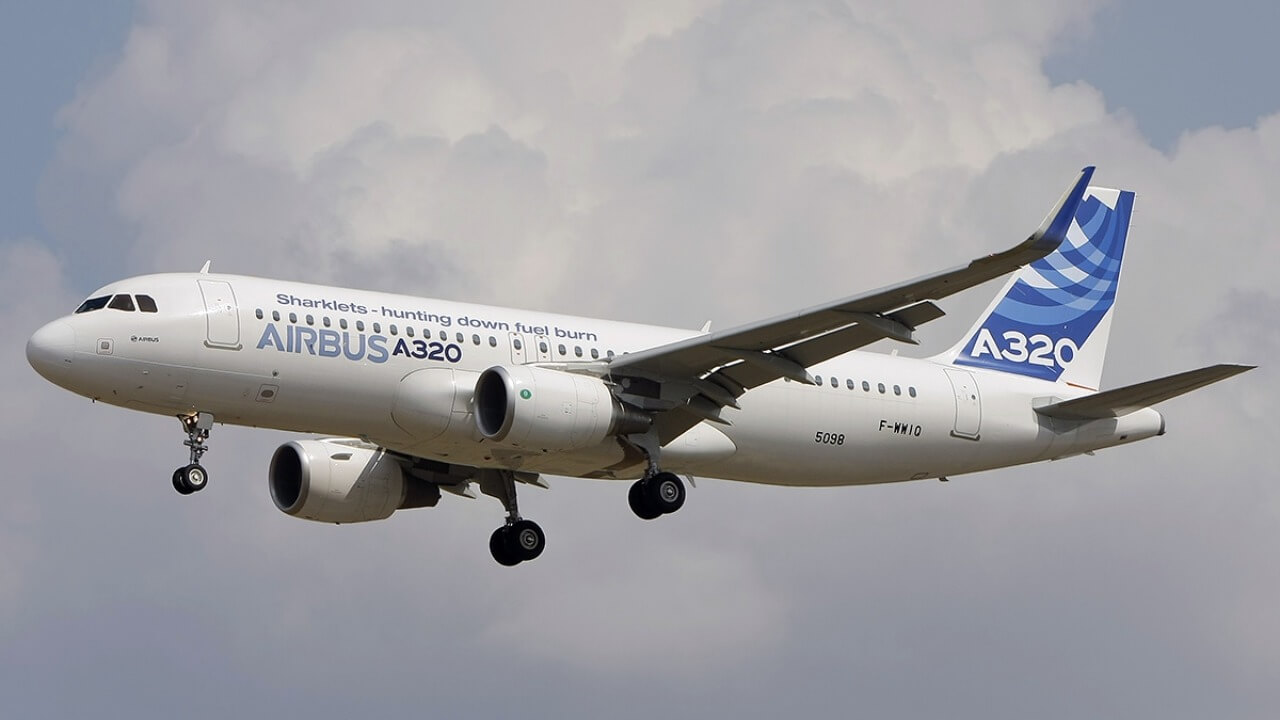

Airbus has reduced its 2025 delivery target for commercial aircraft after uncovering a flaw in fuselage panels on its A320 jets, the company’s top-selling model. The adjustment reflects mounting production pressures as engineers rework affected airframes, although Airbus insists its profit goals for next year remain intact, underscoring the strength of demand in the single-aisle market.
The move highlights how quality problems in a single high-volume program can ripple across airline fleets, supplier networks and financial forecasts in a sector that is already operating near capacity. It also reinforces the scrutiny facing manufacturers as regulators and customers push for tighter oversight of every stage of aircraft production.
Announcement of the Delivery Cut
Airbus formally lowered its 2025 commercial aircraft delivery target after identifying a quality problem in fuselage panels on the A320 family, confirming that the cut is concentrated on its most popular single-aisle line. The company acknowledged that the revised guidance reflects the time needed to inspect and rework affected structures, with the updated outlook framed as a direct response to the A320 fuselage panel issue that has disrupted its production plans. Executives presented the change as a pragmatic recalibration rather than a strategic retreat, arguing that it is better to slow deliveries than to compromise on quality thresholds that underpin long-term safety and reliability.
Earlier expectations had pointed to a higher output level in 2025, but the new target reflects what Airbus now considers a realistic ceiling given the additional work required on each affected airframe. Reporting on the decision notes that the company’s guidance explicitly singles out the A320 family, signaling that the bottleneck is not spread evenly across its portfolio but is instead concentrated in the narrow-body program that anchors its order book. By tying the revised forecast to a specific technical issue, Airbus is effectively telling airlines and investors that the constraint is operational and time-bound, not a sign of weakening demand or structural decline in its core market.
Details of the Fuselage Panel Flaw
The flaw at the center of the disruption involves quality problems in fuselage panels on A320 jets, which must meet strict standards for structural integrity and fatigue resistance. According to technical assessments cited in recent coverage, the issue stems from manufacturing defects that affect the integrity of certain panels, triggering a requirement for additional inspections and rework before the aircraft can be cleared for delivery. One detailed account explains that Airbus identified the problem during routine production checks, prompting engineers to trace the defect back through the supply chain and to adjust assembly processes to prevent recurrence, as described in the analysis of the fuselage panel flaw that has forced the company to cut its 2025 target.
While the reporting does not specify the exact nature of the defect, the characterization of “quality problems” and “panel integrity” issues indicates that the concern is structural rather than cosmetic, which raises the stakes for how Airbus responds. The company has framed its actions as precautionary, emphasizing that the flaw was caught within its own production system rather than through an in-service incident, a distinction that matters for regulators and airlines assessing risk. By moving quickly to isolate affected airframes and adjust its schedule, Airbus is signaling that it is prioritizing safety margins and regulatory compliance, even at the cost of near-term delivery volume.
Impact on Production and Stakeholders
The immediate consequence of the delivery target reduction is a reshuffling of production slots and handover dates for airlines that had been counting on new A320 family jets to support growth or replace older aircraft. Several carriers now face the prospect of extending leases on existing fleets, deferring route expansions or adjusting capacity plans, because the cut in the 2025 delivery target over the A320 fuselage issue leaves fewer aircraft available than previously expected. For airlines that rely heavily on the A320 for high-frequency routes, even modest delays can translate into tighter utilization of current aircraft, higher maintenance exposure and less flexibility to respond to demand spikes.
Suppliers are also feeling the effects, as the revised schedule alters the cadence of orders for components tied to the A320 program, from fuselage sections and landing gear to avionics and cabin interiors. Reporting on the decision notes that the delivery cut is already reshaping supply chain dynamics, with some partners facing slower ramp-ups than planned while others are asked to support rework and inspection campaigns on short notice. At the same time, Airbus has indicated that there is no broader impact on its other jet programs, a point underscored in coverage of how the delivery target reduction over the fuselage quality issue is being contained within the A320 family. That containment is critical for airlines awaiting wide-body aircraft and for suppliers whose exposure is diversified across multiple platforms.
Financial Outlook and Profit Stability
Despite the operational setback, Airbus has reiterated that its profit goals for 2025 remain unchanged, arguing that robust demand and disciplined cost management will offset the impact of lower deliveries. In its updated guidance, the company stressed that the A320 fuselage quality problem is not expected to alter overall earnings projections, a stance reflected in the assessment that Airbus has lowered its 2025 deliveries target on the A320 quality problem while keeping its profit goals intact. That message is aimed squarely at investors who have grown accustomed to aerospace manufacturers missing volume targets but are more sensitive to signs of margin erosion or spiraling remediation costs.
Analysts note that the company’s confidence rests on several pillars, including a deep backlog for the A320 family, pricing power in a constrained market and the ability to concentrate cost controls on the affected production lines rather than across the entire business. Coverage of the decision highlights that Airbus is focusing its remediation spending on the specific fuselage panel issue, while continuing to pursue efficiency gains in other programs and services. By separating the operational disruption from its broader financial trajectory, Airbus is trying to reassure shareholders that the quality problem is a manageable headwind rather than a systemic shock, even as it acknowledges that 2025 output will fall short of earlier ambitions.
Broader Industry Context and Competitive Pressures
The A320 family sits at the heart of the global single-aisle market, so any disruption to its production has implications that extend beyond Airbus and its immediate customers. Reporting on the revised guidance emphasizes that the company’s most popular jet is also a critical workhorse for airlines worldwide, which helps explain why the cut in the 2025 delivery target after issues with the top-selling jet is drawing close scrutiny from regulators, leasing firms and competitors. In a market where capacity is already tight and many carriers are trying to modernize fleets for fuel efficiency and emissions goals, fewer A320 deliveries can ripple into ticket pricing, route planning and environmental commitments.
The episode also lands in an industry climate where quality control and manufacturing oversight are under intense examination, particularly in the narrow-body segment that pits Airbus directly against its main rival. Coverage of the decision to scale back deliveries notes that the A320 fuselage panel flaw adds to a series of production challenges facing large commercial aircraft programs, reinforcing the perception that the sector is struggling to balance aggressive ramp-up targets with the need for meticulous inspection regimes. By confronting the issue publicly and tying its delivery forecast to a specific technical constraint, Airbus is positioning itself as responsive to quality concerns, but it also underscores how little slack exists in the system when a single component problem can reshape global fleet plans.
Operational Response and Next Steps
In response to the fuselage panel flaw, Airbus has launched a structured program of inspections, rework and process adjustments aimed at restoring full confidence in the A320 production line. Detailed accounts of the company’s actions describe how engineers are prioritizing aircraft already in advanced stages of assembly, while also reviewing earlier steps in the manufacturing chain to ensure that similar defects cannot pass undetected in future builds. One report on the company’s internal response notes that the commercial aircraft delivery target for 2025 has been slashed specifically because of the flaw in the fuselage, which underscores how central the remediation effort has become to Airbus’s near-term operational agenda.
Looking ahead, Airbus is expected to refine its production plan as it gains more clarity on the scope of the affected airframes and the time required for corrective work, with the possibility that some of the lost 2025 volume could be recovered in subsequent years. Industry analysts point out that the company’s ability to execute on this plan will influence not only its own financial performance but also the competitive balance in the single-aisle market, where airlines are weighing future orders and fleet strategies. Additional reporting on the situation highlights that the manufacturer has already moved to adjust its guidance after troubles with its most popular jet prompted a cut in the delivery target, suggesting that further fine-tuning is likely as the technical and logistical picture evolves.