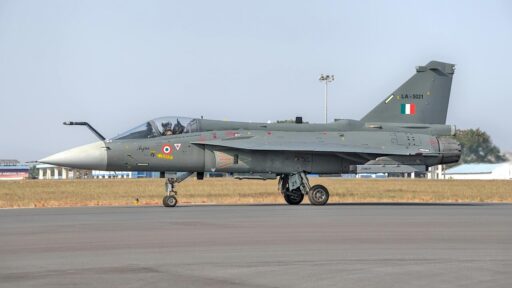
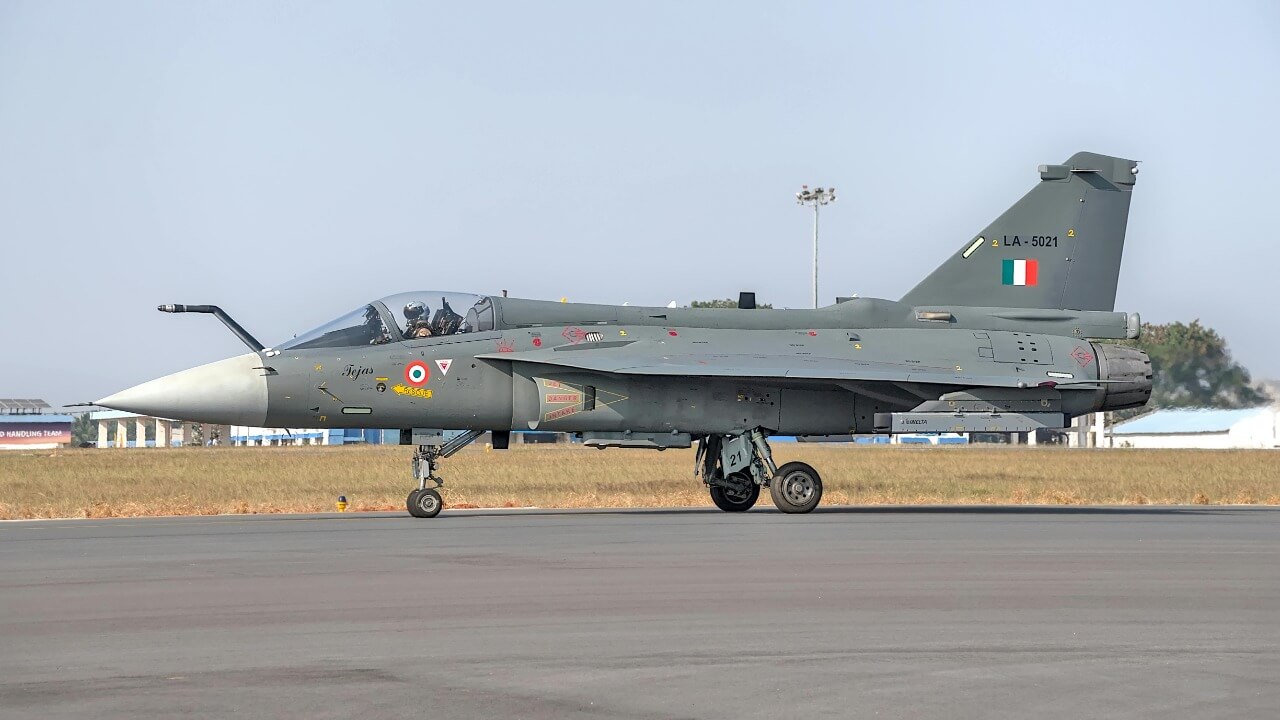

An Indian Air Force Tejas fighter jet crashed during a demonstration flight at the Dubai Airshow 2025, killing its pilot and abruptly halting a high-profile display of India’s indigenous aviation program. The HAL Tejas was performing an aerobatic routine meant to showcase homegrown defense capabilities when it plunged from the sky and exploded into a massive fireball, sending spectators scrambling for cover on November 21, 2025. The incident has turned a marquee international showcase into a somber focal point for questions about safety, reliability, and the future of India’s light combat aircraft exports.
Incident Timeline
According to initial accounts from the venue, the Tejas fighter jet began its demonstration flight at the Dubai Airshow on November 21, 2025, at approximately 11:40 a.m. local time, shortly before reports emerged of a serious in-flight emergency. Eyewitnesses described the aircraft entering a maneuver during the aerial display and then appearing to lose control mid-air, with the jet plummeting toward the ground before erupting into what multiple outlets characterized as a massive fireball that instantly transformed the crowd’s excitement into alarm. The early timing details, tied closely to the start of the scheduled display, are central to investigators who are now reconstructing the final minutes of the sortie to determine whether the problem began during a specific aerobatic sequence or at an earlier phase of the flight.
Video and on-the-ground reporting show that the fireball and subsequent plume of smoke were visible across the Dubai Airshow site, triggering immediate panic among spectators and prompting security personnel to rush people away from the crash zone. Initial confusion about the exact location of the impact gave way to more precise accounts as later updates confirmed that the crash site lay near the airshow venue, close enough to force organizers to suspend flying activities while emergency teams responded. As those later reports clarified the geography of the demonstration flight failure, attention shifted from speculation about a possible off-site incident to the stark reality that a frontline Indian fighter had been lost in full view of international delegations, potential buyers, and global media.
Pilot’s Outcome and Initial Response
In the immediate aftermath of the crash, early dispatches from the scene described the pilot’s status as unknown, reflecting the chaos that followed the explosion and the difficulty of accessing the wreckage while fires still burned. One of the first detailed alerts, issued around the same time as the 11:40 a.m. local start of the display, reported that a plane had gone down during a demonstration flight at the Dubai Air Show and that the pilot’s condition could not yet be confirmed, underscoring how little verified information was available in the first minutes after impact. That uncertainty shaped the initial emergency response, as rescue teams worked under the hope that the pilot might have ejected or survived the crash, even as the scale of the fireball suggested a catastrophic event.
Subsequent confirmations from multiple outlets later in the day established that the pilot succumbed to injuries, turning the incident into a formally acknowledged fatality and prompting a wave of official condolences and procedural reviews. Coverage of the Tejas crash at the Dubai Airshow described how emergency response teams secured the area around the wreckage while medical personnel attempted to treat the pilot, who was later confirmed dead in reports that framed the loss as a tragic outcome of a high-risk display. Indian Air Force officials, cited in detailed accounts of the IAF Tejas display, acknowledged the incident by midday and emphasized the pilot’s efforts during the routine, a framing that highlights both the personal cost of the crash and the institutional imperative to understand what went wrong in an aircraft that is central to India’s frontline fleet.
Airshow Context and Showcase Disruption
The Dubai Airshow 2025 had positioned the HAL Tejas as a centerpiece of India’s indigenous defense showcase, with the light combat aircraft performing aerobatic routines designed to highlight its agility, avionics, and suitability for export customers. Reporting on the event noted that the HAL Tejas aerial display was part of a broader push by New Delhi to promote homegrown aviation technology, including the jet’s role in replacing older platforms and competing in international tenders. The crash that ended this particular display therefore carried symbolic weight beyond the loss of a single airframe, interrupting a carefully choreographed effort to present India as a mature supplier of advanced combat aircraft to global markets.
Once the Indian fighter jet went down, organizers moved quickly to pause aerial activities, creating a temporary standstill in the flying program while safety checks and emergency procedures were carried out. The flow of information mirrored that operational disruption, evolving from an initial alert around 10:36 a.m. local time that a Tejas fighter jet had crashed at the Dubai Air Show to fuller coverage by 12:17 p.m. that detailed the pilot’s death and the scale of the fireball. That progression from sparse early notices to more comprehensive reporting illustrates how the event’s narrative shifted in real time, from a promotional showcase of cutting-edge aircraft to a crisis management exercise watched closely by defense delegations, regulators, and industry executives who rely on airshows as both marketing platforms and demonstrations of operational safety.
Stakeholder Reactions and Broader Implications
Official reactions from India were swift and somber, with the Indian Air Force issuing statements that expressed condolences for the pilot killed and confirmed that a formal investigation into the Tejas crash had been launched by late November 21, 2025. Coverage of the Indian Air Force Tejas jet crash at the Dubai Air Show highlighted that the service treated the incident as a serious operational setback, not only because of the loss of life but also because the aircraft involved was part of a high-visibility international deployment. By publicly acknowledging the fatality and committing to a detailed inquiry, the IAF signaled that it understood the reputational stakes for a platform that has been central to its modernization plans and to India’s broader narrative of technological self-reliance.
Defense analysts quickly began assessing how the Dubai Air Show fatality might affect India’s export ambitions for the Tejas, which has been pitched to several countries as a cost-effective, modern light combat aircraft. Reporting on the Indian fighter jet crash resulting in a pilot fatality noted that the incident raised questions about the jet’s reliability during international showcases, a sensitive issue at a time when India is competing with established suppliers for contracts in Asia, Africa, and Latin America. International media coverage intensified after an 11:46 a.m. update described the crash as a massive fireball that sparked panic, a vivid image that risks overshadowing previous promotional narratives and could prompt potential buyers to seek detailed briefings on the aircraft’s safety record, maintenance regime, and any design or training factors that emerge from the investigation.
Technical and Safety Questions Ahead
As investigators begin their work, the focus now turns to the technical and procedural factors that may have contributed to the demonstration flight failure, including the specific maneuvers flown, the aircraft’s configuration, and the conditions at the time of the crash. Detailed accounts of the incident, such as those describing how the Tejas fighter jet crashed during a demonstration flight at the Dubai Airshow with the pilot killed, will likely form part of the evidentiary record that engineers and safety experts use to reconstruct the sequence of events. The stakes are high for stakeholders across the aerospace sector, since any findings about structural issues, software anomalies, or human factors could influence not only the Tejas program but also broader standards for aerobatic displays at civilian airshows where military hardware is showcased.
Beyond the technical inquiry, the crash is expected to prompt a review of safety protocols governing high-risk aerial demonstrations, including the altitude margins, escape options, and emergency response plans that apply when combat aircraft perform in front of large crowds. Reporting that the Tejas fighter jet crash at the Dubai Air Show unfolded in full view of spectators, with the pilot’s status initially unknown and later confirmed as a fatality, underscores the inherent tension between dramatic displays and acceptable risk in a commercial exhibition setting. For airshow organizers, regulators, and participating air forces, the Dubai incident will likely serve as a case study in how quickly a promotional flight can turn into a mass-casualty threat, reinforcing the need for rigorous pre-display checks, conservative maneuver envelopes, and transparent communication with the public when accidents occur.
India’s Indigenous Defense Narrative Under Scrutiny
The HAL Tejas has long been presented by New Delhi as a flagship of India’s indigenous defense capabilities, a narrative that was on full display at Dubai before the crash abruptly cut the aerial routine short. Coverage of the HAL Tejas aerial display ending in a crash during the Dubai Air Show amid an indigenous defence showcase emphasized that the jet’s presence was meant to demonstrate how India’s domestic industry could deliver a modern, combat-ready platform without relying on foreign designs. The loss of an aircraft in such a public setting therefore complicates that story, inviting closer scrutiny of the program’s development history, testing regime, and operational track record at a moment when India is seeking to position itself as both a major buyer and a credible exporter of advanced military hardware.
At the same time, reporting on the IAF Tejas fighter jet crash at the Dubai Air Show, which confirmed that the pilot was killed during the display, makes clear that the incident will not only be judged on technical grounds but also on how Indian authorities handle transparency, accountability, and support for the bereaved family. The way the Indian Air Force communicates the findings of its investigation, addresses any identified shortcomings, and engages with international partners who witnessed the crash will shape perceptions of India’s defense ecosystem for years to come. For potential customers evaluating the Tejas and for domestic audiences invested in the success of indigenous programs, the Dubai Airshow 2025 tragedy has become a pivotal test of whether India can manage a high-profile setback while preserving confidence in its long-term aerospace ambitions.