
The U.S. Senate has introduced complications to Jared Isaacman’s confirmation process for NASA administrator, following his re-nomination by President-elect Donald Trump after an initial withdrawal. The development, emerging just days after the re-nomination on November 5, 2025, highlights ongoing political hurdles in the transition to the new administration and underscores how confirmation fights are shaping the early contours of Trump’s second-term agenda. Key figures like Senator Ted Cruz have already played a visible role in the Senate’s scrutiny during recent hearings, signaling that Isaacman’s path to leading NASA will not be straightforward.
Initial Nomination and Withdrawal
Jared Isaacman’s first nomination by Donald Trump to lead NASA positioned the billionaire entrepreneur as a central figure in the incoming administration’s space policy, but that initial bid ended in withdrawal prior to November 5, 2025. The available reporting indicates that the withdrawal came before the Senate could complete its confirmation process, leaving the agency’s leadership in limbo at a moment when long term planning for crewed missions, commercial partnerships and science programs requires clear direction. Unverified based on available sources are the specific internal deliberations or tactical calculations that led to the decision to pull the nomination, yet the timing alone suggests that political headwinds in the Senate were already a factor.
The circumstances around the withdrawal created an early stress test for Trump’s transition, since a NASA administrator is typically expected to bridge partisan divides and reassure both lawmakers and the scientific community about continuity of major programs. By stepping back from the first nomination, the Trump team effectively acknowledged that Isaacman’s confirmation could not be treated as a routine personnel move, but rather as a high profile contest over the future of U.S. civil space leadership. That initial setback set the stage for renewed efforts, sharpening the stakes for stakeholders who depend on predictable NASA leadership, including contractors planning multi year projects and international partners coordinating joint missions.
Trump’s Re-Nomination of Isaacman
Donald Trump’s decision to re-nominate Jared Isaacman to lead NASA on November 5, 2025, as reported in detail in an article on Isaacman being re-nominated by Trump to lead NASA after withdrawal, signaled a deliberate choice to confront rather than sidestep the earlier resistance. By returning to the same nominee so soon after the withdrawal, Trump framed Isaacman as a candidate worth expending political capital on, rather than pivoting to a less controversial figure. The re-nomination also reset the confirmation clock, compressing the timeline for Senate review and forcing lawmakers to revisit questions they had only begun to raise during the first attempt.
The implications of this re-nomination for NASA’s leadership transition are significant, because it ties the agency’s near term direction closely to Trump’s broader political strategy. Any statements or endorsements from Trump, emphasizing Isaacman’s qualifications as a private spaceflight pioneer and business leader, are intended to reassure supporters that NASA will be aligned with a more commercially oriented vision of space exploration. For NASA’s workforce and its external partners, the re-nomination signals that the White House is unlikely to compromise easily on its preferred candidate, which could mean a prolonged confirmation battle and extended uncertainty about who will ultimately set priorities for programs ranging from lunar exploration to Earth science.
Senate Hearing Dynamics
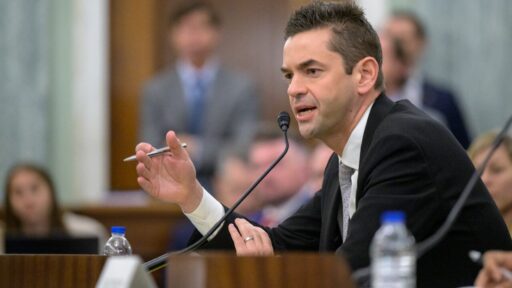
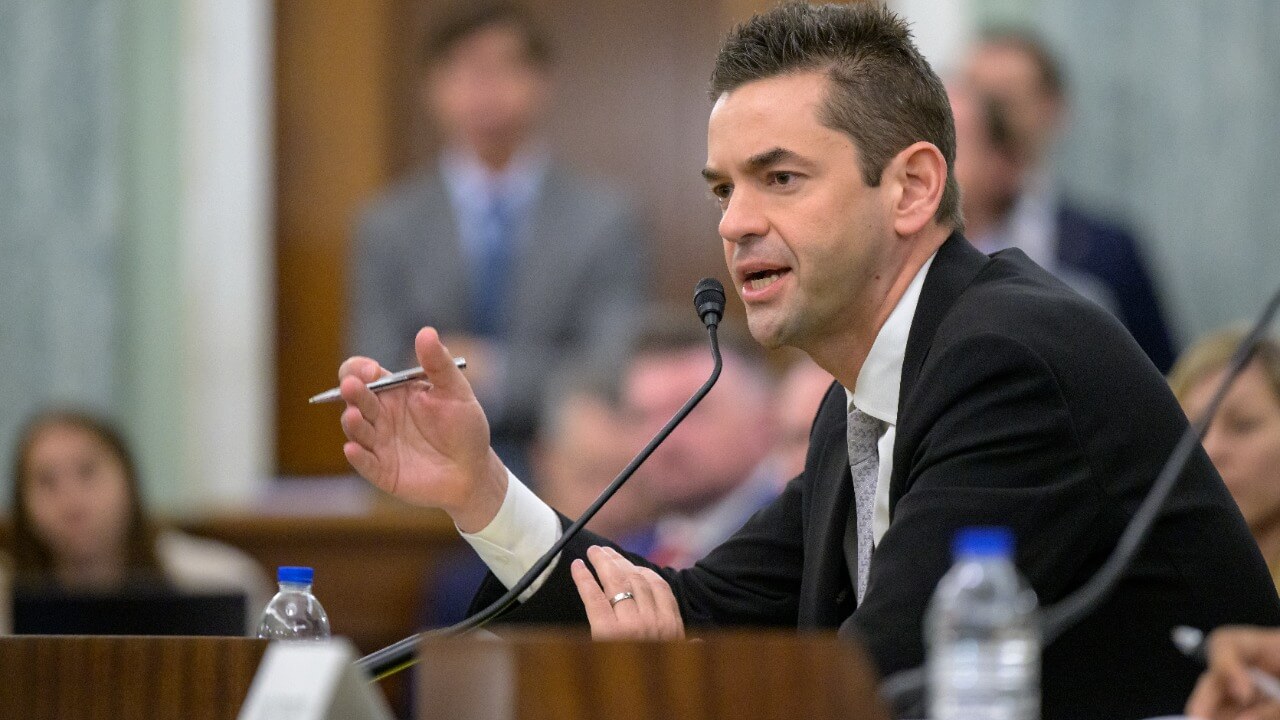
On November 18, 2025, the Senate scheduled a December 3 hearing for Jared Isaacman’s NASA nomination, a move highlighted in coverage noting Ted Cruz’s role in the scrutiny, signaling that the confirmation fight was intensifying. During that session, senators used their questioning to probe Isaacman’s views on NASA’s mission, his ties to commercial space companies and his approach to politically sensitive topics such as climate research and international cooperation. The hearing format gave lawmakers a public stage to test whether Isaacman could command bipartisan confidence, and it also provided a preview of the arguments that will likely dominate floor debate if his nomination advances.
Senator Ted Cruz’s specific involvement, as a prominent Republican voice on space policy, added another layer of complexity to the proceedings. By pressing Isaacman on issues that touch both policy and politics, Cruz helped surface partisan and ideological differences that could shape the final vote count, even if he ultimately supports the nominee. The questions raised during the hearing highlighted fault lines over how aggressively NASA should lean into commercial partnerships, how it should balance human exploration with scientific research and how closely it should align with Trump’s broader priorities, all of which affect Isaacman’s confirmation prospects and the expectations of stakeholders who rely on stable, long term policy signals.
Emerging Complications and Next Steps
Actions taken in the Senate after the November 18 hearing, reflected in reporting that the chamber has complicated Isaacman’s confirmation for NASA, show that the process has moved beyond routine vetting into a more contested phase. On November 19, 2025, the emerging picture is that procedural maneuvers, intensified scrutiny or new conditions attached to the nomination are slowing Isaacman’s path toward a final vote. Unverified based on available sources are the exact parliamentary tactics being used, but the net effect is to introduce fresh uncertainty about timing and outcome at a moment when the Trump transition is trying to lock in key leadership posts.
The complications have immediate and longer term implications for NASA and for the broader Trump administration agenda. Delays in confirming a NASA administrator can ripple through operational planning, affecting decisions on contract awards, launch schedules and coordination with partners such as SpaceX, Boeing and international agencies that depend on clear leadership signals. For the White House, a drawn out fight over Isaacman’s nomination risks consuming political bandwidth that might otherwise be spent on other priorities, while also giving critics a high profile example of resistance to Trump’s personnel choices. Looking ahead, the rapid progression from re-nomination to new hurdles suggests that upcoming votes or further hearings could become key tests of how much leverage the administration has in the Senate, and whether it is prepared to negotiate on policy commitments in order to secure Isaacman’s confirmation.